Tree Lopping Important
Why Is Tree Lopping Important for Property Safety?
Trees are an important part of residential landscapes across Melbourne. They provide shade, improve outdoor spaces, support wildlife and contribute to the appearance of homes and neighbourhoods. However, trees can also create safety concerns when branches become damaged, structural weaknesses develop or growth begins to interfere with buildings and surrounding areas.
Large branches hanging over roofs, damaged limbs near driveways and trees growing close to electrical infrastructure are situations that may require professional attention.
This raises a common question among homeowners: why is tree lopping important for property safety?
The answer is that appropriate tree maintenance can help identify and manage certain risks before they cause injury or property damage. However, not every tree requires lopping, and excessive cutting can create additional problems.
In Australia, the term tree lopping is often used broadly to describe cutting branches or reducing tree size. Professional arborists distinguish between appropriate pruning methods and indiscriminate lopping, which can damage a tree’s structure.
Understanding this difference helps property owners make informed decisions.
At Aussie Tradies Group, we understand that maintaining outdoor areas involves more than keeping them visually appealing. Property owners also need to consider tree condition, safe access, surrounding structures and long-term maintenance.
This guide explains the importance of tree maintenance, the risks associated with damaged branches, the difference between lopping and pruning, and when professional tree assessment or removal may be necessary.
What Is Tree Lopping?
Tree lopping generally refers to cutting branches or sections from a tree, often to reduce its height or overall size.
The term is commonly used by homeowners, but it does not describe one specific arboricultural technique.
Some people use tree lopping to mean routine pruning, while others use it to describe cutting large limbs or reducing the tree’s canopy without regard to natural growth points.
These approaches can have very different outcomes.
Tree Lopping vs Tree Pruning
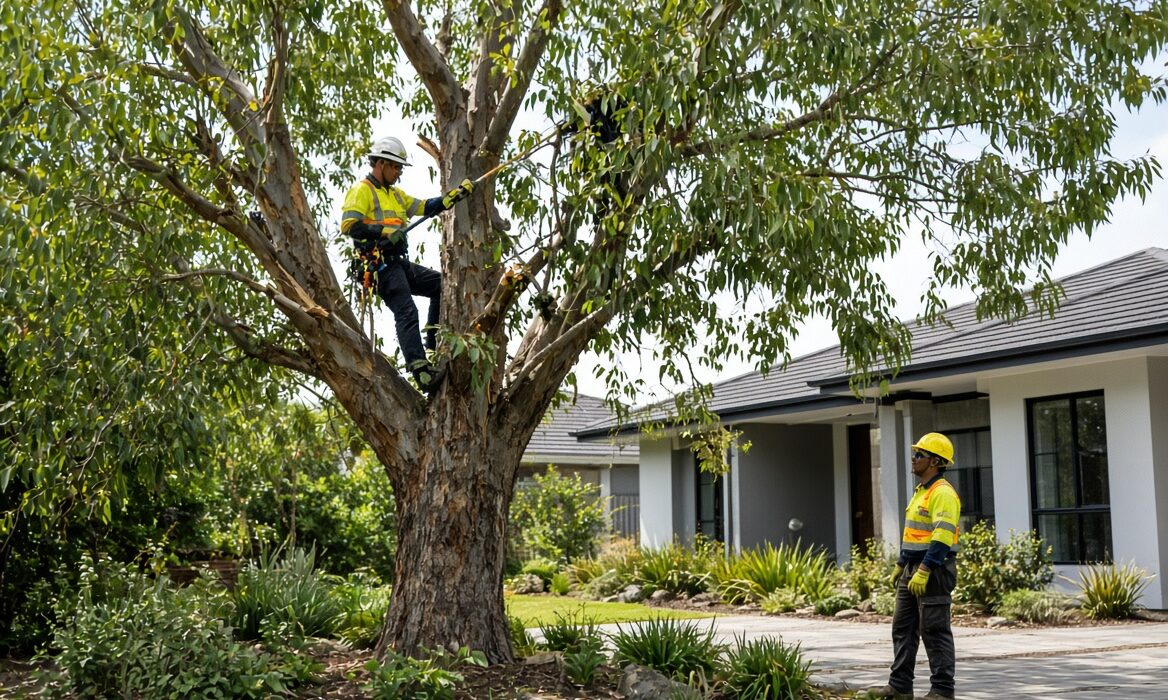
Professional tree pruning involves selecting and removing branches for a defined purpose while considering the tree’s health, structure and natural growth.
Appropriate pruning may be used to:
- Remove dead or damaged branches.
- Improve clearance from suitable structures.
- Address certain structural defects.
- Manage selected branches that create hazards.
- Maintain appropriate canopy structure.
- Support long-term tree management.
Indiscriminate lopping may involve removing large sections of the canopy or cutting branches back to unsuitable points.
This can create large wounds, encourage weakly attached regrowth and increase the risk of future structural problems.
Is Tree Lopping Always Necessary?
No. Healthy trees do not automatically require cutting simply because they are large.
The need for work depends on the tree’s condition, location, structural characteristics and surrounding environment.
A qualified arborist can assess whether pruning, monitoring, other management measures or removal is appropriate.
Why Does the Difference Matter?
Using the wrong cutting method may reduce the tree’s health and stability.
The goal of responsible tree maintenance is not simply to make a tree smaller. It is to manage identified risks while retaining healthy trees wherever practical.
Why Is Tree Lopping Important for Property Safety?
The main reason homeowners consider tree lopping is to address branches or growth that may create hazards.
When appropriate pruning is recommended following an assessment, it can form part of a property safety and maintenance plan.
1. Managing Dangerous Branches
Dead, cracked or damaged branches can present a risk to people and property.
These branches may fail during strong winds or sometimes under otherwise ordinary conditions.
Branches located above frequently used areas deserve particular attention.
Examples include:
- Driveways.
- Garden paths.
- Outdoor seating areas.
- Entrances.
- Children’s play spaces.
- Parking areas.
Professional assessment can help determine whether branch removal is necessary.
2. Reducing Certain Storm-Related Risks
Melbourne experiences periods of strong winds, thunderstorms and heavy rainfall.
Trees with damaged branches or existing structural defects may be vulnerable during severe weather.
Appropriate pruning can help manage some identified hazards, although no pruning method can make a tree completely storm-proof.
3. Managing Branches Near Buildings
Branches growing close to roofs, gutters and other structures may cause problems through direct contact or movement during windy conditions.
Depending on the circumstances, suitable pruning may improve clearance.
The work should consider the tree’s structure and any applicable legal requirements.
4. Maintaining Safe Access
Overgrown branches can obstruct pathways, driveways and entrances.
Low-hanging limbs may interfere with pedestrians or vehicles.
Appropriate clearance pruning can help maintain access where necessary.
5. Identifying Structural Problems
A tree assessment may reveal cracks, weak branch attachments, decay or previous damage.
Some defects can be managed through pruning or other measures.
Others may require monitoring, specialist treatment or removal.
6. Supporting Long-Term Tree Management
Regular professional assessment can help property owners understand changes in tree condition over time.
Maintenance decisions should be based on actual risks rather than unnecessary cutting.
How Overgrown Trees Can Affect Your Property
Tree growth is a natural process, but certain situations may create practical problems.
The presence of a large tree is not itself evidence of danger.
Risk depends on the condition of the tree and what could be affected if a branch or tree section failed.
Branches Overhanging Roofs
Branches close to a roof may create contact problems during windy weather.
Falling branches can also damage roofing materials, gutters and surrounding fixtures.
The appropriate response depends on the branch condition and available clearance.
Branches Near Windows
Large branches close to windows may cause damage if they move or break.
An assessment can determine whether selective pruning is justified.
Trees Near Fences
Branches may extend across boundary fences or rest against structures.
Before cutting, property owners should consider tree ownership, local rules and whether the proposed work could affect stability.
Growth Near Driveways
Low branches can interfere with vehicle access.
Suitable clearance pruning may address the problem without unnecessarily reducing the entire canopy.
Trees Near Outdoor Living Areas
Branches above patios, decks and seating areas may require assessment if visible damage or structural defects are present.
The objective is to manage specific hazards, not automatically remove all overhead branches.
The Importance of Tree Maintenance Before Storm Season
Storm preparation is one reason Melbourne homeowners review the condition of trees around their properties.
Strong winds can place significant loads on branches and trunks.
Heavy rainfall can also change soil conditions, particularly where drainage is poor.
Inspect Trees for Visible Damage
Look for warning signs such as:
- Large dead branches.
- Fresh cracks.
- Split branch attachments.
- Broken limbs caught in the canopy.
- Sudden changes in tree lean.
- Exposed or lifted roots.
- Significant damage following previous storms.
These signs may justify professional assessment.
Arrange Appropriate Pruning
If an arborist identifies branches that should be removed, suitable pruning may reduce certain hazards.
Unnecessary heavy cutting can create additional weaknesses.
Consider Trees Near Important Structures
Trees close to homes, garages and frequently used outdoor areas may warrant particular attention.
The level of risk depends on the tree’s condition and the surrounding environment.
Review Previous Storm Damage
Trees that have lost major branches may have remaining structural defects.
A qualified arborist can assess the condition of the canopy and trunk.
Understand the Limits of Tree Maintenance
Even a healthy, well-maintained tree can be damaged during extreme weather.
Maintenance helps manage identifiable risks but cannot eliminate every possibility of failure.
Signs a Tree May Need Professional Pruning
Not every unusual-looking branch is dangerous.
However, certain conditions suggest that professional advice may be useful.
Dead Branches in the Canopy
Dead branches can become brittle and may eventually fall.
The size and location of the branch influence the risk.
Broken or Hanging Limbs
A branch partially attached to the tree can move unpredictably.
Do not stand beneath suspended limbs or attempt to pull them down.
Branches Rubbing Against Each Other
Rubbing branches can cause wounds over time.
Selective pruning may sometimes help address the issue.
Weak Branch Attachments
Some branch unions have structural characteristics that increase the likelihood of failure.
An arborist can assess whether intervention is appropriate.
Branches Interfering with Access
Low branches may obstruct pathways, driveways or entrances.
Clearance pruning may be suitable.
Previous Poor Pruning
Trees that have been heavily topped or lopped may develop dense regrowth.
Some of this regrowth can have weaker attachments than naturally developed branches.
A professional assessment can help determine appropriate long-term management.
Can Tree Lopping Prevent Property Damage?
Appropriate pruning can help reduce certain identifiable risks, but it does not guarantee that property damage will never occur.
The effectiveness of the work depends on the tree’s condition, the defects being addressed and the methods used.
Protecting Roofs and Gutters
Selective pruning may improve clearance between branches and roof structures.
This can reduce direct contact in some situations.
Managing Hazardous Branches
Removing a damaged branch can eliminate the particular hazard associated with that branch.
However, other parts of the tree may still require assessment.
Improving Access Around Buildings
Pruning can help maintain suitable clearance around paths and entrances.
Addressing Structural Concerns
Some structural problems can be managed through pruning or other arboricultural measures.
Severe defects may require different solutions.
Avoiding Unnecessary Removal
A tree with one damaged branch may not need complete removal.
Professional assessment can help determine whether retaining the tree is practical.
Why Excessive Tree Lopping Can Be Dangerous
Although homeowners may request lopping to reduce a tree’s size, excessive cutting can create problems.
Understanding these risks is essential when considering tree work.
Weak Regrowth
Heavy cutting may encourage vigorous new shoots near the cut areas.
Depending on the species and pruning method, these shoots may have weaker attachments.
Large Pruning Wounds
Removing large limbs creates wounds that a tree must respond to.
Poorly positioned cuts can increase the potential for decay or other problems.
Reduced Tree Health
Removing too much foliage can affect the tree’s ability to produce energy through photosynthesis.
Unbalanced Canopies
Uneven or poorly planned cutting can alter the tree’s structure.
Future Maintenance Problems
Improper lopping may create regrowth that requires additional management.
For these reasons, professional pruning methods are generally preferable to indiscriminate cutting.
Tree Lopping vs Tree Removal: Which Is Necessary?
Pruning and tree removal serve different purposes.
Pruning aims to manage selected branches while retaining the tree.
Tree removal eliminates the tree when retention is unsuitable or removal is otherwise justified.
When Pruning May Be Appropriate
Pruning may be considered when:
- A limited number of branches are damaged.
- Clearance is required.
- Specific structural concerns can be managed.
- The tree remains suitable for retention.
When Tree Removal May Be Necessary
Removal may be considered when:
- The tree has suffered severe structural failure.
- The root system is significantly unstable.
- Extensive decay affects structural integrity.
- Damage makes safe retention impractical.
- The tree conflicts with an approved project and removal is permitted.
Who Should Make the Decision?
A qualified arborist can assess tree condition and explain management options.
Council or planning approval may also be required.
What Happens After Tree Removal?
Once a tree has been removed, the remaining stump may need attention.
Aussie Tradies Group provides tree and stump removal services for suitable Melbourne properties.
How Tree Maintenance Can Improve Outdoor Safety
Trees often grow close to spaces that families use every day.
A practical maintenance plan considers how people move through the property and where hazards may occur.
Garden Paths
Low branches can obstruct walking areas.
Outdoor Seating
Damaged branches above seating areas may require assessment.
Driveways
Branches can interfere with vehicle clearance.
Play Areas
Trees near play spaces should be assessed when visible defects are present.
Commercial Entrances
Business premises may need to maintain clear access for customers and staff.
Appropriate tree management can form part of broader property safety planning.
Tree Lopping and Power Line Safety
Trees growing near electrical infrastructure require particular care.
Branches can contact or interfere with power lines, creating serious electrical hazards.
Never Cut Branches Near Power Lines Yourself
Electricity can cause severe injury or death.
Do not assume a branch is safe because it is not touching a visible wire.
Contact the Electricity Distributor
The relevant electricity distributor can provide guidance about vegetation near its network.
Use Appropriately Authorised Workers
Work near electrical infrastructure may require specially trained and authorised personnel.
Keep Clear of Fallen Wires
If a tree or branch brings down a power line, stay well away.
Contact the electricity distributor or emergency services as appropriate.
Do not attempt to move the branch or wire.
How Often Should Trees Be Pruned?
There is no universal pruning schedule suitable for every tree.
The appropriate frequency depends on species, age, condition, growth rate, location and management objectives.
Young Trees
Some young trees benefit from carefully planned formative pruning to support suitable branch structure.
Mature Trees
Mature trees may need less frequent intervention when healthy and appropriately located.
Trees Near Buildings
Trees close to structures may require periodic assessment.
Previously Damaged Trees
Trees affected by storms or poor pruning may require monitoring.
Professional Inspections
An arborist can recommend an inspection and maintenance schedule suited to the property.
When Is the Best Time for Tree Pruning in Melbourne?
Pruning timing depends on the tree species and the reason for the work.
Some species respond better to pruning during particular seasons.
Winter Pruning
Dormant-season pruning may be suitable for certain deciduous trees.
However, not every species should be treated the same way.
Summer Pruning
Some selective maintenance may be appropriate during warmer months.
The tree’s health and weather conditions should be considered.
Emergency Pruning
Hazardous broken branches may require prompt attention regardless of the season.
Wildlife Considerations
Trees may contain active bird nests or other wildlife habitat.
Relevant wildlife protection requirements should be considered before work begins.
Do You Need Council Permission for Tree Lopping in Melbourne?
Tree protection rules vary across Melbourne councils.
Some properties are affected by planning overlays, local tree protection requirements or permit conditions.
Protected Trees
Certain trees may be protected because of their size, species, location or significance.
Planning Overlays
Vegetation protection, heritage and other planning controls may affect proposed work.
Significant Pruning
Removing major branches may require approval in some circumstances.
Emergency Work
Rules for urgent hazard management can differ from ordinary maintenance.
Do not assume all emergency work is automatically exempt.
Check Before Cutting
Contact the relevant local council or planning authority if you are unsure about the requirements.
What Is the Professional Tree Pruning Process?
The exact process depends on the tree and the proposed work.
A suitable approach begins with assessment rather than immediate cutting.
Step 1: Assess the Tree
The tree’s condition, structure, location and surrounding hazards are considered.
Step 2: Identify the Objective
The reason for pruning should be clear.
Examples include removing a damaged branch or improving access clearance.
Step 3: Review Legal Requirements
Relevant council, planning and wildlife requirements should be checked.
Step 4: Plan the Work
The method should consider safe access, branch size, surrounding structures and appropriate pruning techniques.
Step 5: Carry Out Suitable Pruning
Appropriately qualified workers use methods suited to the tree and work conditions.
Step 6: Manage Debris
Cut branches and other material are handled according to the agreed scope.
Step 7: Review Future Maintenance
The tree may require monitoring or additional assessment over time.
How Much Does Tree Lopping Cost in Melbourne?
Tree pruning and lopping costs vary significantly.
The price depends on the size of the tree, work required, access and safety considerations.
Tree Height and Size
Larger trees may require more time and specialist equipment.
Branch Size
Removing substantial branches can involve complex planning.
Property Access
Narrow entrances, fences and limited equipment access can affect the work.
Nearby Structures
Branches close to buildings may require more controlled removal methods.
Equipment Requirements
Some work requires elevated access equipment or specialist rigging.
Waste Disposal
Debris removal and disposal arrangements may affect the quotation.
Permit Requirements
Where permits or specialist assessments are necessary, these may involve additional costs.
A project-specific quotation is the most reliable way to understand the proposed price.
Can You Lop a Tree Yourself?
Minor garden maintenance is different from cutting large branches or working at height.
Tree work can be dangerous because branches may be heavy, unstable or difficult to control.
Working at Height
Climbing ladders while cutting branches can create fall hazards.
Falling Timber
Large branches can move unpredictably when cut.
Chainsaw Risks
Chainsaws require appropriate training and protective equipment.
Electrical Hazards
Trees near power lines should not be worked on by unqualified individuals.
Tree Health
Incorrect cutting can cause lasting damage.
For major pruning, damaged branches or uncertain tree conditions, professional assessment is the safer approach.
Tree Maintenance for Residential and Commercial Properties
Different properties have different tree management needs.
Residential Homes
Homeowners may need to consider branches near roofs, driveways, gardens and outdoor living areas.
Rental Properties
Property managers may need to arrange assessments when visible hazards are reported.
Commercial Premises
Businesses may need to maintain safe access around entrances, car parks and pedestrian areas.
Strata Properties
Shared outdoor spaces may involve owners corporation responsibilities and approval processes.
Development Sites
Trees affected by construction may require specialist protection or management.
Aussie Tradies Group provides a range of property services for suitable residential and commercial projects.
What Happens When a Tree Is Too Damaged to Save?
Sometimes pruning cannot adequately address a tree’s condition.
Severe structural damage, extensive decay or root instability may make removal necessary.
Professional Assessment
A qualified arborist can evaluate the condition and explain available options.
Check Approval Requirements
Relevant council or planning rules should be considered.
Plan Safe Removal
The removal method depends on the tree’s size, location and surrounding hazards.
Consider Stump Removal
Once the tree has been removed, the remaining stump may interfere with landscaping.
Restore the Outdoor Area
After removal, the property owner can plan suitable soil preparation, planting or other improvements.
Learn more about tree and stump removal and related services.
Common Tree Maintenance Mistakes Homeowners Should Avoid
Some tree care decisions can create unnecessary risks or long-term problems.
Cutting Too Much of the Canopy
Excessive foliage removal can stress a tree and affect its structure.
Ignoring Damaged Branches
Broken or hanging branches should not be ignored when they threaten occupied areas.
Pruning Without Understanding Tree Species
Different species respond differently to pruning.
Cutting Near Electrical Infrastructure
This creates serious safety risks and may require authorised workers.
Assuming All Large Trees Are Dangerous
Tree size alone does not determine risk.
Removing a Tree Without Checking Regulations
Protected trees may require approval.
Choosing Work Based Only on Price
Appropriate qualifications, insurance and the proposed method are important considerations.
How to Choose a Tree Care Professional in Melbourne
Before arranging major tree work, ask questions about the provider’s experience and approach.
Qualifications
For tree assessment and substantial pruning, consider engaging an appropriately qualified arborist.
Insurance
Confirm suitable insurance for the proposed work.
Pruning Methods
Ask what branches will be removed and why.
Safety Procedures
Discuss access, surrounding structures and any electrical hazards.
Written Quotation
A clear quotation should describe the proposed scope and exclusions.
Council Requirements
Confirm who is responsible for checking and obtaining any required approvals.
Long-Term Tree Health
The proposed work should consider whether the tree can remain healthy and structurally suitable.
Why Tree Safety Matters in Melbourne
Melbourne’s residential landscapes include established trees, modern gardens and properties with limited outdoor space.
Trees can provide substantial benefits, but their condition and location should be considered as part of property maintenance.
Appropriate tree care can help homeowners:
- Identify visible hazards.
- Manage selected damaged branches.
- Maintain access around buildings.
- Plan for storm-related risks.
- Protect suitable trees from unnecessary removal.
- Make informed decisions about pruning and removal.
The objective is to balance property safety with responsible tree management.
Frequently Asked Questions About Tree Lopping
1. Why is tree lopping important for property safety?
Appropriate tree pruning can help manage damaged branches, clearance problems and certain structural hazards. However, indiscriminate lopping can damage trees and create future risks.
2. Is tree lopping the same as tree pruning?
Not necessarily. Tree lopping is a broad term often used for cutting branches or reducing tree size. Professional pruning follows defined methods and considers tree health and structure.
3. Can tree lopping prevent storm damage?
Suitable pruning may reduce certain identifiable risks, but it cannot prevent every type of storm damage.
4. How often should trees be lopped?
There is no universal schedule. Maintenance needs depend on tree species, condition, growth and location.
5. Can excessive lopping kill a tree?
Severe cutting can stress a tree and may contribute to decline, depending on the species and extent of the work.
6. Do I need council permission for tree lopping in Melbourne?
Possibly. Tree protection rules and planning controls vary by council and property. Check applicable requirements before significant work.
7. Should I remove branches touching my roof?
Branches in contact with a roof may require attention, but the appropriate method should be assessed rather than cutting indiscriminately.
8. Can I lop a large tree myself?
Major tree work involves significant risks, including falling timber, working at height and chainsaw hazards. Professional assistance is recommended.
9. What happens if a tree is too damaged for pruning?
A qualified arborist may recommend removal when the tree cannot be retained safely or appropriately managed.
10. Does tree lopping improve tree health?
Appropriate pruning can support tree management in certain circumstances. Excessive or poorly performed lopping can harm tree health.
11. How much does tree lopping cost in Melbourne?
Costs depend on tree size, branch condition, access, equipment and the work required. A site-specific quotation is needed.
12. Is tree lopping safe near power lines?
Work near electrical infrastructure requires special precautions and may only be carried out by authorised personnel. Contact the relevant electricity distributor.
Final Thoughts: Why Is Tree Lopping Important?
Understanding why tree lopping is important begins with recognising the relationship between tree condition and property safety.
Damaged branches, poor clearance and structural defects can create hazards, particularly around buildings, driveways and frequently used outdoor areas.
Appropriate pruning and professional assessment can help manage some of these risks while preserving healthy trees.
However, cutting branches without a clear purpose can cause more harm than good. Responsible tree maintenance should prioritise safety, tree health and compliance with applicable regulations.
If a tree has suffered extensive damage or cannot be retained safely, professional removal may be necessary.