When Should You Remove a Tree Instead of Pruning It?
Trees provide shade, improve outdoor spaces and contribute to the natural beauty of residential and commercial properties. Regular pruning helps maintain healthy growth, removes damaged branches and reduces potential safety risks. However, pruning is not always enough to solve serious tree problems.
In some situations, removing a tree completely is a safer and more practical option than continuing to cut back branches. Severe structural damage, extensive disease, unstable roots and significant storm damage can make a tree dangerous, particularly when it is close to homes, driveways, powerlines or frequently used outdoor areas.
Knowing when to remove a tree instead of pruning it helps property owners make informed decisions about safety, maintenance and long-term landscaping.
In this guide, we explain the warning signs that indicate a tree may need removal, when pruning is still appropriate and why professional assessment matters.
1. The Tree Has Severe Structural Damage
One of the clearest reasons to consider tree removal is significant structural damage.
A healthy tree should have a stable trunk, strong root system and well-supported branches. When these components become severely damaged, the tree may lose its ability to support its own weight safely.
Structural problems can develop because of storms, strong winds, physical impacts, ageing or long-term deterioration.
Signs of Serious Structural Damage
Look for the following warning signs:
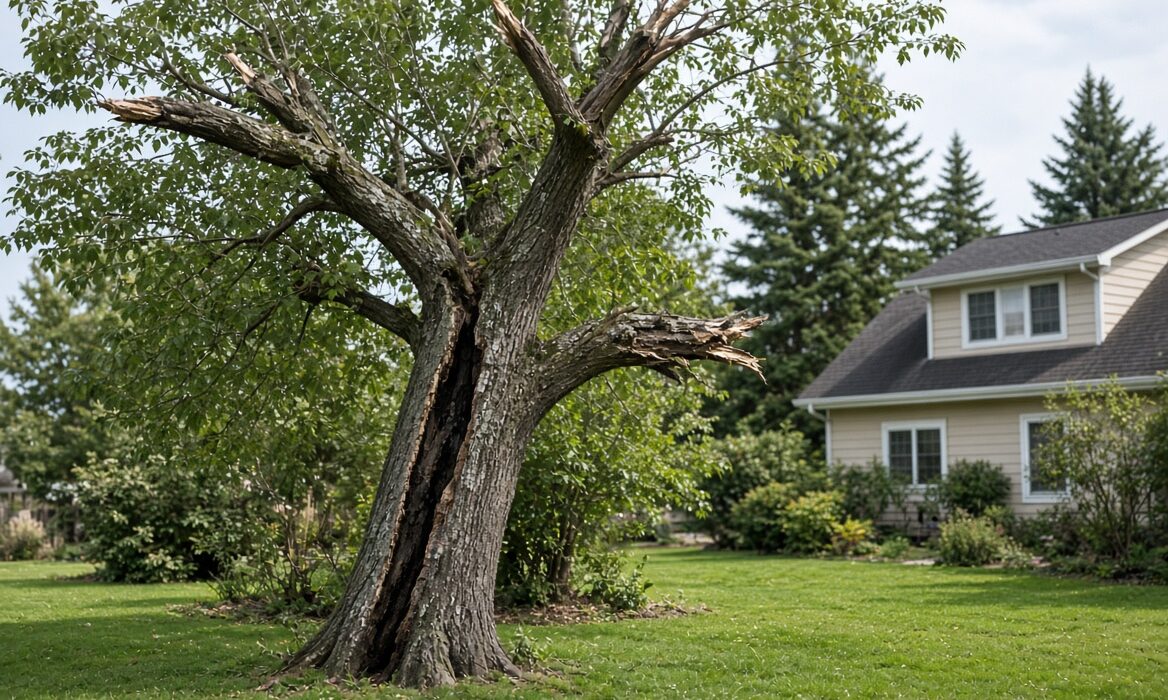
- Large cracks running through the main trunk.
- Deep splits where major branches connect to the trunk.
- Significant trunk decay.
- A severely damaged or broken main stem.
- Large sections of the tree becoming unstable.
- Major branches hanging dangerously over buildings.
Small damaged branches can often be removed through pruning. However, when the main trunk or primary supporting structure is severely compromised, removing the entire tree may be the safer option.
A qualified arborist can assess the extent of the damage and determine whether the tree can be retained.
2. The Tree Has Extensive Disease
Tree diseases can affect leaves, branches, roots and the trunk.
Some conditions can be managed through targeted pruning, improved growing conditions and appropriate treatment. However, advanced disease may cause extensive deterioration that cannot be reversed.
If a large portion of the tree is affected, removing individual branches may not prevent the condition from spreading or the tree from becoming unstable.
Common Signs of Tree Disease
Watch for:
- Extensive leaf discolouration.
- Premature leaf loss.
- Dead branches across multiple sections.
- Fungal growth around the trunk or roots.
- Unusual swelling or lesions.
- Extensive decay in the main trunk.
- Weak or deteriorating branch connections.
It is important to remember that these symptoms do not automatically mean a tree needs removal.
Different diseases affect trees in different ways. A professional assessment can help determine whether treatment, pruning or removal is the most appropriate response.
3. The Tree Has Developed Root Problems
A tree depends on its roots for stability, water absorption and nutrient supply.
When the root system becomes damaged, the tree may struggle to remain upright and support its overall structure.
Root problems can develop because of construction work, soil disturbance, excessive moisture, poor drainage, excavation or root disease.
Warning Signs of Root Damage
Some common indicators include:
- A tree beginning to lean unexpectedly.
- Soil lifting or cracking around the base.
- Exposed or damaged structural roots.
- Sudden changes in the tree’s position.
- Significant deterioration around the root collar.
- Visible movement during windy conditions.
Not every leaning tree is dangerous. Some trees naturally develop at an angle and remain stable for many years.
However, a sudden lean combined with disturbed soil or damaged roots can indicate a serious stability problem.
Pruning the branches may reduce some of the tree’s weight, but it does not repair a compromised root system.
If the tree has become unstable, professional assessment is important.
4. The Tree Has Suffered Severe Storm Damage
Strong winds, heavy rainfall and storms can cause substantial damage to trees.
While smaller broken branches can often be removed through pruning, severe storm damage may affect the entire tree.
For example, a tree with a split trunk, broken main stem or extensively damaged root system may no longer be structurally safe.
When Is Storm-Damaged Tree Removal Necessary?
Tree removal may be recommended when:
- The main trunk has split significantly.
- Major supporting branches have broken.
- The tree has partially fallen.
- The root system has been pulled out of the ground.
- The tree is leaning dangerously towards a building.
- Large sections of the tree are no longer structurally stable.
Avoid standing beneath damaged branches or attempting to cut unstable trees yourself.
Storm-damaged trees can move unexpectedly, and suspended branches may fall without warning.
Contact a qualified tree removal professional to assess the situation and determine the safest approach.
5. The Tree Is Growing Too Close to Buildings
Trees can become problematic when they grow too close to houses, garages, fences and other structures.
As trees mature, their trunks, branches and root systems expand. This growth may interfere with buildings, outdoor structures, drainage systems and paved surfaces.
In some cases, regular pruning can control the canopy and prevent branches from touching roofs or walls.
However, removal may be considered when the tree creates ongoing structural risks that cannot be managed through reasonable maintenance.
Potential Problems Caused by Trees Near Buildings
These may include:
- Large branches extending over rooftops.
- Roots affecting nearby paving.
- Branches interfering with gutters.
- Trees restricting access to driveways.
- Repeated damage during storms.
- Significant interference with existing structures.
Before deciding on removal, consider the tree species, mature size, root characteristics and available growing space.
A professional assessment can help determine whether pruning, root management or removal is appropriate.
6. The Tree Has Extensive Dead Branches
Dead branches are common in ageing trees, but widespread branch death can indicate a more serious problem.
If only a few branches are dead, pruning may be sufficient to improve the tree’s condition and reduce falling branch hazards.
However, when large sections of the canopy are dead, the tree may be experiencing significant health or structural problems.
Signs of Extensive Canopy Decline
Look for:
- Large areas without leaves during the growing season.
- Multiple dead branches throughout the canopy.
- Significant bark loss.
- Weak branch attachments.
- Repeated branch failure.
- Progressive deterioration over several seasons.
Removing dead branches can improve safety, but it will not necessarily resolve the underlying condition.
If canopy decline is widespread, an arborist should assess the tree to determine whether it can recover.
7. The Tree Is Leaning and Becoming Unstable
A leaning tree is not automatically dangerous.
Some trees naturally grow at an angle because of sunlight, wind exposure or surrounding landscape conditions.
The concern arises when a tree begins leaning suddenly or shows other signs of instability.
For example, fresh soil cracks around the base, exposed roots and movement in the root plate may indicate that the tree is losing its support.
When Does a Leaning Tree Need Removal?
Removal may be necessary when:
- The lean has developed suddenly.
- The ground around the base is lifting.
- Structural roots are severely damaged.
- The trunk has significant cracks.
- The tree is moving noticeably in windy conditions.
- The tree is at risk of falling onto an occupied area.
Pruning may reduce canopy weight, but it cannot restore a damaged root system or correct severe structural instability.
Do not attempt to pull, straighten or heavily prune an unstable tree yourself.
8. The Tree Is Causing Repeated Property Damage
Some trees can create ongoing maintenance problems because of their location, size or growth characteristics.
Branches may repeatedly damage roofs, block gutters or interfere with nearby structures.
Roots can also contribute to problems with paving, garden edging and some drainage infrastructure.
In many situations, regular pruning and suitable maintenance can manage these issues.
However, if the same problems continue despite appropriate maintenance, removal may become a more practical long-term solution.
Common Examples
- Large branches repeatedly contacting the roof.
- Roots contributing to recurring paving displacement.
- Persistent interference with access areas.
- Branches creating ongoing clearance issues.
- Tree growth repeatedly affecting nearby structures.
Before removing a tree, it is important to identify the exact cause of the damage.
Root-related problems, for example, should be properly investigated because removing a tree may not automatically resolve existing drainage or structural issues.
9. The Tree Has Reached the End of Its Useful Life
Trees have different lifespans depending on their species, growing conditions and environment.
As trees age, they may experience declining health, reduced growth and increased structural deterioration.
However, age alone is not a sufficient reason to remove a tree.
Many mature trees remain healthy, stable and valuable for decades.
Removal may become appropriate when advanced ageing is accompanied by significant decay, extensive deadwood or structural instability.
Signs of Advanced Tree Decline
These may include:
- Repeated loss of large branches.
- Extensive trunk decay.
- Significant root deterioration.
- Severe canopy decline.
- Weak structural connections.
- Poor recovery after environmental stress.
A professional assessment can help establish whether the tree can continue growing safely or whether removal is necessary.
10. The Tree Is Creating a Serious Safety Risk
Safety should always be a major consideration when deciding between pruning and removal.
A tree located near a busy pathway, children’s play area, driveway or occupied building may present a greater risk if its structural condition deteriorates.
Even a relatively small tree can become dangerous if its trunk, roots or main branches are severely compromised.
In these circumstances, removing selected branches may not adequately address the risk.
An arborist can assess the likelihood and potential consequences of tree failure and recommend suitable management options.
If there is an immediate risk of collapse, keep people away from the affected area and arrange urgent professional assistance.
Tree Removal vs Pruning: What Is the Difference?
Tree pruning and tree removal serve different purposes.
Pruning involves selectively cutting branches to improve tree health, manage growth and remove damaged or unsafe sections.
Tree removal involves taking down the entire tree when retaining it is no longer appropriate or safe.
Here is a simple comparison.
| Situation | Pruning | Tree Removal |
|---|---|---|
| A few dead branches | Usually suitable | Usually unnecessary |
| Minor canopy overgrowth | Usually suitable | Usually unnecessary |
| Small damaged branches | Usually suitable | Usually unnecessary |
| Severe trunk decay | May be insufficient | May be recommended |
| Extensive root damage | Usually insufficient | May be necessary |
| Sudden dangerous leaning | May not resolve the risk | May be necessary |
| Severe storm damage | Depends on the damage | May be necessary |
| Extensive irreversible disease | Depends on the condition | May be recommended |
| Healthy tree near a building | May be sufficient | Not automatically required |
The best decision depends on the tree’s condition, location, species and potential risks.
When Is Pruning a Better Option Than Tree Removal?
Removing a healthy tree should not be the first response to every tree-related problem.
Pruning is often the better option when the tree remains structurally sound and its problems can be managed through selective branch removal.
Consider pruning when:
The canopy is overgrown: Selective pruning can improve clearance and manage excessive growth.
A few branches are damaged: Removing individual damaged branches can reduce hazards while preserving the rest of the tree.
Branches are interfering with structures: Appropriate pruning can provide clearance around roofs, pathways and buildings.
The tree is healthy: Maintaining a healthy tree is generally preferable to removing it without a valid reason.
The tree needs routine maintenance: Regular pruning can help maintain suitable growth and remove dead or weak branches.
Pruning should be performed according to the tree species, condition and appropriate arboricultural practices. Excessive cutting can weaken a tree and create additional problems.
How to Decide Whether a Tree Should Be Removed
Before arranging tree removal, consider the following factors.
1. Assess the Tree’s Overall Health
Check the trunk, branches, leaves and visible root area for signs of deterioration.
2. Identify Structural Problems
Look for significant cracks, decay, broken supporting branches and changes in the tree’s position.
3. Consider Its Location
A damaged tree near a house or frequently used area may require more urgent attention than a similar tree in an open space.
4. Evaluate Whether Pruning Can Solve the Problem
If the issue is limited to a few branches, selective pruning may be sufficient.
If the main trunk or root system is compromised, pruning may not provide an adequate solution.
5. Arrange a Professional Assessment
An experienced arborist can evaluate the tree’s health, structural condition and surrounding environment before recommending removal or ongoing maintenance.
Does Tree Removal Require Council Approval in Melbourne?
In Melbourne, tree removal may be subject to local council regulations, planning controls and tree protection requirements.
The rules depend on the property’s location, tree species, size, condition and applicable planning overlays.
Some councils require permits before removing or heavily pruning certain trees.
Additional restrictions may apply to significant trees, vegetation protected by planning schemes or trees located in specific environmental areas.
Before arranging removal, property owners should:
- Check their local council’s tree removal requirements.
- Confirm whether a planning or vegetation permit is needed.
- Check for applicable tree protection overlays.
- Obtain professional advice where necessary.
- Confirm any relevant requirements before work begins.
Do not assume that a dead, damaged or privately owned tree can always be removed without approval. Emergency situations may have specific provisions, but these should be checked with the relevant authority.
Why Professional Tree Removal Matters
Removing a tree can involve significant risks, particularly when it is large, unstable or located close to buildings and powerlines.
Professional tree removal requires appropriate equipment, safety procedures and knowledge of tree structure.
Experienced professionals can assess the tree, identify potential hazards and determine a suitable removal approach.
Professional services may also include:
- Tree condition assessments.
- Selective pruning.
- Hazardous branch removal.
- Complete tree removal.
- Controlled sectional dismantling.
- Stump grinding.
- Site clean-up and debris removal.
For properties in Melbourne, Aussie Tradies Group provides tree and stump removal services to help property owners manage unwanted or problematic trees.
Explore our [tree stump removal services] to learn more about suitable solutions for your outdoor space.
Frequently Asked Questions
1. How do I know if a tree needs to be removed instead of pruned?
A tree may need removal when it has severe trunk damage, extensive decay, major root problems or significant structural instability. If the issue is limited to a few damaged branches, pruning may be sufficient.
2. Can a diseased tree be saved through pruning?
Some diseased trees can recover through selective pruning and appropriate treatment. However, extensive disease affecting the main trunk, roots or most of the canopy may make removal necessary.
3. Is a leaning tree always dangerous?
No. Some trees naturally grow at an angle. However, a sudden lean combined with soil movement, exposed roots or trunk damage can indicate instability and requires professional assessment.
4. Does pruning make a dangerous tree safe?
Pruning can reduce certain hazards by removing weak, damaged or overhanging branches. However, it cannot always correct severe trunk decay, root damage or structural instability.
5. Can tree roots cause damage to outdoor paving?
Yes. Tree roots can contribute to the displacement of paving, particularly when roots grow beneath or close to paved surfaces. The extent of damage depends on the tree species, root growth and site conditions.
6. Should I remove a dead tree?
A dead tree may need removal if it presents a falling risk or is located near people, buildings or frequently used areas. However, some dead trees can be retained safely in suitable locations for wildlife habitat.
7. What happens after a tree is removed?
After removal, the remaining stump can be left in place, removed or ground down depending on the property’s requirements. Stump grinding is commonly used to reduce the visible stump and make the area easier to maintain.
8. Is a permit required to remove a tree in Melbourne?
Depending on the property and applicable council regulations, a permit may be required. Always check local planning controls and tree protection requirements before starting removal work.
Final Thoughts
Deciding when to remove a tree instead of pruning it requires careful consideration of its health, structural condition and location.
Pruning is often sufficient for healthy trees with minor damage or excessive growth. However, extensive disease, severe trunk damage, unstable roots and serious storm damage may make complete removal the safer option.
The most important step is to identify the underlying problem before choosing a solution. Removing a healthy tree unnecessarily can affect the surrounding environment, while leaving a structurally dangerous tree untreated can create significant safety risks.
If you are concerned about a damaged, diseased or unstable tree, seek professional advice before attempting major cutting or removal.
Need help with a problematic tree? Contact Aussie Tradies Group to discuss your tree and stump removal requirements and request a quote.