What Causes Water to Pool Around Outdoor Paving?
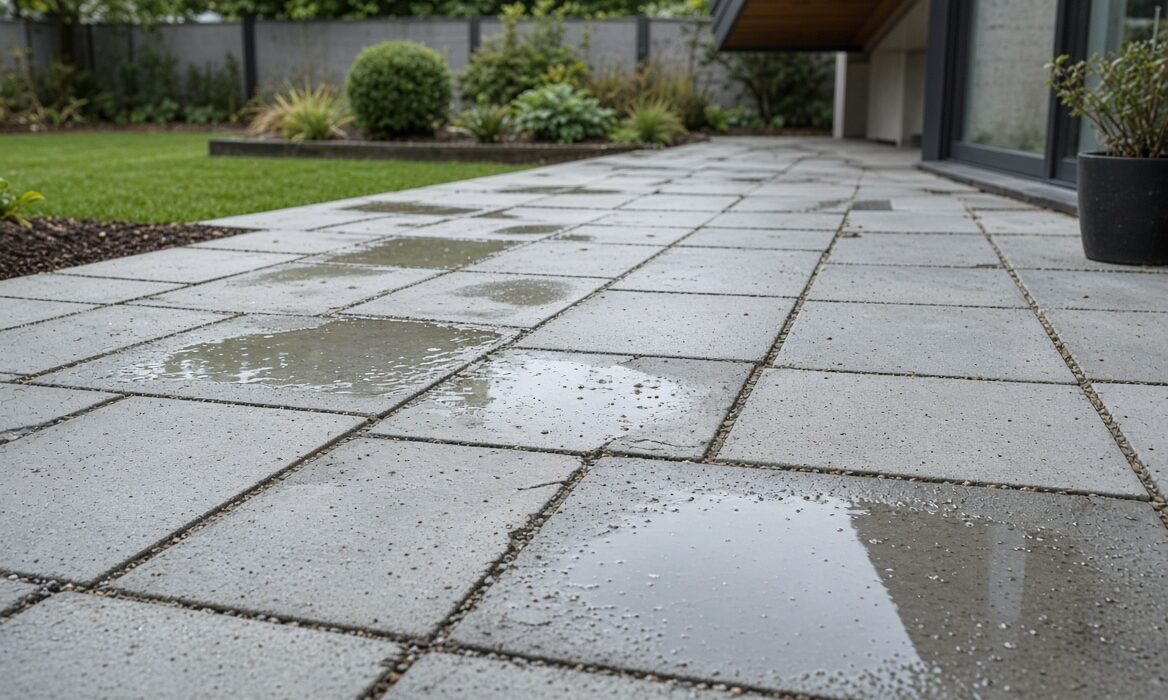
Water pooling around outdoor paving is a common problem that can affect patios, pathways, driveways and other paved areas. After rainfall or outdoor cleaning, you may notice water collecting in certain spots instead of flowing away naturally. Although small amounts of water may disappear as the surface dries, persistent pooling can indicate an underlying drainage or installation problem.
Outdoor paving should be installed with appropriate surface falls to direct rainwater towards suitable drainage points. When the paving is uneven, the ground does not drain properly or drainage systems become blocked, water can collect around individual pavers or across larger sections.
Ignoring standing water can lead to slippery surfaces, algae growth, staining, joint deterioration and potential damage to the surrounding landscape.
In this guide, we explain what causes water to pool around outdoor paving, how to identify drainage problems and what homeowners can do to improve water runoff.
1. Incorrect Slope or Surface Gradient
One of the most common causes of water pooling around outdoor paving is an incorrect surface gradient.
Outdoor paved surfaces need a suitable slope to allow rainwater to move away rather than collecting in low areas.
If paving is installed without sufficient fall, water may remain on the surface long after rainfall has stopped.
In some cases, the paving may even slope towards the house or building, increasing the risk of water entering unwanted areas.
How Incorrect Slopes Cause Water Pooling
Water naturally follows the lowest available path. When the paving surface is flat or slopes in the wrong direction, rainwater cannot drain efficiently.
This can create:
- Standing water across patio areas.
- Puddles near garden pathways.
- Water collecting beside exterior walls.
- Persistent damp patches around paved surfaces.
- Runoff flowing towards doorways or garages.
A professional assessment can identify whether the existing paving needs regrading or whether additional drainage is required.
2. Poor Ground Preparation Before Paving
The condition of the ground beneath outdoor paving has a significant impact on drainage.
Before pavers are installed, the underlying soil and base materials must be properly prepared and compacted.
If the ground is unstable or uneven, sections of paving may gradually sink or shift.
These changes can create low spots where rainwater collects.
Common Ground Preparation Problems
Poor preparation may involve:
- Insufficient excavation.
- Inadequate base material.
- Uneven ground levels.
- Incorrect compaction.
- Unsuitable materials beneath the pavers.
- Poor preparation around drainage points.
Over time, these problems can affect the stability of the paved surface and interfere with water runoff.
Proper excavation, base preparation and compaction help create a stable foundation that supports effective drainage.
3. Blocked or Inadequate Drainage Systems
Outdoor paving often relies on drainage systems to collect and redirect excess rainwater.
These may include surface drains, channel drains, grated pits and connected stormwater systems.
When drainage components become blocked or are not designed to handle the amount of runoff, water may collect around the paving.
What Causes Drainage Blockages?
Common causes include:
- Leaves and garden debris.
- Soil and loose sand.
- Mud and sediment buildup.
- Small stones entering drain openings.
- Plant roots affecting drainage pipes.
- Damaged or poorly connected drainage components.
A blocked drain can prevent water from leaving the paved area efficiently.
Regularly inspecting and cleaning drainage openings can help maintain proper water flow.
If water continues pooling despite clear drain openings, the drainage system may need a more detailed inspection.
4. Uneven or Sunken Pavers
Outdoor pavers can move over time due to ground settlement, poor installation or repeated exposure to moisture.
When individual pavers sink below the surrounding surface, they create small depressions.
These low areas can collect rainwater because the surrounding paving prevents it from flowing away naturally.
Signs of Uneven Paving
Look for:
- Pavers sitting lower than neighbouring sections.
- Visible gaps between individual pavers.
- Water collecting in specific spots.
- Loose or rocking paving stones.
- Uneven edges along pathways.
- Sections that appear to have shifted over time.
Simply adding more sand between the joints may not solve the problem.
The affected area may need to be lifted, the underlying base corrected and the pavers reinstalled at the appropriate level.
5. Soil With Poor Water Absorption
The type of soil surrounding outdoor paving can also contribute to standing water.
Some soils allow water to drain naturally, while others absorb and release moisture much more slowly.
Clay-heavy soil, for example, generally drains more slowly than many sandy soils.
When rainwater reaches the ground around a paved area, poor soil drainage can cause water to remain near the surface.
How Soil Conditions Affect Outdoor Paving
Poorly draining soil can contribute to:
- Water collecting along paving edges.
- Persistent muddy patches.
- Saturated garden beds.
- Water flowing back towards paved areas.
- Longer drying times after rainfall.
A suitable drainage solution depends on the soil conditions, available space and the amount of water that needs to be managed.
In some situations, improving the surrounding ground levels or installing an appropriate drainage system may help.
6. Incorrect Paver Spacing and Joint Materials
The spaces between outdoor pavers can influence how water moves across the surface.
Depending on the paving design, joint materials may help stabilise the pavers and control water movement through the joints.
If the joints are poorly installed or the wrong materials are used, water may not drain as intended.
However, it is important to understand that ordinary paving joints are not automatically designed to function as a complete drainage system.
Common Joint-Related Problems
These include:
- Missing or deteriorated joint sand.
- Incorrect jointing materials.
- Poorly filled paving joints.
- Loose material washing out during rainfall.
- Weed growth affecting the joints.
Some permeable paving systems are specifically designed to allow water to pass through the surface and into a prepared drainage base.
Traditional paving installations may require separate drainage arrangements.
Choosing the right paving system for the location is important for long-term performance.
7. Heavy Rainfall and Insufficient Drainage Capacity
Sometimes, water pooling is not caused by poor paving installation alone.
Heavy rainfall can produce more runoff than an existing drainage system can handle.
This is particularly common in areas with large paved surfaces, limited garden space or inadequate stormwater connections.
When rainfall exceeds the drainage capacity, water can temporarily accumulate on the surface.
Areas More Likely to Experience Runoff Problems
- Large outdoor patios.
- Concrete driveways.
- Paved entertainment areas.
- Garden pathways.
- Areas surrounded by retaining walls.
- Properties with limited natural drainage.
If pooling occurs only during intense rainfall and disappears quickly, the drainage system may simply be experiencing temporary overload.
However, persistent standing water should be investigated to determine whether improvements are needed.
8. Downpipes Discharging Water Near Paving
Roof drainage can also contribute to water pooling around outdoor paving.
Downpipes carry rainwater from the roof towards a suitable stormwater drainage point.
If a downpipe releases water directly beside a patio, pathway or driveway, it can introduce a concentrated amount of water into a relatively small area.
Over time, this may create persistent wet patches and contribute to erosion around the paving edges.
What to Check
Inspect the following areas:
- Downpipe outlets near paved surfaces.
- Stormwater connections.
- Drainage points around the building.
- Areas where roof runoff enters garden beds.
- Sections where water flows towards exterior walls.
Downpipes should discharge into an appropriate stormwater system or approved drainage arrangement.
Any changes to stormwater connections should comply with local requirements.
9. Poor Drainage Around Retaining Walls
Retaining walls are often used to manage changes in ground levels around outdoor paved areas.
However, if water cannot drain properly behind or around a retaining wall, it may collect near the base or flow towards neighbouring paving.
Retaining walls may require suitable drainage arrangements to manage water pressure and groundwater.
Without appropriate drainage, water can contribute to soil movement, erosion and damage to nearby paved surfaces.
Warning Signs
Look for:
- Water collecting along the bottom of a retaining wall.
- Persistent damp patches.
- Soil washing out near the wall.
- Pavers becoming uneven.
- Visible cracks or movement in the wall.
If a retaining wall shows signs of movement or damage, seek an assessment from a suitably qualified professional.
10. Poorly Planned Landscape Levels
Outdoor paving does not exist in isolation. Its drainage performance is also influenced by surrounding gardens, lawns, garden beds and landscaping features.
If the surrounding ground is higher than the paved surface, rainwater may flow towards the paving instead of away from it.
Similarly, raised garden beds and poorly positioned edging can prevent water from escaping.
Landscaping Problems That Contribute to Pooling
- Garden beds positioned above paving levels.
- Soil built up against paving edges.
- Incorrect lawn gradients.
- Landscaping edging blocking runoff.
- Downhill runoff directed towards patios.
- Insufficient drainage between garden and paved areas.
Good landscape planning should consider the direction of water movement across the entire outdoor space.
How to Identify the Cause of Water Pooling
Before choosing a repair method, it is important to understand why water is collecting.
A simple inspection can help identify potential drainage problems.
Step 1: Observe the Area After Rainfall
Check where water collects and how long it takes to disappear.
Take note of whether the pooling occurs across the entire paved surface or only in specific locations.
Step 2: Check the Surface Levels
Look for sunken pavers, visible depressions and areas where the paving appears uneven.
A professional can use suitable levelling equipment to assess the surface gradient.
Step 3: Inspect Drainage Openings
Check nearby grates, pits and channel drains for leaves, soil and other debris.
Do not remove drain covers or enter drainage pits unless it is safe and appropriate to do so.
Step 4: Check Surrounding Ground Levels
Observe whether garden beds, lawns or neighbouring surfaces direct water towards the paving.
Step 5: Inspect Downpipes
Look for roof drainage outlets that discharge water close to the affected area.
These observations can help narrow down the cause before arranging repairs.
How to Fix Water Pooling Around Outdoor Paving
The correct repair method depends on the underlying problem.
Cleaning a blocked drain may resolve a minor issue, while uneven paving or incorrect surface gradients may require more extensive work.
Here are some common solutions.
1. Relevel Uneven Pavers
If individual pavers have sunk or shifted, the affected section may need to be lifted and reinstalled.
This generally involves removing the affected pavers, correcting the underlying base and restoring the correct surface levels.
2. Improve Surface Drainage
If the paving does not have a suitable gradient, the surface may need to be adjusted.
Proper falls help direct water towards an appropriate drainage point rather than allowing it to collect in low spots.
3. Install Channel Drains
Channel drains can collect surface water across larger paved areas.
They are particularly useful near garage entrances, patios and other locations where runoff needs to be controlled.
The drain must be correctly positioned and connected to an appropriate discharge point.
4. Clear Existing Drainage Systems
Remove leaves, dirt and other debris from accessible drainage openings.
Regular maintenance helps prevent blockages and supports consistent water flow.
5. Improve the Underlying Base
Where poor ground preparation has caused settlement, the underlying base may need to be repaired or replaced.
This helps restore paving stability and reduces the likelihood of further sinking.
6. Adjust Surrounding Landscape Levels
If water flows from garden beds or lawns towards the paving, adjusting the surrounding ground levels may improve runoff.
The aim is to direct water away from buildings and towards suitable drainage areas.
How to Prevent Water Pooling Around Outdoor Paving
Preventing drainage problems starts before the first paver is installed.
A well-planned paving project considers the surface gradient, ground conditions, drainage requirements and surrounding landscape levels.
Here are some practical ways to reduce the risk of standing water.
Prepare the ground properly: Ensure the soil and base materials are suitable and properly compacted.
Create appropriate surface falls: Plan the paving gradient so that water moves towards suitable drainage points.
Choose suitable paving materials: Select products according to the intended application, drainage requirements and environmental conditions.
Maintain drainage systems: Regularly remove leaves, dirt and debris from accessible drains.
Check surrounding landscaping: Avoid creating raised areas that direct water towards paved surfaces.
Manage roof runoff: Ensure downpipes discharge into suitable stormwater arrangements.
Inspect paving regularly: Address loose, sunken or uneven pavers before they develop into larger problems.
Use professional installation: Proper planning and installation help create a stable and well-drained paved surface.
Frequently Asked Questions
1. Why does water collect on my outdoor paving after rain?
Water commonly collects because of incorrect surface gradients, uneven pavers, blocked drainage systems or poorly prepared ground. Surrounding landscaping and soil conditions can also contribute to the problem.
2. Is water pooling on paving normal?
Small amounts of temporary water may occur during heavy rainfall. However, persistent pooling or water that remains in the same location long after rain stops may indicate a drainage or installation issue.
3. Can uneven pavers cause standing water?
Yes. Sunken or uneven pavers create low spots where rainwater can collect. Relevelling the affected section may help restore proper water flow.
4. Does sand between pavers help with drainage?
Joint sand helps stabilise many types of paving, but it does not automatically provide effective drainage. The overall paving system, including its base and underlying ground, determines how water moves through the installation.
5. How do I stop water pooling near my patio?
Start by checking the surface gradient, nearby drains and surrounding ground levels. Depending on the cause, solutions may include regrading the paving, repairing sunken pavers or installing channel drainage.
6. Can water pooling damage outdoor paving?
Yes. Persistent moisture can contribute to algae growth, staining, joint deterioration and movement of the underlying base. It can also create slippery surfaces.
7. Should outdoor paving slope away from my house?
Generally, surface drainage should direct water away from buildings and towards suitable drainage points. The exact gradient and drainage arrangement depend on the site conditions and applicable building requirements.
8. When should I call a professional for outdoor paving drainage problems?
Seek professional assistance when water continues pooling, multiple pavers are sinking, drainage systems are not working properly or water is collecting near building foundations.
Final Thoughts
Water pooling around outdoor paving is often a sign that something is affecting the way water moves across or beneath the surface.
Incorrect gradients, poor ground preparation, blocked drains, uneven pavers and surrounding landscape levels can all contribute to standing water.
Identifying the underlying cause is the first step towards finding a lasting solution. Simply removing the water or filling low spots without addressing the drainage problem may lead to recurring issues.
Proper planning, suitable materials and professional installation can help create outdoor paved areas that remain stable, functional and easier to maintain.
If you are planning an outdoor paving project or experiencing problems with an existing paved surface, Aussie Tradies Group can help you explore suitable solutions for your property.
Contact Aussie Tradies Group today to discuss your project and request a quote.