Storm Damage Tree Removal
Emergency Storm Damage Tree Removal: What to Do After Storm
Severe storms can leave homeowners dealing with fallen branches, damaged trees, blocked driveways and serious safety concerns. Strong winds, heavy rainfall and saturated soil can weaken trees, sometimes causing large limbs or entire trunks to fall without warning.
When a storm damages a tree on your property, knowing what to do next can help protect your family, prevent additional property damage and reduce the risk of injury.
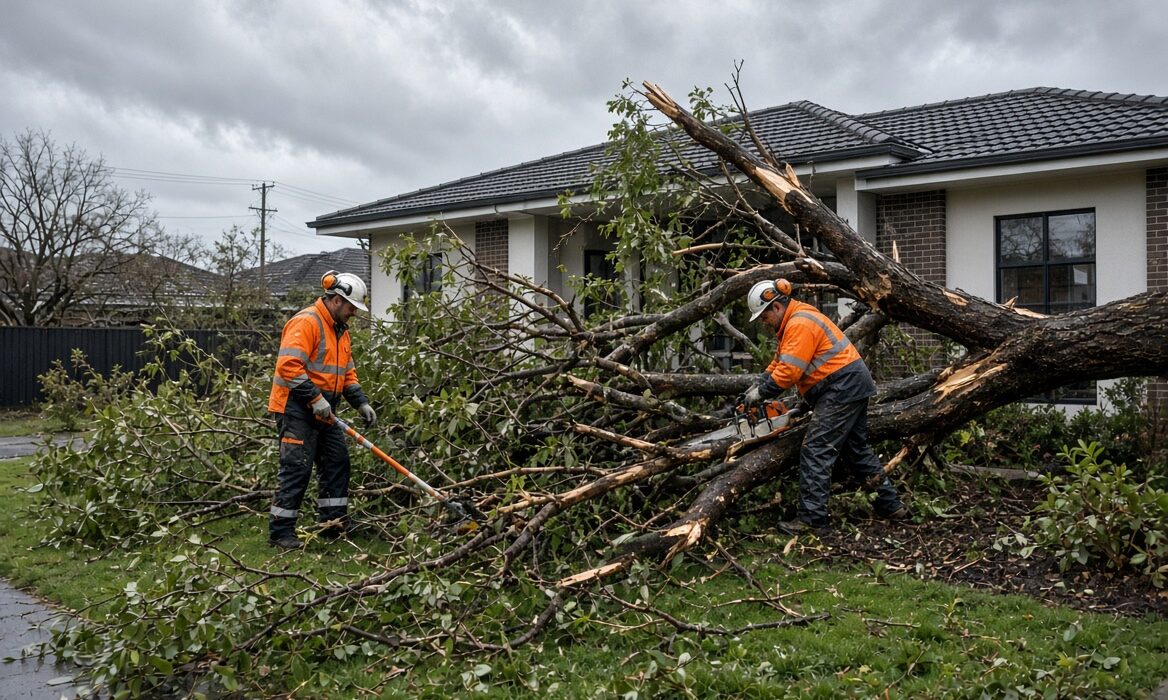
Storm damage tree removal is not always as simple as cutting up a fallen trunk. A damaged tree may contain unstable branches, hidden cracks, suspended limbs or tensioned wood that can move unexpectedly. Even a tree that appears to be standing securely may have suffered structural damage during the storm.
For Melbourne homeowners, changing weather conditions and strong wind events make tree safety an important part of property maintenance.
This guide explains how to assess storm damage from a safe distance, recognise dangerous trees, understand when emergency removal is necessary and prepare your property for professional assistance.
If you need help with a fallen or damaged tree, Aussie Tradies Group provides tree and stump removal services across suitable Melbourne locations. Contact our team to discuss your situation and confirm service availability.
What Is Storm Damage Tree Removal?
Storm-related damage can include:
- Trees that have fallen onto lawns, fences or driveways.
- Large branches hanging above roofs or outdoor areas.
- Trees leaning after strong winds.
- Split trunks and damaged structural branches.
- Exposed or lifted root systems.
- Trees blocking access to a property.
- Broken limbs caught in neighbouring trees.
- Trees weakened by heavy rainfall and saturated soil.
Not every damaged tree needs to be removed completely.
Some trees may be suitable for professional pruning or other corrective work, while severely damaged or unstable trees may require removal.
A qualified arborist can assess whether a tree can be retained safely or whether removal is the more appropriate option.
What Should You Do Immediately After a Storm?
The first priority after a storm is personal safety.
Before inspecting your garden or attempting to clear debris, make sure the immediate area is safe.
1. Stay Away from Fallen Trees and Broken Branches
A fallen tree can be unstable even when it is resting on the ground.
Branches may be under tension, the trunk may be supported by other objects, and damaged sections can move without warning.
Avoid walking underneath hanging limbs or climbing onto fallen trees.
Keep children and pets away from damaged areas until the hazards have been assessed.
2. Check for Power Lines
Fallen trees can bring down electrical wires or become entangled with overhead power lines.
Never touch a tree, branch, fence or other object that may be in contact with electrical infrastructure.
Do not assume a fallen power line is safe because it is not sparking.
If electrical wires are involved, stay well clear and contact the electricity distributor or emergency services as appropriate.
3. Inspect the Property from a Safe Distance
Look for obvious signs of damage without approaching unstable trees.
You may notice:
- Large branches resting on a roof.
- Trees leaning toward a building.
- Cracks in major branches.
- Exposed roots.
- Fallen limbs blocking access.
- Damaged fences or outdoor structures.
Do not enter an area where branches could fall or the ground appears unstable.
4. Keep People Away from Hazardous Areas
If a tree has damaged a driveway, garden path or outdoor entertaining space, prevent people from entering the affected area.
Avoid parking vehicles beneath damaged trees.
If access to your property is unsafe, wait for professional advice before attempting to move debris.
5. Contact the Appropriate Service
Different situations require different responses.
If there is an immediate threat to life, a fire, or another life-threatening emergency, call 000.
If a tree has damaged electrical infrastructure, contact the relevant electricity distributor and follow its safety instructions.
For storm-related assistance in Victoria, the Victoria State Emergency Service can be contacted on 132 500 for eligible non-life-threatening storm emergencies.
For tree removal work that is not an immediate emergency, contact a suitable tree removal professional.
How to Identify a Dangerous Tree After a Storm
Storm damage is not always obvious.
Some trees remain standing despite having suffered serious structural damage.
Knowing the warning signs can help you recognise when professional assessment is needed.
A Tree Suddenly Starts Leaning
A tree that develops a new lean after strong winds may have experienced root movement or structural failure.
This is particularly concerning if the lean is accompanied by lifted soil or exposed roots.
Do not attempt to push the tree upright or secure it with ropes.
Keep clear and arrange a professional assessment.
Large Branches Are Hanging from the Canopy
Broken branches may remain caught in the canopy after a storm.
These suspended limbs can fall later, even when the weather has improved.
Avoid walking or parking underneath the affected area.
The Trunk Has Split
A split trunk can significantly affect a tree’s structural stability.
The risk depends on the location and extent of the damage, tree species and remaining supporting structure.
A professional assessment is important before deciding whether pruning or removal is required.
Roots Are Exposed or the Ground Has Lifted
Strong winds can cause root plates to move, particularly where soil is saturated.
Warning signs include fresh soil cracks, lifted ground and visible root movement.
These conditions may indicate that the tree has become unstable.
Major Branches Have Broken Away
Losing a large structural branch can leave significant wounds and change the balance of a tree.
The remaining canopy and branch attachments should be assessed before any further work.
The Tree Has Fallen Against Another Structure
A tree resting against a building, fence or another tree may be under significant tension.
Removing supporting branches without proper planning can cause sudden movement.
When Is Emergency Storm Damage Tree Removal Necessary?
Emergency tree removal may be necessary when storm damage creates an immediate or serious safety risk.
The urgency depends on the location of the tree, its condition and the potential consequences of further movement.
A Tree Has Fallen onto a House
A fallen tree resting on a roof or building can create structural and safety concerns.
Do not attempt to cut the tree away yourself.
If the building may be unsafe, leave the affected area and seek appropriate emergency assistance.
The tree and damaged structure may need to be assessed before removal begins.
A Tree Is Blocking Essential Access
A fallen tree may prevent residents from entering or leaving a property.
If the obstruction affects emergency access or creates an immediate safety concern, professional assistance may be required urgently.
A Tree Is Leaning Toward a Building
A newly leaning tree can present a serious hazard when it is close to a house, garage or occupied outdoor area.
A qualified arborist should assess its stability.
A Large Branch Is Suspended Above an Occupied Area
Broken branches hanging above entrances, paths or outdoor seating areas may require urgent attention.
Keep the area closed until the hazard has been addressed.
Storm Damage Has Affected Several Trees
Severe weather can damage multiple trees on the same property.
A professional assessment can help identify which hazards need immediate attention and which can be managed later.
Why Storm-Damaged Trees Are Dangerous to Remove Yourself
Homeowners may be tempted to cut fallen branches or trunks to clear their property quickly.
However, storm-damaged wood can behave unpredictably.
Hidden Tension in Fallen Wood
A fallen trunk may be compressed or stretched by its own weight.
Cutting through the wrong section can cause sudden movement, rolling or splitting.
Unstable Root Systems
A partially uprooted tree may still be connected to the ground.
The root plate can shift unexpectedly as weight is removed.
Suspended Branches
Broken branches caught in a canopy may fall when nearby material is disturbed.
Chainsaw Hazards
Chainsaws create serious risks, particularly when used on unstable timber or above shoulder height.
Storm cleanup should not be treated as ordinary garden pruning.
Working Near Buildings and Power Lines
Trees resting against structures or electrical infrastructure require additional precautions and coordination.
For these reasons, dangerous storm damage tree removal should be carried out by appropriately qualified and equipped professionals.
Can a Storm-Damaged Tree Be Saved?
Not every storm-damaged tree needs to be removed.
Some trees can recover from moderate damage if their main structure and root system remain sound.
A qualified arborist can assess whether the tree is suitable for retention.
Minor Branch Damage
Small broken branches may be addressed through appropriate pruning.
The tree’s overall condition should still be considered.
Limited Canopy Damage
Some trees can recover from the loss of a limited portion of their canopy.
Recovery depends on the species, health and extent of damage.
Significant Trunk Splitting
Major trunk damage may affect the tree’s long-term stability.
Professional assessment is needed to determine whether retention is realistic.
Root Plate Movement
A tree with significant root movement may present a serious stability concern.
Do not attempt to straighten or brace it without professional advice.
Extensive Structural Damage
Where major supporting branches or the trunk have failed, removal may be the safest practical option.
The decision should be based on an assessment rather than appearance alone.
The Professional Storm Damage Tree Removal Process
The removal method depends on the tree’s size, location, condition and surrounding hazards.
A professional team may use a staged approach to reduce risk.
Step 1: Initial Safety Assessment
The affected area is assessed for hazards such as unstable branches, damaged structures, electrical infrastructure and restricted access.
If electrical or structural hazards are present, other specialists or emergency services may need to be involved.
Step 2: Evaluate the Tree’s Condition
The tree’s remaining structure, trunk damage, root stability and surrounding conditions are considered.
This helps determine whether removal is required and how the work should proceed.
Step 3: Plan the Removal
The removal method depends on available space, tree size and the risk of uncontrolled movement.
Some trees can be removed in sections, while others require specialist access or lifting equipment.
Step 4: Remove Hazardous Sections
The work is carried out using suitable techniques and equipment.
Branches and trunk sections are managed to reduce risks to people and nearby structures.
Step 5: Process the Fallen Material
Once hazardous sections have been addressed, suitable debris can be cut and managed according to the agreed scope of work.
Step 6: Discuss Remaining Stump Work
After tree removal, the stump may remain in the ground.
Depending on the property owner’s plans, stump removal or grinding may be considered separately.
Aussie Tradies Group provides tree and stump removal services for suitable Melbourne properties.
What Happens If a Tree Falls onto Your Roof?
A fallen tree on a roof can create hazards that are not immediately visible.
Damage may affect roof coverings, structural supports, gutters and nearby electrical systems.
Do Not Enter an Unsafe Area
If the roof or building structure appears damaged, avoid entering the affected space.
Follow emergency services’ instructions where applicable.
Avoid Removing the Tree Yourself
A tree resting on a roof may be supporting part of its own weight against the structure.
Cutting it without a controlled plan can cause additional movement.
Document Damage When Safe
Photographs may help with insurance enquiries and repair planning.
Only take photographs from a safe location.
Contact Your Insurer
If the property is insured, notify your insurer and ask about the claims process.
They may provide guidance about emergency make-safe work, documentation and approved contractors.
Arrange Appropriate Assessments
Tree removal and building repairs are different tasks.
Depending on the damage, the property may require assessment by a tree professional, builder, structural engineer or other specialist.
Who Is Responsible for a Fallen Tree in Victoria?
Responsibility for a fallen tree can depend on where it stood, who controls the land, the circumstances of the incident and any relevant legal obligations.
The fact that a tree originated on a neighbouring property does not automatically determine liability.
Trees on Your Property
Property owners generally need to take reasonable steps to manage known hazards on land under their control.
However, legal responsibility for a particular incident depends on the facts.
Trees from a Neighbouring Property
If a neighbouring tree falls onto your land, communicate with the neighbour and document the damage when safe.
Responsibility for removal costs or damage may depend on the circumstances, insurance arrangements and applicable law.
Trees on Council Land
If the damaged tree appears to be on council-managed land, report the issue to the relevant local council.
For trees affecting public roads or infrastructure, follow the responsible authority’s reporting procedures.
Trees Near Power Lines
Trees affecting electrical infrastructure require coordination with the relevant electricity distributor.
Never attempt to remove branches near fallen or damaged power lines yourself.
For disputes or uncertainty about responsibility, seek advice from your insurer or a qualified legal professional.
Do You Need Council Permission for Storm Damage Tree Removal?
Tree removal rules vary across Victoria.
Some trees may be protected by local planning controls, vegetation overlays or other requirements.
Emergency circumstances can affect how these rules apply, but a storm does not automatically mean every tree can be removed without approval.
Check Local Council Requirements
Before removing a damaged tree, determine whether planning controls or local tree protection rules apply.
Understand Emergency Exemptions
Some planning provisions allow work involving trees that present an immediate risk, subject to specific conditions.
The applicable rules should be checked rather than assumed.
Keep Evidence of Damage
Photographs, assessment reports and relevant correspondence may help document the condition of the tree.
Seek Professional Advice
A qualified arborist can provide information about the tree’s condition.
The local council or relevant planning authority can clarify approval requirements.
Storm Damage Tree Removal and Home Insurance
Home insurance may cover some costs associated with storm damage, but coverage varies between policies.
The insurer may distinguish between removing a tree from a damaged insured structure and clearing a fallen tree from a garden.
Review Your Policy
Check the wording relating to storm damage, debris removal, emergency repairs and exclusions.
Notify Your Insurer Promptly
Report the damage and ask what documentation is required.
Photograph the Damage Safely
Photographs can help record the condition of the property before repairs begin.
Do not enter hazardous areas to obtain images.
Keep Invoices and Records
Retain relevant quotations, invoices, reports and communication with service providers.
Confirm Approval Requirements
Some insurers may require authorisation before particular work is completed, except where immediate safety measures are necessary.
Always follow the terms of your policy and the insurer’s guidance.
How Much Does Storm Damage Tree Removal Cost in Melbourne?
The cost of storm damage tree removal varies depending on the size of the tree, the nature of the damage and the difficulty of the work.
Emergency conditions may increase the complexity of removal.
Tree Size
Larger trees generally involve more material, equipment and planning.
Location
A tree in an open garden may be easier to access than one resting against a building or located in a narrow space.
Structural Instability
Split trunks, suspended limbs and uprooted root systems can require more complex removal methods.
Access Restrictions
Narrow driveways, fences, surrounding structures and limited equipment access may affect the work.
Equipment Requirements
Some situations require specialist machinery or additional safety measures.
Debris Removal
The amount of material to be removed and the agreed disposal arrangements can influence the quotation.
Stump Removal
Stump removal or grinding may be quoted separately from the initial tree removal.
For an accurate estimate, provide photographs from a safe distance and details about the tree’s location and condition.
What Should You Do with a Tree Stump After Storm Removal?
Once a fallen tree has been removed, the stump may remain.
Whether it should be removed depends on the property owner’s plans and the condition of the remaining root system.
Consider Future Landscaping
A stump may interfere with planned garden improvements, new planting or other outdoor projects.
Assess Access and Position
Stumps near fences, structures or underground services may require additional planning.
Understand Stump Grinding
Stump grinding reduces the stump using specialist equipment.
The depth and scope of grinding should be agreed before work begins.
Consider Complete Stump Removal
Complete stump removal may involve more extensive excavation and root removal.
The appropriate method depends on the site and intended future use.
Learn more about available tree and stump removal services.
How to Prepare Your Property for Storm Damage Tree Removal
Once immediate hazards have been identified and professional assistance has been arranged, a few practical steps may help the process.
Keep the Area Clear
Prevent children, pets and visitors from entering the affected area.
Avoid Moving Large Debris
Do not attempt to move unstable branches, suspended timber or sections resting against structures.
Provide Clear Information
Tell the service provider about the tree’s location, visible damage, access restrictions and nearby buildings.
Mention Electrical Hazards
Inform the appropriate electricity distributor if power lines are involved.
Do not allow work to proceed near electrical hazards until the relevant authority has addressed them.
Identify Known Underground Services
If stump work or excavation is planned, underground service locations may need to be checked.
Arrange Safe Access
If appropriate, move vehicles and removable obstacles away from the work area without entering hazardous zones.
How to Reduce Tree Damage Before the Next Storm
Not every storm-related failure can be prevented.
However, regular tree inspections and appropriate maintenance can help identify some problems before severe weather arrives.
Inspect Trees for Visible Damage
Look for large dead branches, cracks, fungal growth or unusual changes in the trunk and root area.
These signs do not always mean a tree is dangerous, but they may justify professional assessment.
Arrange Professional Pruning When Appropriate
Suitable pruning can help address certain structural problems.
Poor pruning practices can damage trees and create new risks, so major work should be performed by qualified professionals.
Monitor Trees Near Buildings
Trees close to roofs, fences, driveways and frequently used outdoor areas deserve particular attention.
Check Drainage and Soil Conditions
Persistent waterlogging and changes around the root zone may affect tree health or stability.
Avoid Unnecessary Root Damage
Excavation and construction near tree roots can affect stability.
Professional advice may be needed before major work near established trees.
Arrange an Arborist Assessment
A qualified arborist can assess tree health, structure and risk factors.
An assessment does not guarantee a tree will withstand every storm, but it can support informed maintenance decisions.
Common Mistakes to Avoid After a Storm
Rushing to clear storm damage can create additional risks.
Avoid these common mistakes.
Cutting a Fallen Tree Without Assessing Tension
A fallen trunk may move suddenly when cut.
Leave complex removal to appropriately equipped professionals.
Standing Under Hanging Branches
Suspended limbs can fall unexpectedly.
Keep clear of the affected area.
Ignoring a Newly Leaning Tree
A new lean may indicate root movement or structural damage.
Arrange an assessment rather than assuming the tree will recover.
Touching Trees Near Power Lines
A tree in contact with electrical infrastructure may be energised.
Stay away and contact the relevant electricity distributor.
Removing Protected Trees Without Checking Requirements
Storm damage does not automatically remove all legal obligations.
Check the applicable rules before undertaking non-immediate removal work.
Assuming Every Damaged Tree Must Be Removed
Some trees can be retained after professional assessment.
The decision should reflect the extent of damage and the risks involved.
Storm Damage Tree Removal for Melbourne Properties
Melbourne experiences changing weather conditions, including periods of strong winds and heavy rainfall.
Trees across residential and commercial properties may be affected differently depending on species, condition, soil moisture and exposure.
Storm damage tree removal may be needed for:
- Residential gardens and front yards.
- Apartment and townhouse properties.
- Commercial premises.
- Driveways and access areas.
- Outdoor entertaining spaces.
- Investment properties.
- Properties undergoing landscaping improvements.
Aussie Tradies Group provides suitable tree and stump removal services for Melbourne property owners.
You can explore our broader property services or learn more about Aussie Tradies Group.
Frequently Asked Questions About Storm Damage Tree Removal
1. What should I do first if a tree falls during a storm?
Stay away from the tree and any hanging branches. Check for electrical hazards from a safe distance. Call 000 if there is an immediate threat to life, or contact the appropriate emergency service or electricity distributor depending on the situation.
2. Is a leaning tree dangerous after a storm?
A tree that suddenly begins leaning may have experienced root movement or structural damage. Keep clear and arrange a qualified arborist assessment.
3. Can I remove a fallen tree myself?
Small, clearly stable debris may be manageable in some circumstances, but storm-damaged trees can contain hidden tension and unstable sections. Large, suspended or structurally damaged material should be left to professionals.
4. Does every storm-damaged tree need removal?
No. Some trees can recover from limited damage. A qualified arborist can assess whether pruning, monitoring or removal is appropriate.
5. How quickly should a damaged tree be removed?
The urgency depends on the risk. Trees threatening people, buildings or essential access require prompt attention. Less urgent work can be planned after professional assessment.
6. Will home insurance pay for fallen tree removal?
Some policies cover certain storm-related removal costs, but coverage varies. Review your policy and ask your insurer about the circumstances of the damage.
7. Do I need council permission to remove a storm-damaged tree?
Possibly. Local planning controls and vegetation protections may apply. Emergency exemptions depend on the circumstances and relevant rules.
8. What if a tree falls onto a neighbour’s property?
Keep the area safe and communicate with the neighbour. Responsibility for removal or damage depends on the circumstances and applicable law. Your insurer may be able to provide guidance.
9. Can a tree remain standing after serious storm damage?
Yes. A tree may remain upright despite cracks, broken structural branches or root damage. Professional assessment can help identify hidden risks.
10. How much does emergency tree removal cost?
Costs depend on tree size, location, structural instability, access and equipment requirements. A project-specific quotation is needed for an accurate estimate.
11. Should the stump be removed after a fallen tree is cleared?
Not always. Stump removal depends on the property’s future use, access and site conditions. Grinding or removal can be discussed separately.
12. How can I reduce the risk of future storm damage?
Regular inspections, appropriate pruning and professional assessment of concerning trees can help identify some risks. No maintenance programme can eliminate all storm-related hazards.