Waterproofing Fails
What Happens If Bathroom Waterproofing Fails? | ATG
This guide explains what happens when bathroom waterproofing fails, how the damage develops, what it can cost you and what you can do about it. It is written by the team at Aussie Tradies Group, a local business based in Campbellfield that supplies tiling and waterproofing across Melbourne, backed by more than 25 years of practical experience. We repair failed bathrooms every week, so the advice here comes from real work on real sites.
When bathroom waterproofing fails, water escapes through the tiles and grout and soaks into the walls, floor and structure. Over time this causes mould, rotting timber, damaged plasterboard, stained ceilings, bad smells, loose tiles and costly structural repairs. The earlier the problem is found, the smaller and cheaper the repair is likely to be.
Most people never think about waterproofing until something goes wrong. It sits quietly under the tiles, out of sight, doing its job every day. But when waterproofing failure happens, the consequences can be far more serious than a few loose tiles or a stained ceiling. Water that escapes the bathroom does not simply disappear. It travels into walls, floors and framing, where it can cause damage that spreads for months or even years before anyone notices.
What Is Bathroom Waterproofing and Why Does It Matter?
Bathroom waterproofing is a continuous sealed membrane applied to the floors and walls of wet areas before tiling begins. Its job is to keep water inside the bathroom and away from the building structure. Tiles and grout are not waterproof on their own. Grout is porous and can crack as a house moves, so the real barrier sits underneath.
When that barrier works, you never think about it. When it fails, water gets into places it should never reach.
What Does Waterproofing Failure Mean?
Waterproofing failure means the membrane is no longer stopping water from passing through. It may have cracked, split at a corner, peeled away from the surface, been applied too thinly or been damaged by building movement. Sometimes it was never installed properly in the first place, or was missing altogether in an older bathroom.
Why Does Bathroom Waterproofing Fail?
Understanding the causes helps you avoid the problem in the first place. The table below summarises the most common reasons.
| Cause | What happens |
|---|---|
| Poor surface preparation | The membrane does not bond properly |
| Thin or missing coverage | Water passes through weak spots |
| Weak corners and joins | Cracks form where surfaces meet |
| Not allowed to cure fully | Moisture is trapped and the membrane weakens |
| Building movement | The membrane splits as the house shifts |
| Damaged tiles, grout or silicone | Water reaches the membrane through gaps |
| Age | Older bathrooms may pre date modern standards |
Poor Workmanship
Many failures trace back to the original installation. Rushed preparation, thin coverage, missed corners or skipped curing time all create weak points that fail sooner than they should.
Building Movement
Melbourne homes expand, contract and settle with the weather and the seasons. Corners and joins feel this movement first. A membrane that is not reinforced in these areas can split over time.
Damaged Tiles and Grout
Cracked grout, loose tiles and worn silicone let water reach the membrane faster than it was designed to handle. Over time, this extra exposure can wear it down.
What Happens Right After Waterproofing Fails?
In the early stages, you may notice very little. Water escapes slowly, soaking into the materials behind the tiles. This is why waterproofing failure is so dangerous. The damage begins long before it becomes visible.
The First Weeks and Months
Moisture collects behind the tiles and inside the wall sheeting or beneath the floor. Adhesive begins to weaken, and the surface starts to lose its strength. You might notice grout that stays dark, a faint damp smell or tiles that feel slightly different underfoot.
The First Year or Two
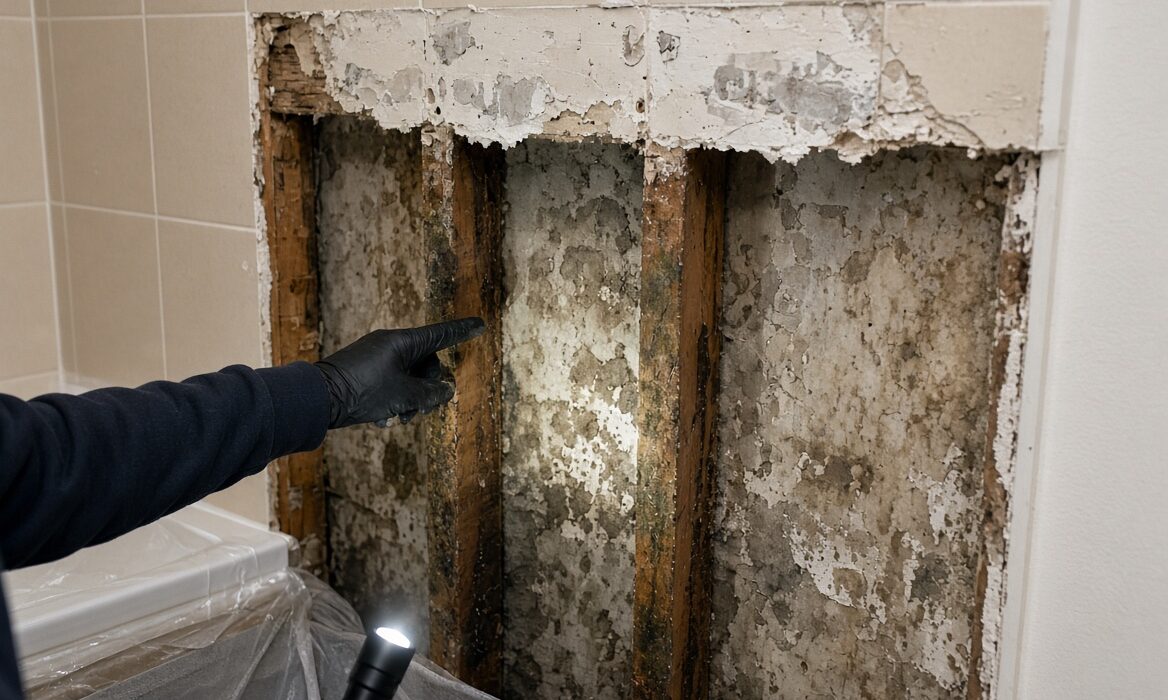
As the moisture continues, mould begins to grow in hidden spaces. Timber framing absorbs water and starts to swell. Plasterboard softens. Paint may bubble or peel. By this stage, the problem is usually visible, but the damage behind the surface is already well advanced.
The Damage That Waterproofing Failure Can Cause
Mould and Mildew
Hidden moisture creates the perfect environment for mould. It grows behind tiles, inside walls and under floors, often long before you see any sign. A persistent musty smell is frequently the first clue.
Why Mould Matters
Mould damages materials and can affect indoor air quality. If you or your family have breathing problems or allergies, persistent mould is worth taking seriously. A doctor can advise on health concerns, and a professional can find and fix the moisture source.
Rotting Timber and Structural Damage
Timber framing, floor joists and subfloors absorb water over time. Wet timber softens, swells and eventually rots. In serious cases, structural parts of the house can lose their strength, and repairs become major building work.
Subfloor and Slab Concerns
In homes with timber floors, water can reach the subfloor, causing rot and attracting pests. In homes with concrete slabs, moisture can travel through the slab and affect surrounding materials.
Damaged Walls and Ceilings
Plasterboard soaks up water like a sponge. Walls become soft, crumbly and stained. Paint bubbles and peels. If your bathroom is upstairs, water can pass through the floor and appear as brown or yellow stains on the ceiling below. Wet ceilings can also sag, so a stained area deserves careful attention.
Loose and Cracked Tiles
Water weakens the adhesive holding tiles in place. Tiles begin to sound hollow, crack or lift. Floors can feel uneven, and loose tiles become a safety risk.
Swollen Skirting Boards and Sticking Doors
Timber near the bathroom swells as it absorbs moisture. Skirting boards warp, doors begin to stick and floorboards can feel soft or uneven.
Bad Smells
A damp, earthy smell that lingers after cleaning is one of the clearest warning signs. The smell often spreads into neighbouring rooms, hallways and cupboards.
Damage to Neighbouring Rooms and Homes
Water does not stop at the bathroom door. It can travel into bedrooms, hallways and rooms below. In townhouses and apartments, it can also affect neighbours, which may lead to disputes and extra costs.
What Can Waterproofing Failure Cost You?
The cost of waterproofing failure grows the longer it goes unnoticed. A small repair caught early may involve a few tiles and a new membrane. A failure left for years can involve new framing, new wall sheeting, mould treatment, painting, flooring and a complete bathroom rebuild.
Why Early Action Saves Money
Water damage spreads quietly. The sooner an expert inspects it, the smaller the repair is likely to be. Waiting often turns a simple fix into a full renovation.
Insurance and Selling Your Home
Insurance policies differ, and some may not cover damage that develops slowly over time. Check your policy and speak to your insurer if you are unsure. Hidden water damage can also affect the sale of a home, because building inspectors often look for signs of moisture and past failures.
Warning Signs of Waterproofing Failure
Catching a problem early is the best way to limit the damage. Watch for these signs.
- Grout that stays dark, soft or crumbly
- Tiles that sound hollow when gently tapped
- A musty smell in or near the bathroom
- Paint bubbling or peeling on walls near the shower
- Swollen skirting boards or doors that stick
- Damp patches or stains on ceilings below
- Mould that keeps returning after cleaning
- Water that pools or drains slowly
You can learn more about bathroom waterproofing in Melbourne and how to recognise problems early.
What to Do If You Think Your Waterproofing Has Failed
If you recognise any of the signs above, take calm and sensible steps.
- Stop using the affected area if there is any sign of active leaking
- Take clear photos and note when you first noticed the problem
- Improve ventilation by running the exhaust fan and opening a window
- Avoid painting, sealing or regrouting over the problem
- Contact a professional for an inspection as soon as you can
Why You Should Not Simply Cover It Up
Painting over stains or regrouting may make the bathroom look better for a while, but the moisture remains and the damage continues. The cause must be fixed first.
How Is Failed Waterproofing Repaired?
In most cases, a failed membrane cannot be repaired from the surface. The tiles usually need to be removed so the surface can be inspected, repaired and sealed again. A good repair follows a clear process.
Step One: Inspection
The team inspects the area, checks surfaces, drainage and access, and works out where the water is coming from and how far the damage has spread.
Step Two: Removing Tiles and Damaged Materials
Old tiles, adhesive and any damaged sheeting are removed. If timber has been affected, it is assessed and repaired or replaced as needed.
Step Three: Preparing the Surface
Walls and floors are repaired, levelled and cleaned. Falls to the drain are checked and corrected. Good preparation is essential for a lasting result.
Step Four: Applying New Waterproofing
Wet areas are sealed with a high grade waterproofing membrane, with extra reinforcement in corners, joins and around drains. The membrane is then given full curing time before tiling begins.
Step Five: Tiling and Finishing
New tiles are laid with straight lines and neat cuts. Grout and silicone are applied, and the area is cleaned. You can read more on our tiling and waterproofing page.
Can Small Waterproofing Problems Be Fixed Without a Full Renovation?
Sometimes a minor problem can be fixed with targeted repairs, such as replacing damaged silicone, regrouting or replacing a few tiles. If the membrane itself has failed, the affected area usually needs to be stripped and re waterproofed.
Why a Proper Fix Matters
A quick surface repair over a failed membrane does not stop water from reaching the structure. It may hide the symptoms for a few months, but the damage continues.
How to Prevent Waterproofing Failure
Good decisions at the start and good habits afterwards protect your bathroom for years.
Choose the Right Team
Ask who will complete the waterproofing, whether it is included in the quote and what warranty is offered. Hiring a team that handles both waterproofing and tiling means the two stages are planned together, and one business stays responsible for the result.
Respect Curing Time
Every waterproofing product has a required curing time. Tiling too soon traps moisture and weakens the membrane. A good team confirms the curing time and never skips it.
Maintain Your Bathroom
- Run the exhaust fan during and after every shower
- Wipe excess water from floors and screens regularly
- Check grout and silicone once a year and repair small cracks quickly
- Replace cracked or loose tiles promptly
- Keep drains clear so water flows away freely
Common Myths About Waterproofing Failure
Myth One: Tiles Make a Bathroom Waterproof
Tiles and grout are not waterproof on their own. The membrane underneath does the real work.
Myth Two: If There Is No Visible Leak, Everything Is Fine
Water damage often hides for a long time. Smells, stains and loose tiles can appear long after the failure began.
Myth Three: New Silicone Fixes a Leak
Silicone helps at the surface, but it cannot repair a failed membrane beneath the tiles.
Myth Four: Waterproofing Lasts Forever
A properly applied system can last many years, but building movement, damaged tiles and poor drainage can shorten its life.
Areas We Serve Across Melbourne
Aussie Tradies Group is based in Campbellfield and serves homeowners across northern, eastern and south eastern Melbourne. Our team regularly works in suburbs including Toorak, Doncaster, Box Hill, Hampton, Bentleigh, St Kilda and Hawthorn. If your suburb is not listed, please contact our team, because we can often help with projects in nearby areas. We also provide tree and stump removal for homeowners who need outdoor areas cleared before tiling.
Frequently Asked Questions About Waterproofing Failure
What happens if bathroom waterproofing fails?
Water escapes through the tiles and grout and soaks into the walls, floor and structure. Over time this causes mould, rotting timber, damaged plasterboard, stained ceilings, loose tiles and costly repairs.
How long does it take for waterproofing failure to cause damage?
It varies. Some problems appear within months, while others stay hidden for years. Because the damage develops out of sight, early inspection is the safest approach.
What are the signs of failed waterproofing?
Common signs include dark or crumbling grout, hollow sounding tiles, a musty smell, bubbling paint, swollen timber, ceiling stains below and mould that keeps returning.
Can failed waterproofing be repaired without removing tiles?
In most cases, no. A failed membrane lies beneath the tiles, so the tiles usually need to be removed to repair and re seal the surface properly.
How much does it cost to fix failed waterproofing?
The cost depends on the size of the area, the extent of the damage and the materials needed. Early repairs cost far less than repairs after long term water damage. The best way to get an accurate figure is a professional inspection and a detailed written quote.
Is waterproofing failure covered by insurance?
It depends on your policy and the cause. Some policies may not cover damage that develops slowly over time. Check your policy and speak to your insurer.
How can I prevent waterproofing failure?
Choose a professional team, make sure waterproofing is applied correctly and cured fully before tiling, maintain grout and silicone, keep the bathroom well ventilated and act quickly at the first sign of trouble.
Ready to Protect Your Bathroom From Waterproofing Failure?
Waterproofing failure is easier and cheaper to deal with when it is caught early. If you have noticed any warning signs, or if you are planning a renovation and want the hidden work done properly, a quick conversation can save you from costly repairs later.
Aussie Tradies Group provides tiling and waterproofing in Melbourne with clear quotes, tidy work sites and one team that stays responsible for the finished result. Call us on 0421 595 305, email info@atgltd.com.au or visit our contact page to request a free quote. You can also browse our full range of services or read more about our team before you decide.