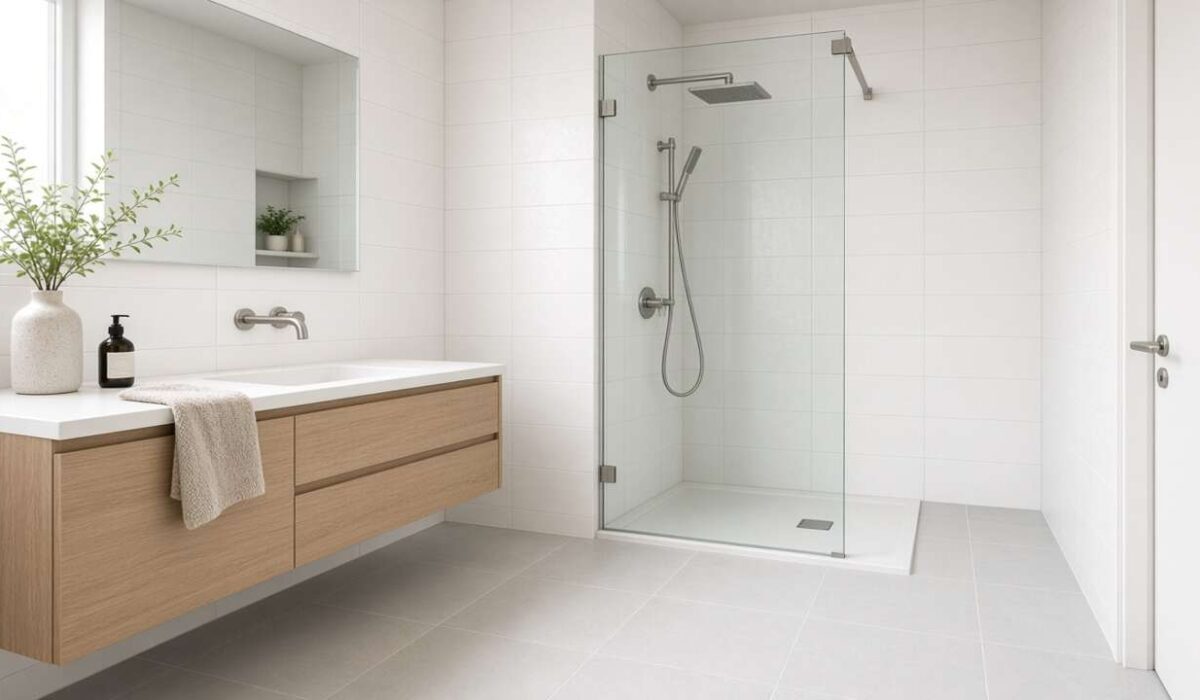
How to Choose the Right Tile Size for Small Rooms
Choosing the right tile size for a small room can make a noticeable difference to how the space feels and functions. Many homeowners assume that small rooms need small tiles, but this is often not the case. The wrong size can make a room look busy, cramped or cluttered, while the right choice can create a cleaner, more open and more inviting atmosphere.
This guide explains how tile size affects small spaces and helps you select the most suitable options for bathrooms, kitchens, powder rooms, laundries and other compact areas.
Why Tile Size Matters in Small Rooms
Tile size influences both the visual appearance and the practical performance of a room. Larger tiles create fewer grout lines. With fewer joints, the eye moves more easily across the surface, which can make the room feel less broken up and more spacious. Smaller tiles create more joints. While this can add texture and interest, it can also make a compact space feel busier and more fragmented.
In most small rooms, reducing the number of visual interruptions generally works in favour of creating a sense of openness. This is especially true on floors and main wall areas. However, tile size is not only about appearance. It also affects installation difficulty, the amount of cutting required, waste levels, cleaning effort and long term maintenance.
Understanding these factors helps you make a decision that balances aesthetics with practicality.
Recommended Tile Sizes for Small Rooms
Large format tiles (300 x 600 mm, 600 x 600 mm and similar)
Large format tiles are often the most effective choice for small bathrooms and kitchens. By covering more surface area with each tile, they reduce the number of grout lines and create a smoother, more continuous look. Rectangular 300 x 600 mm tiles are particularly popular because they can be oriented to visually lengthen or widen a narrow room. Square 600 x 600 mm tiles also work well on floors when the surface is sufficiently flat.
These sizes give a modern, clean appearance and tend to make small spaces feel larger rather than smaller.
Medium tiles (300 x 300 mm or 400 x 400 mm)
Medium sized tiles offer a good balance between visual impact and ease of installation. They create fewer joints than small tiles while remaining easier to handle and cut than very large formats. These sizes suit both floors and walls and work well when you want some pattern or definition without overwhelming a compact room.
Small tiles and mosaics (50 x 50 mm to 100 x 100 mm)
Small tiles and mosaics still have a place in small rooms, but they are best used selectively. On shower floors they provide better slip resistance and allow for more accurate falls to the drain. They also work well as feature strips, niches or borders. Covering entire floors or walls with very small tiles in a compact room can create a dense grid of joints that makes the space feel smaller and busier than necessary.
Practical Tips for Choosing the Right Size
Check the condition of floors and walls
Large format tiles require a very flat surface. Any significant unevenness can lead to lipping (uneven edges between tiles) and make the installation more difficult and time consuming. If the substrate is not sufficiently flat, additional preparation or a different tile size may be needed.
Consider the number of cuts and fixtures
Small rooms often contain many obstacles such as toilets, vanities, doorways, cabinets and pipes. Larger tiles usually require more precise cutting around these features, which can increase material waste. Factor this into your calculations when ordering tiles.
Think about orientation and layout
The way rectangular tiles are laid affects the perception of space. Running the long side across the width of a narrow room can make it feel wider. Running the long side along the length can make it feel longer. A simple change in orientation can improve the sense of proportion without changing the tile size itself.
Match tile size to the scale of the room and fixtures
Very large tiles next to small fittings can sometimes look disproportionate. Aim for a balanced relationship between the tile size and the overall design of the room, including the size of basins, toilets and other elements.
Pay attention to grout colour
Grout lines become more noticeable when there is strong contrast with the tile. Matching or closely coordinating the grout colour with the tile helps reduce the visual impact of joints. This is particularly helpful in small rooms where you want the surface to feel continuous.
Think about cleaning and maintenance
Fewer grout lines generally mean less maintenance. Larger tiles are often easier to clean because there are fewer joints that can collect dirt or mould over time. This practical benefit is worth considering in bathrooms and kitchens.
Special Considerations for Wet Areas
Showers and other wet areas have additional requirements. On shower floors, smaller tiles or mosaics are frequently preferred because the higher number of joints improves grip and makes it easier to create the necessary falls towards the drain. Larger tiles can still be used successfully on shower walls provided the surface is flat and a proper waterproofing system is in place.
In laundries and other wet zones, slip resistance and ease of cleaning should also influence the choice of size and finish.
Common Mistakes to Avoid
- Assuming that small rooms always need small tiles
- Choosing very large tiles without checking surface flatness
- Ignoring the amount of cutting required around fixtures
- Using highly contrasting grout in a compact space
- Selecting a size based only on appearance without considering practical installation factors
Avoiding these common issues helps ensure a better looking and longer lasting result.
Final Thoughts
For most small rooms, medium to large format tiles (particularly 300 x 600 mm or 600 x 600 mm) tend to create a cleaner and more spacious feel. Smaller tiles still have valuable uses, especially on shower floors and as feature details, but they should be applied thoughtfully rather than across entire surfaces.
The best choice depends on the exact size and shape of your room, the condition of the walls and floors, the number of fixtures, and the overall style you want to achieve. Taking the time to consider these factors before purchasing tiles can save time, reduce waste and produce a more successful outcome.
If you need help choosing the right tile size or would like professional advice and installation for your small bathroom, kitchen or other compact space, the team at Aussie Tradies Group is ready to assist. Visit https://atgltd.com.au/ to get in touch and discuss your project.