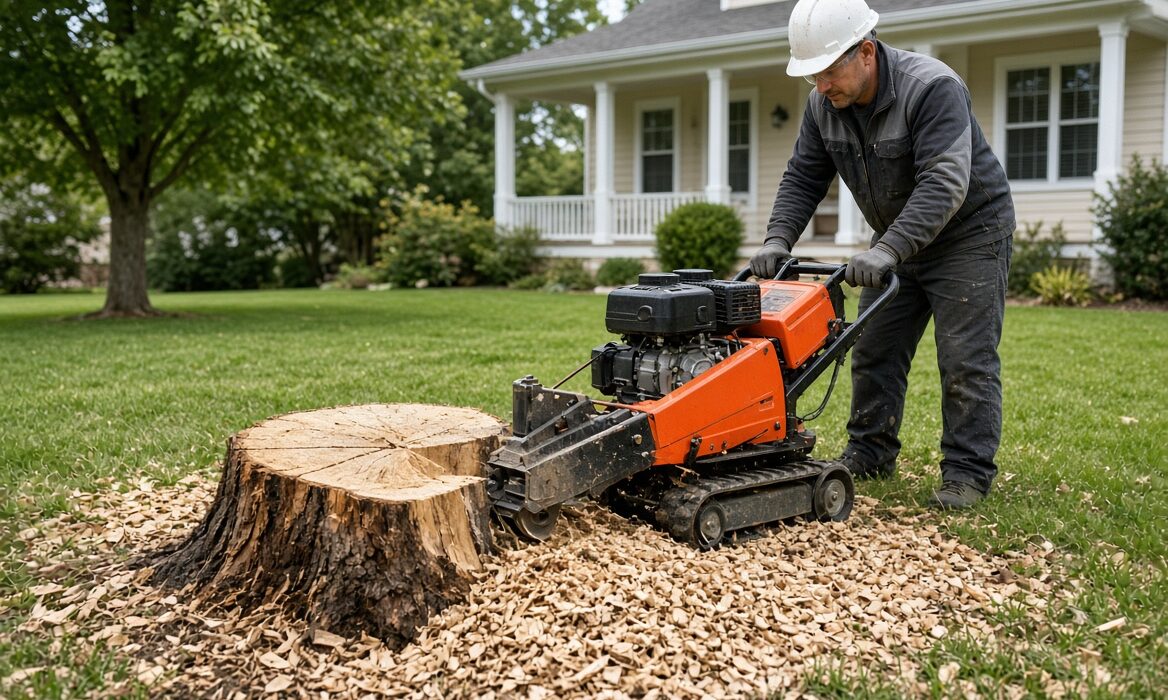
How Long Does Tree Stump Grinding Take?
Tree stump grinding is one of the most effective ways to remove an unwanted tree stump without excavating the entire root system. However, one of the most common questions homeowners ask before booking the service is how long the process will take. The answer depends on several factors, including the stump’s size, wood hardness, root structure, site accessibility, and the depth of grinding required. In many cases, a small stump can be ground down in around 15 to 30 minutes, while larger or more complicated stumps may take an hour or several hours to complete.
Understanding the factors that affect stump grinding time helps you plan your garden work, compare service quotes, and decide when to arrange professional stump removal. Whether a tree has recently been removed or an old stump has been taking up space for years, knowing what to expect can make the process easier to manage.
How Long Does Stump Grinding Usually Take?
The time required for stump grinding varies considerably depending on the condition and dimensions of the stump. Smaller stumps are generally quicker to process, while large, mature trees can require more time and multiple grinding passes.
The following estimates provide a general guide. Actual times can vary based on equipment, site conditions, operator experience, and the depth of grinding requested.
| Stump size | Approximate grinding time |
|---|---|
| Small stump, under 30 cm wide | 15–30 minutes |
| Medium stump, 30–60 cm wide | 30–60 minutes |
| Large stump, 60–100 cm wide | 1–2 hours |
| Very large stump, over 100 cm wide | 2 hours or longer |
These estimates refer to the grinding process itself rather than the entire service appointment. Travel, equipment setup, site preparation, root treatment, and cleanup can add to the total time.
A professional may be able to estimate the duration more accurately after reviewing the stump’s size, location, and surrounding conditions.
1. Stump Size and Diameter
The diameter of a tree stump is one of the biggest factors affecting grinding time. A small stump contains less wood to process, while a wide stump requires the machine to remove a larger volume of material.
For example, a narrow stump from a young tree may be ground down relatively quickly. A broad stump from a mature tree can require repeated passes across the surface and additional grinding around the edges.
Stump size also affects how much debris is produced. Larger stumps typically generate more wood chips, which may require extra time to collect, move, or spread across the site.
When requesting a quote, measure the stump across its widest point and provide photographs if possible. This information helps the service provider estimate the amount of work involved.
2. Type of Tree and Wood Hardness
Different tree species have different wood densities, root structures, and growth patterns. These characteristics can affect how quickly the grinding equipment cuts through the stump.
Hardwoods may require more time and careful grinding than some softer woods. However, the condition of the individual stump also matters. A large, decayed stump may grind differently from a smaller stump made of dense, healthy wood.
Other factors include:
- The age and condition of the tree
- The moisture content of the wood
- The density of the stump
- The presence of embedded stones or foreign objects
- The size and arrangement of the roots
A professional operator can adjust the grinding approach to suit the wood and the machine being used. This helps maintain steady progress while reducing unnecessary strain on the equipment.
3. Root Structure and Root Spread
Tree roots can extend well beyond the visible stump. Some species develop relatively compact root systems, while others produce broad, spreading roots that extend across a garden or beneath nearby surfaces.
If the job only requires grinding the visible stump, the process may be relatively straightforward. If large surface roots also need to be reduced, the work can take considerably longer.
Grinding additional roots may be necessary when they interfere with:
- Lawn installation
- Garden bed preparation
- Landscaping projects
- Pathway improvements
- Future planting
- Access around fences or garden structures
However, stump grinding does not normally remove every underground root. Smaller roots are usually left to decay naturally over time.
Before work begins, clarify whether the goal is simply to remove the visible stump or to grind selected surface roots as well. This helps establish realistic expectations for the time and cost involved.
4. Depth of Grinding Required
The depth of grinding has a direct effect on how long the job takes. Grinding a stump just below ground level is generally quicker than removing additional material to prepare the area for landscaping.
For a basic garden tidy-up, the stump may only need to be ground several centimetres below the surrounding soil. If the area will be used for new turf, planting, or another landscaping project, deeper grinding may be appropriate.
The required depth depends on the planned use of the area and the stump’s characteristics.
For example:
- Lawn restoration: The stump may need to be ground below the surface to allow soil and turf to be added.
- Garden beds: Additional grinding may be required depending on the planting plan and the remaining root material.
- Landscaping projects: The required depth should be discussed with the landscaper before grinding begins.
- General stump removal: A shallower grind may be sufficient if the area will remain a garden bed or an unused section of the yard.
Deeper grinding produces more wood chips and may require additional filling and levelling. Tell the service provider what you intend to do with the area so the grinding depth can be planned appropriately.
5. Accessibility of the Stump
The location of the stump can affect both equipment selection and total job duration. A stump in an open front yard may be easy to access, while one located in a narrow backyard or behind a fence may require more preparation.
Access considerations include:
- Width of gates and pathways
- Steps and changes in ground level
- Slopes and uneven surfaces
- Nearby buildings and fences
- Garden furniture or other obstacles
- Space available to position the grinding machine
If the equipment cannot reach the stump directly, the operator may need to use a smaller machine or spend additional time preparing the area.
In some cases, access restrictions can make a relatively small stump more time-consuming to grind than a larger stump in an open space.
When requesting a quote, mention any narrow entrances, steps, steep slopes, or other obstacles. Clear access can help the work proceed more efficiently.
6. Number of Stumps Being Ground
Removing several stumps during one visit generally takes longer than grinding a single stump, but it may be more efficient overall than arranging separate appointments.
The time required depends on the size and location of each stump. A property with three small, accessible stumps may be completed in a relatively short visit. Several large stumps spread across a difficult site could require much longer.
A multi-stump job may involve:
- Moving equipment between locations
- Preparing each work area
- Adjusting the machine for different stump sizes
- Grinding exposed surface roots where required
- Managing the resulting wood chips
- Inspecting each area before completion
If you have multiple stumps, provide their approximate dimensions and locations when requesting a quote. This helps the service provider assess the overall workload and plan the most practical approach.
7. Equipment and Operator Experience
The type of stump grinder used can make a substantial difference to the speed of the job. Professional equipment is available in different sizes, with each machine suited to particular stump dimensions and access conditions.
Larger machines may handle substantial stumps efficiently when the site allows access. Compact machines are useful for restricted spaces but may take longer to process a large stump.
Operator experience also matters. An experienced operator can select an appropriate grinding approach, position the equipment effectively, and recognise obstacles that could slow progress.
The best equipment is not necessarily the largest machine. It is the equipment that suits the stump, site conditions, and access restrictions.
8. Hidden Obstacles and Ground Conditions
The condition of the ground surrounding a stump can affect how easily the machine operates. Rocks, buried materials, old fencing components, and other obstacles may interrupt the work.
Uneven or soft ground can also make equipment positioning more difficult. In certain locations, the operator may need to take additional precautions to protect nearby structures or avoid damaging underground services.
Before grinding begins, identify any known underground pipes, irrigation lines, cables, or other installations near the stump. If their location is uncertain, arrange appropriate checks before work proceeds.
Stump grinding should not begin until relevant underground services have been considered and any necessary safety precautions are in place.
What Happens During a Professional Stump Grinding Appointment?
Although the actual grinding can be relatively quick, the complete appointment involves more than cutting through the stump. Understanding the stages helps explain why the total service time may be longer than the grinding estimate.
Step 1: Site Assessment
The operator examines the stump, estimates its dimensions, checks access, and considers nearby structures, plants, and potential hazards.
This assessment helps determine the suitable equipment and grinding depth.
Step 2: Work Area Preparation
The area may need to be cleared of movable obstacles. The operator positions the machine and establishes a safe working area.
Preparation time depends on the site’s condition and accessibility.
Step 3: Stump Grinding
The grinder cuts the stump into small wood fragments. The operator works across the stump in controlled passes, gradually reducing it to the required depth.
Larger stumps and extensive surface roots generally require more grinding passes.
Step 4: Inspection and Additional Grinding
Once the main stump has been reduced, the operator checks whether the requested depth has been achieved. Additional grinding may be required around the edges or exposed roots.
Step 5: Wood Chip Management
Grinding creates a mixture of wood chips and soil. Depending on the agreed service, these materials may be left on site, moved to a designated area, or removed.
Step 6: Site Cleanup
The work area is checked and tidied according to the service agreement. If the area will be used for a new lawn or garden bed, additional soil preparation may be needed.
These stages explain why a stump that takes 30 minutes to grind might require a longer overall appointment.
Does Stump Grinding Take Longer Than Stump Removal?
Stump grinding and complete stump extraction are different processes, so their timelines can differ.
Stump grinding uses a specialised machine to reduce the stump below ground level. The majority of the underground root system remains in the soil and decays naturally over time.
Complete stump extraction involves removing the stump and a substantial portion of its root system. Depending on the tree and site, this can require excavation, heavy machinery, and additional ground restoration.
| Factor | Stump grinding | Stump extraction |
|---|---|---|
| Main process | Grinds the stump into wood chips | Excavates and removes the stump and major roots |
| Ground disturbance | Usually more limited | Often more extensive |
| Root removal | Most underground roots remain | Major roots may be removed |
| Site restoration | Filling and levelling may be needed | More extensive backfilling may be required |
| Time required | Often quicker for accessible stumps | Can take longer, depending on excavation needs |
Neither option is automatically best for every situation. The right choice depends on future landscaping plans, the location of the stump, root conditions, and whether underground root removal is necessary.
How Can You Prepare for Faster Stump Grinding?
Good preparation can reduce delays and help the service provider complete the work efficiently. Although some factors cannot be controlled, property owners can take several practical steps before the appointment.
Clear the Work Area
Remove garden furniture, loose equipment, pots, toys, and other movable objects from around the stump. Keep children and pets away from the work zone.
Provide Clear Access
Make sure the access route is wide enough for the agreed equipment. If there are locked gates or access restrictions, arrange entry in advance.
Share Photos and Measurements
Send photographs showing the stump from several angles. Include its approximate diameter and information about nearby obstacles.
Identify Underground Services
Mention any known irrigation systems, cables, pipes, or other buried installations. Arrange appropriate checks before the work begins if the locations are uncertain.
Explain Your Landscaping Plans
Tell the provider whether you plan to install turf, plant a new tree, build a garden bed, or use the area for another purpose. This helps determine the required grinding depth.
Confirm Cleanup Requirements
Discuss whether the wood chips will be left on site or removed. If the area needs to be ready for landscaping, explain what level of cleanup and preparation you expect.
These steps can help avoid unnecessary delays and make it easier to receive an accurate estimate.
Frequently Asked Questions About Stump Grinding Time
Can a tree stump be ground in 30 minutes?
Yes, a small, accessible stump may be ground in around 15 to 30 minutes. Larger stumps, dense wood, extensive roots, or restricted access can increase the time considerably.
How long does it take to grind a large tree stump?
A large stump may take one to two hours or longer, depending on its diameter, wood density, root structure, and the depth required. Very large or difficult stumps can require several hours.
Does stump grinding remove the roots?
No. Stump grinding usually removes the visible stump and may reduce selected surface roots, but most underground roots remain in the soil. They gradually decay over time.
Why does stump grinding take longer than expected?
Common reasons include a larger stump than anticipated, dense wood, extensive surface roots, difficult access, deeper grinding requirements, and obstacles such as buried stones or materials.
How long does the entire stump grinding service take?
The total appointment includes assessment, preparation, grinding, inspection, and any agreed cleanup. A small stump may require a relatively short visit, while a large or complicated job can take several hours.
Can I plant grass after stump grinding?
Usually, yes, but the area needs suitable preparation. Remove or manage excess wood chips, add appropriate topsoil, and level the surface before sowing grass or laying turf. Fresh wood chips mixed into the soil can affect the planting area, so they should be managed appropriately.
Can I plant another tree where the stump was ground?
It may be possible, but the remaining roots and wood chips can affect planting conditions. The best location may be slightly away from the original stump, depending on the new tree and available space. Ask a landscaper or arborist for advice if the new planting is important to your garden design.
Is stump grinding suitable for every tree stump?
Not always. Access limitations, nearby structures, underground services, stump condition, and the intended use of the area can affect suitability. A site assessment helps determine whether grinding is the best option.
Does stump size affect the cost as well as the time?
Yes. Larger stumps generally require more machine time and produce more debris. Access difficulties, additional root grinding, and cleanup requirements can also affect the final quote.
Get an Accurate Estimate for Your Stump Grinding Job
The time required for stump grinding depends on the size of the stump, the type of tree, the root structure, the grinding depth, and the accessibility of the site. A small stump may take less than half an hour to grind, while a large or complicated stump can require several hours of work.
Planning ahead, clearing the work area, providing accurate measurements, and explaining your landscaping goals can help the service provider estimate the job more effectively.
If you have an unwanted stump taking up valuable garden space, arrange a professional assessment to discuss the most suitable approach. Ask for an estimate covering the expected stump grinding time, required grinding depth, access conditions, and cleanup so you can plan your garden project with confidence.