7 Signs Your Bathroom Needs Waterproofing
7 Signs Your Bathroom Needs Waterproofing | ATG
Bathroom waterproofing problems rarely announce themselves with a sudden flood. Most of the time, they start quietly. A faint smell in the corner. A tile that sounds a little hollow. A patch of paint that looks slightly bubbled. By the time the damage is obvious, water may have been travelling through your walls and floor for months or even years.
The good news is that your bathroom usually gives you warning signs long before the damage becomes severe. This guide explains seven clear signs that your bathroom needs waterproofing, what each one means and what to do next. It is written by the team at Aussie Tradies Group, a local business based in Campbellfield that supplies tiling and waterproofing across Melbourne, backed by more than 25 years of practical experience. We see these problems in homes every week, so the advice here comes from real work on real sites.
Quick answer: Your bathroom may need waterproofing if you notice dark or crumbling grout, hollow sounding tiles, a musty smell, bubbling or peeling paint, swollen skirting boards or doors that stick, damp patches on ceilings below, or mould that keeps returning. Any one of these signs deserves a professional inspection as soon as possible.
Why Bathroom Waterproofing Matters
Tiles and grout look solid, but they are not waterproof on their own. Grout is porous and can crack as a house moves, and tiles can chip or loosen over time. The real protection sits underneath, in a waterproofing layer that stops water from reaching the wall sheeting, the floor and the timber or concrete structure.
When that layer is missing, thin or damaged, water slowly finds its way into places you cannot see. Over time, this causes rot, mould, damaged plasterboard and costly structural repairs. Catching bathroom waterproofing problems early keeps repairs smaller and cheaper.
What Is Bathroom Waterproofing?
Bathroom waterproofing is a continuous sealed membrane applied to the floors and walls of wet areas before tiling begins. It forms a barrier that keeps water inside the bathroom and away from the building structure. It must be applied carefully, allowed to cure fully and then covered with tiles. You can learn more about bathroom waterproofing in Melbourne and how it protects your home.
The 7 Signs at a Glance
The table below gives a quick summary before we explore each sign in detail.
| Sign | What you might see | What it may mean |
|---|---|---|
| Dark or crumbling grout | Black, soft or powdery grout lines | Moisture is staying in the joints |
| Hollow sounding tiles | A dull, empty sound when tapped | Tiles may have lost their bond |
| Musty smell | A damp odour in or near the bathroom | Hidden moisture or mould |
| Bubbling or peeling paint | Paint lifting on walls near the shower | Water is moving through the wall |
| Swollen skirting or sticking doors | Warped timber near the bathroom | Moisture has reached the framing |
| Ceiling stains below | Brown patches under an upstairs bathroom | Water is passing through the floor |
| Recurring mould | Mould that returns after cleaning | A constant moisture source |
Sign One: Dark or Crumbling Grout
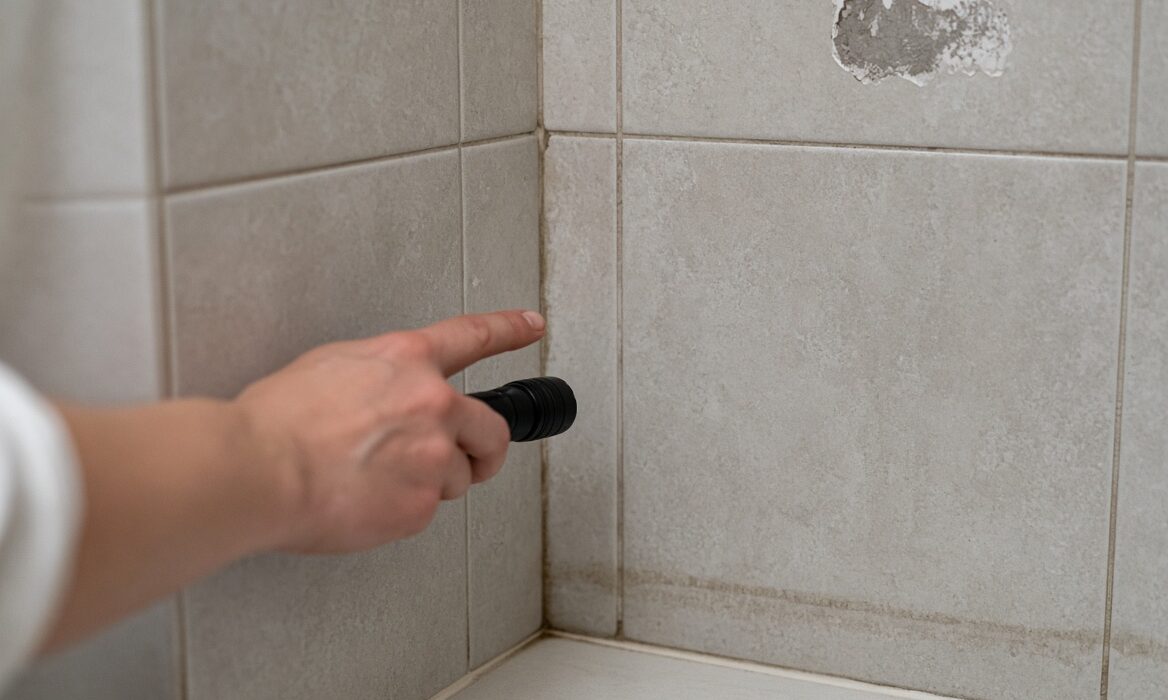
Grout is the first line of defence in a tiled bathroom, and it is often the first place you notice a problem. Healthy grout is firm, even and light in colour. Grout that turns dark, feels soft or crumbles when you touch it is telling you that moisture is staying in the joints.
What Causes Dark Grout?
Sometimes dark grout is simply dirt or surface mould that cleans away. If the stain keeps returning, or the grout is soft and powdery, water is likely getting through and staying trapped. That can point to a failing waterproof layer beneath the tiles.
A Simple Test
Clean a small section of grout thoroughly and let it dry. If the dark colour comes back within a few weeks, there may be a moisture source beneath it. A professional can check the area and confirm what is happening.
Sign Two: Hollow Sounding Tiles
Tap gently on the tiles with a coin or the handle of a spoon. Tiles that are well fixed give a solid sound. Tiles that sound hollow or dull may have lost their bond with the surface beneath them.
Why Tiles Become Hollow
When water gets behind tiles, it can weaken the adhesive and the surface underneath. Over time, tiles can lift, crack or become loose. A single hollow tile may be a minor issue, but a whole section that sounds hollow often points to a larger moisture problem.
Do Not Ignore Loose Tiles
Loose tiles allow even more water to reach the structure. They are also a safety risk on floors. Have them checked quickly rather than waiting for them to fall off.
Sign Three: A Musty Smell
A damp, earthy smell in or near your bathroom is one of the clearest warning signs. Good ventilation and regular cleaning should keep a bathroom smelling fresh. If a stale smell lingers, even after cleaning, moisture is probably collecting somewhere you cannot see.
Where the Smell Comes From
Hidden moisture inside walls or beneath floors creates the perfect environment for mould and mildew. The smell is often the first sign, appearing long before any visible damage. The odour may also drift into neighbouring rooms, hallways or cupboards.
Check Nearby Rooms
If the smell appears in a bedroom or hallway that shares a wall with the bathroom, moisture may be spreading through the wall. This is a strong reason to arrange an inspection.
Sign Four: Bubbling or Peeling Paint
Paint that bubbles, blisters or peels on walls or ceilings near the bathroom is a classic sign of moisture. Paint is not designed to hold water, so when moisture moves through a wall it pushes the paint away from the surface.
Look in the Right Places
Check the wall behind the shower, the wall shared with the bathroom and the ceiling around the exhaust fan. Also look at the paint on adjoining rooms. Any bubbling in these areas deserves attention.
Repainting Is Not a Fix
Painting over the problem hides it for a short time, but the moisture remains and the damage continues. The cause must be fixed first, then the paint can be repaired.
Sign Five: Swollen Skirting Boards or Sticking Doors
Timber swells when it absorbs water. Skirting boards that look warped, doors that suddenly stick, and floorboards that feel soft or uneven near the bathroom can all point to moisture in the framing.
Why Timber Reacts
Timber absorbs water slowly and swells as it does. If the moisture continues, timber can soften, rot and weaken. This can become a structural problem, which is why swollen timber should never be ignored.
Check the Bathroom Door Frame
The door frame and the skirting around the bathroom are often the first places where swelling appears. Look for gaps, soft spots or discolouration at the base.
Sign Six: Stains on the Ceiling Below
If your bathroom is upstairs, brown or yellow stains on the ceiling below are a serious warning. Water is passing through the bathroom floor and into the room underneath.
Act Quickly
Ceiling stains mean the water has already travelled through the floor structure. The sooner an inspection happens, the smaller the repair will be. Wet ceilings can also sag, so avoid standing directly beneath a stained area.
Single Storey Homes
Even in a single storey home, stains on walls or on the ceiling of a neighbouring room can point to the same problem. Moisture travels, so a stain may appear far from the source.
Sign Seven: Mould That Keeps Returning
Mould is common in bathrooms, and some surface mould is normal. Mould that returns quickly after cleaning, spreads across walls or appears in corners and ceilings points to a constant moisture source.
Surface Mould or Deeper Problem?
Surface mould that clears with cleaning and better ventilation is usually manageable. Mould that returns within days or weeks, or grows in areas that should stay dry, suggests water is escaping from the shower, the floor or the walls.
Ventilation Helps but Does Not Solve Everything
A good exhaust fan reduces steam and helps prevent mould. If you have good ventilation and mould still keeps coming back, waterproofing may be the missing piece.
Why Waterproofing Fails
Understanding why waterproofing fails helps you spot trouble earlier.
Common Causes of Failure
- Older bathrooms built before modern waterproofing standards
- Poor preparation of the surface before waterproofing
- Missing or thin membrane in corners and around drains
- Waterproofing that was not allowed to cure fully
- Building movement that cracks the membrane
- Damaged tiles, grout or silicone that let water in
Where Leaks Usually Begin
Leaks usually start at the points where surfaces meet, such as wall corners, the join between wall and floor, and around taps, pipes and the floor drain. These areas move slightly as a house settles, so they need extra reinforcement during waterproofing.
What to Do If You Notice These Signs
If you recognise one or more of these signs, take calm and sensible steps.
- Stop using the affected area if there is any sign of active leaking
- Take clear photos of the problem and note when you first saw it
- Improve ventilation by running the exhaust fan and opening a window
- Avoid painting or sealing over the problem
- Arrange a professional inspection as soon as you can
Why Early Action Saves Money
Water damage spreads quietly. The sooner an expert inspects it, the smaller the repair is likely to be. Waiting often turns a simple fix into a full renovation involving rotten framing, damaged sheeting and new tiles.
Can a Leaking Shower Be Repaired Without a Full Renovation?
Sometimes a small problem can be fixed with targeted repairs, such as replacing damaged silicone, regrouting or replacing a few tiles. If the waterproofing membrane itself has failed, the tiles usually need to be removed so the surface can be prepared and sealed again.
Why a Proper Fix Matters
A quick surface repair over a failed membrane does not stop water from reaching the structure. It may hide the symptoms for a few months, but the damage continues. A proper repair addresses the cause, not just the signs.
What Happens During a Professional Waterproofing Repair
A good waterproofing job follows a clear process.
Step One: Inspection
The team inspects the area, checks the surfaces, drainage and access, and identifies the source of the problem.
Step Two: Preparation
Old tiles are removed where needed, and the base is repaired, levelled and cleaned. Good preparation is essential for a lasting result.
Step Three: Waterproofing
Wet areas are sealed with a high grade waterproofing membrane, with extra reinforcement in corners, joins and around drains. The membrane is then given full curing time.
Step Four: Tiling and Finishing
Once the membrane has cured, new tiles are laid with straight lines and neat cuts. Grout and silicone are applied, and the area is cleaned. You can read more on our tiling and waterproofing page.
How to Prevent Bathroom Waterproofing Problems
Good habits protect your bathroom and extend the life of the waterproofing.
- Run the exhaust fan during and after every shower
- Wipe excess water from floors and screens regularly
- Check grout and silicone once a year and repair small cracks quickly
- Replace cracked or loose tiles promptly
- Keep drains clear so water flows away freely
- Choose licensed professionals for any bathroom work
Areas We Serve Across Melbourne
Aussie Tradies Group is based in Campbellfield and serves homeowners across northern, eastern and south eastern Melbourne. Our team regularly works in suburbs including Toorak, Doncaster, Box Hill, Hampton, Bentleigh, St Kilda and Hawthorn. If your suburb is not listed, please contact our team, because we can often help with projects in nearby areas. We also provide tree and stump removal for homeowners who need outdoor areas cleared before tiling.
Frequently Asked Questions About Bathroom Waterproofing Problems
How do I know if my bathroom needs waterproofing?
Common signs include dark or crumbling grout, hollow sounding tiles, a musty smell, bubbling paint, swollen timber, ceiling stains below and mould that keeps returning. Any of these signs deserves a professional inspection.
How long does bathroom waterproofing last?
A properly applied waterproofing system can last many years, but the exact lifespan depends on the products used, the quality of preparation and how the building moves. Damaged tiles, poor drainage and cracked grout can shorten it.
Can I fix waterproofing problems myself?
Small tasks such as cleaning grout or replacing old silicone can be done by a careful homeowner. Fixing a failed waterproofing membrane is a skilled job that must be done to the correct standard, so it is best left to professionals.
What causes a bathroom to leak?
Most leaks start where surfaces meet, such as wall corners, the join between wall and floor and around drains and pipes. A missing, thin or damaged waterproofing membrane allows water to pass through these points.
Can I tile over old waterproofing?
It depends on the condition of the existing waterproofing. If it is damaged or failing, it should be removed and replaced. A professional inspection is the safest way to know.
How long does a waterproofing repair take?
Most jobs take a few days, plus the curing time the waterproofing product requires. Larger bathrooms and complex layouts can take longer.
Is mould always a sign of waterproofing problems?
Not always. Surface mould can come from poor ventilation. Mould that keeps returning, spreads or appears in areas that should be dry may point to a moisture source behind or beneath the surface.
Ready to Fix Your Bathroom Waterproofing Problems?
Bathroom waterproofing problems are easier and cheaper to fix when they are caught early. If you have noticed any of the seven signs in this guide, do not wait for the damage to spread. A quick inspection can tell you exactly what is happening and what it will take to fix it.
Aussie Tradies Group provides tiling and waterproofing in Melbourne with clear quotes, tidy work sites and one team that stays responsible for the finished result. Call us on 0421 595 305, email info@atgltd.com.au or visit our contact page to request a free quote. You can also browse our full range of services or read more about our team before you decide.