How to Protect Your Property From Overhanging Tree Branches
Overhanging tree branches can create several problems for homeowners, particularly when they extend above roofs, driveways, garages and outdoor living areas. Although trees provide shade, improve landscaping and add natural beauty to a property, uncontrolled branch growth can increase the risk of property damage.
During strong winds, heavy rainfall and storms, weak or overextended branches may break and fall onto buildings, vehicles or surrounding structures. Even without severe weather, branches that continuously touch roof surfaces can damage roofing materials, block gutters and create maintenance problems.
Protecting your property does not necessarily mean removing nearby trees. In many situations, regular pruning and proper tree maintenance can control branch growth while preserving the health and appearance of the tree.
In this guide, we explain how to protect your property from overhanging tree branches, identify potential hazards and understand when professional pruning or tree removal may be necessary.
1. Inspect Trees Around Your Property Regularly
The first step in preventing damage from overhanging tree branches is understanding the condition of the trees surrounding your property.
Regular inspections help identify branches that are growing too close to buildings or showing signs of deterioration.
Pay particular attention to trees positioned near:
- Roofs and gutters.
- Garages and sheds.
- Driveways and parking areas.
- Windows and exterior walls.
- Fences and boundary structures.
- Outdoor entertainment areas.
Look for branches that appear weak, cracked, dead or unusually heavy.
Also check whether branches are touching roofing materials or becoming tangled with nearby structures.
Identifying these issues early makes it easier to arrange appropriate maintenance before damage occurs.
2. Trim Branches That Extend Over Your Roof
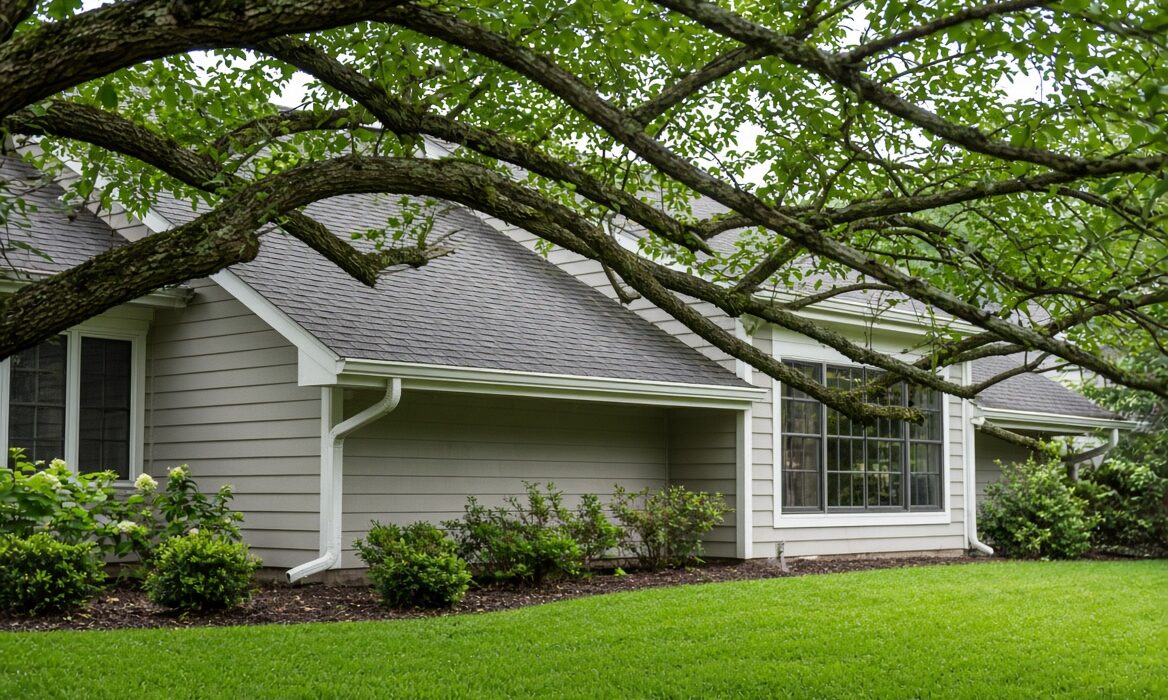
Branches growing directly above a roof can create ongoing maintenance and safety concerns.
During windy conditions, branches may rub against roofing materials and gradually damage tiles, metal sheets or protective coatings.
Falling leaves and small twigs can also accumulate in gutters and roof valleys, restricting the movement of rainwater.
Problems Caused by Overhanging Roof Branches
Common problems include:
- Scratches on roofing materials.
- Broken roof tiles from falling branches.
- Blocked gutters and downpipes.
- Accumulation of leaves and organic debris.
- Increased roof maintenance.
- Damage during storms.
Selective pruning can help maintain suitable clearance between trees and buildings.
However, branches should not be removed indiscriminately. Cutting too much of the canopy can weaken the tree and affect its natural structure.
A qualified arborist can recommend appropriate pruning techniques based on the tree species and its condition.
3. Remove Dead and Weak Branches
Dead and damaged branches are among the most common hazards around residential properties.
Unlike healthy branches, deadwood may become brittle and lose its ability to withstand strong winds or additional weight.
If a weak branch hangs above a roof, driveway or frequently used outdoor area, it may present a significant safety concern.
Warning Signs of Dangerous Branches
Look for:
- Branches without leaves during the growing season.
- Visible cracks or splits.
- Loose or hanging sections.
- Fungal growth around damaged areas.
- Broken branch connections.
- Branches with extensive decay.
Removing dead or structurally compromised branches through appropriate pruning can reduce the risk of falling debris.
However, large hanging branches should never be removed without suitable equipment and professional safety procedures.
4. Prepare Trees Before Storm Season
Strong winds and severe weather can turn overhanging branches into serious property hazards.
Trees with weak branch connections, excessive deadwood or poor structural balance may be more vulnerable during storms.
Preparing trees before periods of severe weather can help reduce potential damage.
Storm Preparation Tips
Before storm season:
- Inspect trees for damaged and dead branches.
- Check for branches extending over roofs and parking areas.
- Arrange professional pruning where required.
- Remove loose branches and fallen debris from accessible areas.
- Check trees for signs of instability.
- Keep outdoor spaces clear of unnecessary hazards.
Avoid heavy pruning simply to reduce the size of a tree before a storm. Excessive cutting can damage tree structure and create new problems.
If a tree is unstable or has suffered major storm damage, arrange a professional assessment.
5. Keep Gutters and Downpipes Clear of Tree Debris
Overhanging branches can contribute to blocked gutters and downpipes.
Leaves, twigs, seeds and other organic material may collect in drainage channels, particularly when trees are positioned close to the roof.
When gutters become blocked, rainwater may overflow instead of draining through the downpipes.
This can contribute to water damage around roof edges, exterior walls and building foundations.
How to Reduce Gutter Problems
Homeowners can reduce debris-related drainage issues by:
- Removing accumulated leaves from accessible gutters.
- Inspecting downpipe openings.
- Scheduling regular gutter maintenance.
- Considering suitable gutter protection systems.
- Arranging appropriate pruning to reduce excessive overhang.
Gutter guards can help reduce some debris accumulation, but they do not eliminate the need for inspection and cleaning.
For safety, roof and gutter maintenance should be handled by appropriately equipped professionals where access is difficult or hazardous.
6. Maintain Safe Clearance Around Windows and Walls
Tree branches that grow close to windows and exterior walls can create several practical problems.
During windy conditions, branches may repeatedly strike windows, scratch exterior surfaces or damage window screens.
Dense foliage can also reduce natural light and restrict airflow around parts of the building.
Maintaining suitable clearance can help prevent direct contact between branches and structures.
Areas to Monitor
Pay attention to:
- Branches touching window frames.
- Foliage covering ventilation openings.
- Branches rubbing against exterior walls.
- Trees growing close to roof edges.
- Branches interfering with outdoor lighting.
Selective pruning can often resolve these problems without removing the entire tree.
The amount of clearance required depends on the tree species, building design and surrounding conditions.
7. Protect Driveways and Vehicles From Falling Branches
Trees growing over driveways and parking areas can create risks for vehicles.
Even relatively small branches can cause scratches, broken mirrors or damage to vehicle windows when they fall.
Larger branches may cause much more serious damage during storms.
If a tree has visible structural problems, parking directly beneath it may be unsafe.
Practical Ways to Protect Vehicles
- Avoid parking beneath visibly damaged trees.
- Inspect branches above regular parking spaces.
- Arrange pruning of hazardous overhanging branches.
- Keep driveways clear of fallen branches.
- Assess trees that lean towards garages or parking areas.
If a tree is showing signs of instability, do not assume that removing a few branches will make the entire tree safe.
A professional assessment is important to determine the appropriate solution.
8. Prevent Tree Branches From Damaging Fences and Outdoor Structures
Overhanging branches can also affect fences, pergolas, sheds and other outdoor structures.
As branches grow, they may place pressure on fencing materials or repeatedly contact structures during windy weather.
Falling branches can also damage garden furniture, outdoor lighting and decorative features.
Common Problems
- Branches pushing against fence panels.
- Falling limbs damaging pergolas.
- Tree growth interfering with sheds.
- Branches scratching outdoor structures.
- Fallen debris collecting around garden areas.
Regular inspection and appropriate pruning can help maintain clearance around these structures.
For larger branches near buildings or boundary fences, professional assistance can help prevent accidental damage during removal.
9. Be Careful With Trees Near Powerlines
Trees growing close to overhead powerlines require particular attention.
Branches contacting electrical wires can create serious safety hazards, including electrical shock, fire risks and power interruptions.
Never attempt to cut or move branches that are touching or approaching powerlines.
Even branches that appear dry or harmless can conduct electricity under certain conditions.
What Should Homeowners Do?
If branches are growing near electrical wires:
- Keep people away from the affected area.
- Do not use ladders or cutting equipment nearby.
- Avoid touching fallen branches near powerlines.
- Contact the relevant electricity distributor.
- Arrange work through appropriately authorised professionals.
Electrical safety requirements vary by location and the type of powerline.
Always follow the relevant authority’s instructions before arranging vegetation work near electrical infrastructure.
10. Understand When Pruning Is Not Enough
Pruning is often the best solution for controlling overhanging branches, but it cannot resolve every tree-related problem.
Some trees have extensive structural damage, severe decay or unstable root systems that make them unsafe to retain.
In these situations, removing selected branches may not adequately reduce the overall risk.
When Should You Consider Tree Removal?
Tree removal may be recommended when:
- The main trunk has significant structural damage.
- The tree has extensive decay.
- Major supporting branches are severely compromised.
- The root system has become unstable.
- The tree is leaning dangerously.
- The tree repeatedly creates serious safety risks.
However, a tree should not be removed simply because a few branches extend over a roof.
A qualified arborist can assess its condition and determine whether pruning, treatment or removal is appropriate.
11. Choose the Right Tree Pruning Approach
Different pruning techniques are used for different tree maintenance requirements.
Choosing the correct approach helps maintain tree health while managing potential hazards.
Crown Cleaning
Crown cleaning involves removing dead, dying, diseased or damaged branches from the tree canopy.
It helps reduce falling debris and improves the overall condition of the tree.
Crown Thinning
Crown thinning involves selectively removing branches to improve light penetration and airflow while maintaining the tree’s natural shape.
It should not involve indiscriminate removal of large amounts of foliage.
Crown Reduction
Crown reduction involves reducing the overall size of a tree canopy using appropriate cuts.
This may help manage excessive growth, but it must be carried out carefully to avoid damaging the tree’s structure.
Clearance Pruning
Clearance pruning removes or redirects selected branches to maintain appropriate space around buildings, pathways and other structures.
It can be useful when branches are interfering with roofs, windows or driveways.
The correct pruning method depends on the tree species, age, condition and surrounding environment.
12. Hire Professionals for Large or Overhanging Branches
Pruning small, accessible branches may appear straightforward, but larger branches can be difficult and dangerous to remove.
Branches may be heavier than expected, under tension or positioned in a way that makes them unpredictable when cut.
Working at height also introduces additional risks.
Professional tree services have the equipment and knowledge required to assess these hazards and carry out suitable work.
Professional assistance may include:
- Tree health and condition assessments.
- Deadwood removal.
- Overhanging branch pruning.
- Canopy maintenance.
- Hazardous tree assessment.
- Complete tree removal.
- Stump grinding and site clean-up.
For branches close to buildings, powerlines or other structures, using appropriately qualified and authorised professionals is particularly important.
How Often Should You Inspect Overhanging Tree Branches?
There is no single inspection schedule suitable for every property.
The frequency depends on tree species, growth rate, age, condition and exposure to weather.
However, checking trees periodically and after major storms can help identify developing problems.
Consider inspecting trees:
- Before storm season.
- After strong winds or heavy rainfall.
- When branches begin touching buildings.
- When deadwood becomes visible.
- When noticeable changes occur in the tree’s structure.
- During regular property maintenance.
If you notice sudden leaning, fresh cracks or hanging branches, arrange an assessment promptly rather than waiting for the next routine inspection.
Frequently Asked Questions
1. Can overhanging tree branches damage a roof?
Yes. Branches can scratch roofing materials, break roof tiles and deposit leaves or twigs into gutters. Larger branches may also fall during storms and cause significant damage.
2. Should I cut branches hanging over my house?
Branches that create a genuine hazard may need selective pruning. However, large branches should be assessed and removed by a professional to avoid damage to the tree or property.
3. How far should tree branches be from a house?
There is no universal clearance distance for every tree. The appropriate spacing depends on the tree species, mature canopy size, building design and potential risks. A qualified arborist can recommend suitable clearance.
4. Can pruning prevent tree branches from falling during storms?
Pruning can reduce certain hazards by removing dead, damaged and poorly attached branches. However, it cannot guarantee that branches will not fall during severe weather.
5. Is it better to prune or remove a tree near a house?
If the tree is healthy and structurally stable, pruning may be sufficient to maintain clearance. Removal may be appropriate when severe damage, extensive decay or instability makes the tree unsafe to retain.
6. Can I remove overhanging branches from a neighbour’s tree?
Property owners should not assume they can freely cut branches belonging to a neighbouring tree. Property boundaries, local laws and tree protection requirements may apply. Check the relevant local council rules and obtain appropriate advice before cutting.
7. When should overhanging branches be pruned?
Pruning timing depends on the tree species, its condition and the type of work required. Dead or hazardous branches may require prompt attention, while routine pruning should follow appropriate arboricultural recommendations.
8. Do I need council approval to prune or remove a tree in Melbourne?
Some trees are protected under local planning controls, council regulations or vegetation overlays. Depending on the property and the proposed work, approval may be required. Check with the relevant local council before starting.
Final Thoughts
Overhanging tree branches can create unnecessary risks for roofs, gutters, vehicles, fences and outdoor structures. Regular inspections and appropriate pruning help maintain safe clearance while protecting the health and appearance of trees.
The most important step is identifying potential hazards before they cause property damage. Removing dead branches, managing excessive growth and preparing trees for severe weather can reduce many common risks.
However, pruning is not always enough. Trees with serious structural damage, extensive decay or unstable roots may require complete removal following a professional assessment.
If you have trees growing too close to your property or need assistance with hazardous branches, Aussie Tradies Group can help you explore suitable tree maintenance and removal solutions.
Contact Aussie Tradies Group today to discuss your tree and stump removal requirements and request a quote.