Leaking Shower Repair Bentleigh
Leaking Shower Repair Bentleigh | No Tile Removal
A leaking shower can turn a comfortable bathroom into a frustrating and expensive problem. Water stains on adjoining walls, loose tiles, damaged grout and persistent dampness are all signs that something may be wrong.
For homeowners in Bentleigh, Melbourne, one of the biggest concerns is whether fixing a leaking shower means removing tiles and renovating the entire bathroom.
Fortunately, not every shower leak requires extensive demolition.
In some situations, leaking shower repairs can be completed without removing existing tiles. Depending on the cause, the solution may involve replacing damaged silicone, repairing grout joints, fixing plumbing connections or addressing other accessible defects.
However, the most important step is identifying where the water is coming from.
A leaking shower can result from several different problems, and surface repairs will not necessarily resolve a failed waterproofing membrane beneath the tiles.
Understanding the available repair methods can help you avoid unnecessary costs and make informed decisions.
At Aussie Tradies Group, we understand the importance of maintaining functional bathrooms and properly waterproofed wet areas.
This guide explains the causes of shower leaks, the warning signs to look for, practical repair methods and when professional waterproofing work may be required.
If you are searching for leaking shower repair Bentleigh, this article will help you understand your options before committing to a major renovation.
Can You Fix a Leaking Shower Without Removing Tiles?
Yes, some leaking showers can be repaired without removing tiles.
The success of a no-tile-removal repair depends entirely on the source of the leak and the condition of the existing bathroom.
For example, replacing deteriorated silicone around a shower screen may resolve water escaping through that particular joint.
Similarly, repairing a leaking tap connection or replacing damaged grout can address certain surface or plumbing defects.
However, these repairs are not equivalent to replacing a failed concealed waterproofing system.
When No-Tile-Removal Repairs May Work
Repairs without removing tiles may be suitable when:
- The leak comes from an accessible plumbing fitting.
- Silicone around the shower screen has deteriorated.
- A door seal allows water to escape.
- Localised grout joints require replacement.
- Water is escaping over the shower threshold.
- A visible fixture connection needs repair.
When Tile Removal May Be Necessary
Tile removal may be required when:
- The concealed waterproofing membrane has failed.
- The substrate beneath the tiles is damaged.
- Water is penetrating through a defective membrane-to-drain connection.
- Tiles are loose because of underlying deterioration.
- The shower floor requires reconstruction to correct drainage problems.
Why Diagnosis Matters
A surface treatment may temporarily reduce visible moisture without resolving the underlying defect.
The correct repair should address the actual source of the leak.
What Causes a Shower to Leak?
Several different components work together to keep shower water within the intended wet area.
A defect in any one of these components can create leakage.
1. Damaged Silicone Sealant
Silicone is commonly used at suitable junctions around shower screens, fixtures and other connections.
Over time, sealant can deteriorate, separate or become damaged.
This may create a pathway for water to escape.
2. Cracked or Missing Grout
Grout fills the joints between tiles.
Damaged grout can allow additional moisture to move through the tiled surface.
However, grout is not the primary waterproofing barrier.
3. Failed Waterproofing Membrane
A waterproofing membrane helps protect the building materials beneath the tiles.
If the membrane or one of its critical connections fails, water may reach concealed areas.
4. Plumbing Leaks
Shower mixers, supply pipes and connections can develop leaks.
Some plumbing leaks occur even when the shower is not being used.
5. Drainage Problems
A damaged drain connection or unsuitable floor falls can contribute to water-related problems.
6. Shower Screen Leaks
Water can escape through poorly sealed screen connections, damaged door seals or unsuitable installation details.
7. Movement and Cracking
Movement in the building or tiled assembly can affect grout, sealant and other components.
Signs You Have a Leaking Shower in Bentleigh
Shower leaks are not always obvious.
Some problems develop gradually and become visible only after moisture has affected surrounding materials.
Damp Walls Near the Bathroom
Persistent dampness on an adjoining wall may indicate moisture migration.
Peeling or Bubbling Paint
Water exposure can cause paint to lift or deteriorate.
Swollen Skirting Boards
Timber and other moisture-sensitive materials may swell when exposed to water.
Loose Bathroom Tiles
Loose tiles may indicate adhesive failure, movement or moisture-related deterioration.
Musty Smells
Persistent odours may suggest hidden dampness.
Mould Growth
Mould can develop where moisture remains present.
Mould alone does not prove that the shower membrane has failed.
Water Stains on Ceilings
In multi-level properties, a leak may become visible on the ceiling below the bathroom.
Water Outside the Shower
Puddles near the shower screen or bathroom doorway may indicate an enclosure or drainage problem.
Step 1: Identify the Source of the Shower Leak
Before attempting repairs, determine whether the leak originates from plumbing, surface joints, drainage or concealed waterproofing.
Inspect Visible Silicone
Look for gaps, cracks, peeling or separation around the shower screen and suitable junctions.
Check Grout Joints
Identify missing, loose or visibly deteriorated grout.
Examine Shower Fixtures
Look for dripping fittings, leaking connections and signs of water around the mixer.
Inspect the Shower Screen
Check whether water escapes through the door, frame or threshold during use.
Look for Drainage Problems
Notice whether water pools excessively or drains unusually slowly.
Check Adjoining Areas
Inspect nearby walls, floors and skirting boards for moisture damage.
Arrange Professional Leak Detection
If the source remains unclear, a qualified professional may use appropriate testing and inspection methods.
Avoid cutting into walls or disturbing plumbing and waterproofing without suitable expertise.
Step 2: Repair Damaged Shower Silicone
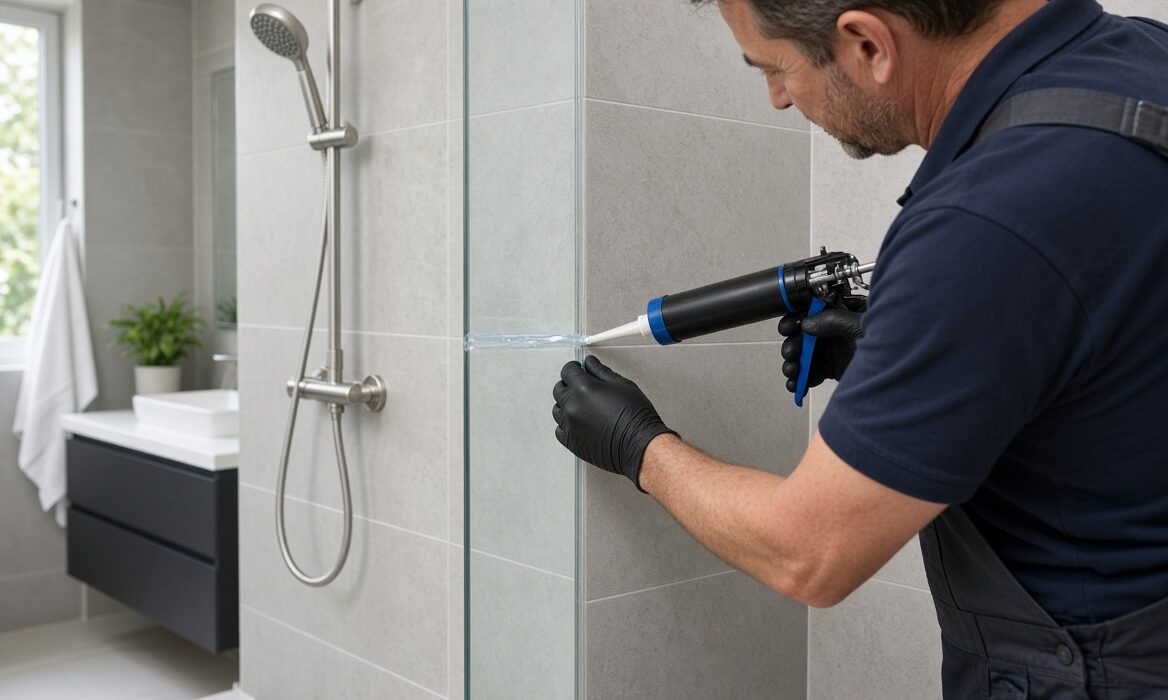
Replacing failed silicone may resolve leaks caused by water escaping through a particular sealed joint.
Why Silicone Deteriorates
Sealant may be affected by movement, cleaning products, age or unsuitable installation.
Remove Failed Sealant
Old, loose or contaminated silicone must be removed carefully.
Prepare the Surface
The joint should be cleaned and dried according to the new sealant manufacturer’s requirements.
Apply Suitable Wet-Area Sealant
The selected product should be compatible with the surfaces and application.
Allow Proper Curing
Do not use the shower until the sealant has cured as required.
Important Limitation
Replacing silicone will not repair a failed waterproofing membrane or leaking pipe.
Step 3: Repair Cracked or Missing Shower Grout
Regrouting may be appropriate when grout joints are damaged but the tiled assembly remains otherwise sound.
What Is Shower Regrouting?
Regrouting involves removing deteriorated grout and replacing it with suitable new material.
Inspect the Existing Tiles
Tiles should be checked for looseness, cracks and other signs of damage.
Remove Old Grout Carefully
Excessive cutting depth can damage tile edges or concealed waterproofing.
Prepare the Joints
Dust and loose material must be removed.
Apply Compatible Grout
The product should suit the tile type, joint dimensions and wet-area application.
Allow the Grout to Cure
Follow the manufacturer’s instructions before returning the shower to normal use.
Does Regrouting Waterproof a Shower?
No.
Regrouting maintains the tiled finish but does not replace the underlying waterproofing membrane.
Step 4: Check Shower Screens and Door Seals
Sometimes water escapes from the shower enclosure rather than penetrating through the tiled walls or floor.
Inspect Door Seals
Damaged or missing seals can allow water to escape.
Check the Screen Frame
Gaps or failed seals around the frame may cause leakage.
Examine the Shower Threshold
Water may escape where the enclosure does not adequately contain it.
Review Showerhead Direction
Water directed toward vulnerable enclosure joints can reveal existing sealing problems.
Consider Professional Adjustment
Some shower screens require adjustment or replacement components.
Step 5: Investigate Plumbing Leaks
A leaking shower may have a plumbing problem rather than a waterproofing defect.
Showerhead Connections
Leaks may occur at accessible fittings.
Mixer Taps
Faulty mixer components or connections can cause water leakage.
Concealed Pipes
Leaks inside walls may produce dampness even when surface joints appear intact.
Drain Connections
Waste connections can develop leaks beneath the shower.
When to Contact a Plumber
Plumbing repairs should be performed by an appropriately licensed professional where required under Victorian law.
Step 6: Check Shower Drainage
Drainage problems can increase the amount of water remaining on the shower floor.
Blocked Drains
Hair, soap residue and debris can restrict water flow.
Incorrect Floor Falls
A shower floor should direct water toward the drainage outlet according to the applicable design requirements.
Drain-to-Membrane Connections
The connection between the drain and waterproofing system is a critical detail.
Persistent Water Pooling
Standing water may indicate drainage or floor construction problems.
When Reconstruction Is Necessary
If the floor has unsuitable falls or the concealed drain connection has failed, surface repairs may not be sufficient.
Step 7: Understand No-Tile-Removal Waterproofing Products
Some products are marketed as waterproofing solutions that can be applied over existing tiles.
These may include surface sealers, coatings and specialised treatments.
However, their suitability depends on the actual defect and the product’s intended use.
Surface Sealers
Certain sealers may reduce moisture absorption through some porous materials.
They do not necessarily create a compliant replacement for a failed concealed membrane.
Grout Sealers
Grout sealers can improve water resistance in suitable applications.
They should not be treated as a complete shower waterproofing system.
Surface Coatings
Some coating systems are designed for particular wet-area applications.
Their performance depends on substrate condition, compatibility and correct installation.
Why Product Claims Need Careful Evaluation
A product advertised as waterproof does not automatically mean it can repair every leaking shower.
When Surface Treatments Are Not Enough
If the concealed membrane, substrate or drainage assembly has failed, reconstruction may be required.
Leaking Shower Repair Without Removing Tiles: What Actually Works?
The following comparison helps explain which repairs may be suitable.
| Cause of leak | Possible repair | Tile removal usually needed? |
|---|---|---|
| Failed shower screen seal | Replace suitable sealant or seals | No |
| Accessible leaking tap fitting | Repair or replace fitting | Often no |
| Damaged grout | Regrout suitable joints | Often no |
| Water escaping through shower door | Adjust or replace enclosure seals | Often no |
| Failed concealed membrane | Reconstruct affected waterproofing | Often yes |
| Damaged substrate | Repair substrate and rebuild finishes | Often yes |
| Defective concealed drain connection | Access and repair connection | May be required |
| Incorrect shower floor falls | Reconstruct floor as necessary | Often yes |
The actual repair should be selected after identifying the cause.
How Much Does Leaking Shower Repair Cost in Bentleigh?
The cost of leaking shower repair in Bentleigh depends on the problem and the work required.
A small sealant repair is very different from replacing a failed waterproofing membrane.
Silicone Replacement
Costs depend on the length of the joints, preparation and access.
Shower Regrouting
The price depends on the tiled area, grout condition and product selected.
Plumbing Repairs
Costs vary according to the faulty component and accessibility.
Shower Screen Repairs
Replacing seals or adjusting a screen may involve a smaller scope than replacing the entire enclosure.
Waterproofing Reconstruction
A failed membrane may require removing tiles, preparing the substrate and installing a new compliant system.
Additional Damage
Water-damaged walls, flooring or framing can increase repair costs.
Get a Detailed Quotation
A suitable quote should identify the suspected defect, proposed work and exclusions.
Is It Cheaper to Repair a Shower Than Renovate It?
In many situations, a targeted repair costs less than a full bathroom renovation.
However, the cheaper option is not always the correct one.
When a Small Repair Makes Sense
A localised, accessible defect may be repaired without disturbing the existing tiles.
When a Larger Repair Is Necessary
Concealed waterproofing failure or extensive substrate damage may require reconstruction.
Avoid Repeated Temporary Repairs
Repeatedly replacing grout or silicone without identifying the cause can waste money.
Consider the Age of the Bathroom
An older bathroom with multiple defects may require a broader assessment.
Focus on the Underlying Problem
The best repair is one that addresses the actual source of leakage.
Why Shower Waterproofing Matters in Melbourne Homes
Bathrooms are among the most moisture-exposed areas of a home.
Waterproofing helps protect building materials from water that passes beyond the visible tiled surface.
Tiles Are Not the Main Waterproof Barrier
Grout joints and other openings can allow moisture movement.
Membrane Continuity Is Important
The waterproofing system must be properly detailed at required surfaces, corners and penetrations.
Drainage Must Work with Waterproofing
Suitable floor falls and drain connections are essential.
Installation Quality Matters
Surface preparation, compatible products and correct curing contribute to system performance.
Compliance Is Important
Wet-area work should meet the applicable National Construction Code, Australian Standards and Victorian requirements.
For related services, explore our tiling and waterproofing services.
How to Prevent Shower Leaks in the Future
Routine maintenance can help identify problems before they become more extensive.
Inspect Grout Regularly
Look for missing or deteriorated grout.
Check Silicone Joints
Replace failed sealant when appropriate.
Maintain Shower Screens
Keep door seals and fittings in suitable condition.
Keep Drains Clear
Remove hair and other debris that restrict drainage.
Improve Ventilation
Suitable ventilation helps manage humidity and condensation.
Avoid Harsh Cleaning Products
Use products compatible with your tiles, grout and sealants.
Investigate Dampness Early
Persistent water stains or moisture should not be ignored.
Protect Waterproofed Surfaces
Drilling or modifying wet-area surfaces can damage concealed waterproofing.
Common Mistakes When Fixing a Leaking Shower
Some repairs fail because they address symptoms rather than the underlying cause.
Applying Silicone Over Existing Damaged Silicone
New sealant may not adhere properly to contaminated or loose material.
Regrouting Without Checking for Leaks
Damaged grout may not be the main source of water penetration.
Using Grout as Waterproofing
Grout is not a replacement for the required waterproofing membrane.
Ignoring Loose Tiles
Loose tiles may indicate problems with the adhesive or substrate.
Applying Unverified Surface Treatments
Not every coating is suitable for every wet-area defect.
Using the Shower Before Products Cure
Insufficient curing can affect repair performance.
Ignoring Plumbing Problems
A leaking pipe will not be repaired by treating the tile surface.
Why Local Shower Leak Repairs Matter in Bentleigh
Bentleigh is an established Melbourne suburb with a mixture of older homes, renovated bathrooms, units and contemporary properties.
Different buildings may experience different moisture-related problems.
Older Bathrooms
Older wet areas may have deteriorated materials or previous repairs.
Renovated Homes
Recently renovated bathrooms can still develop leaks because of installation defects or movement.
Apartments and Units
Leaks may affect adjoining properties or lower levels.
Rental Properties
Prompt investigation can help limit further damage.
Family Bathrooms
Frequently used showers experience regular moisture exposure and require ongoing maintenance.
The appropriate repair depends on the actual bathroom condition rather than the property’s age alone.
How to Choose a Leaking Shower Repair Professional in Bentleigh
Before booking a repair, ask questions about the assessment and proposed work.
Leak Diagnosis
The provider should explain how the likely source will be identified.
Relevant Qualifications
Confirm the contractor meets applicable Victorian requirements for plumbing, waterproofing or building work.
Repair Method
Ask whether the proposed work addresses the underlying defect.
Product Compatibility
Sealants, grout and waterproofing materials should suit the application.
Written Quotation
The scope should identify the work, materials and exclusions.
Compliance
Relevant building and waterproofing requirements should be considered.
Repair Limitations
A reliable provider should explain when a no-tile-removal repair is unsuitable.
When Is a Full Shower Waterproofing Replacement Necessary?
Some shower leaks cannot be repaired effectively through surface maintenance.
Confirmed Membrane Failure
A failed concealed waterproofing system may require reconstruction.
Extensive Substrate Damage
Damaged backing materials may need replacement.
Widespread Loose Tiles
Extensive tile movement can indicate underlying problems.
Failed Drain Connections
Concealed drainage defects may require access beneath the finished surface.
Incorrect Floor Construction
Significant drainage or floor-level problems may require rebuilding.
Multiple Recurring Leaks
Repeated problems may justify a broader assessment of the shower assembly.
Frequently Asked Questions About Leaking Shower Repair Bentleigh
1. Can a leaking shower be fixed without removing tiles?
Yes, when the leak comes from an accessible fitting, shower screen seal or another suitable surface defect. Failed concealed waterproofing may require tile removal.
2. How much does leaking shower repair cost in Bentleigh?
Costs depend on the cause, extent of damage and repair method. A localised sealant repair generally costs less than full waterproofing reconstruction.
3. Can regrouting stop a leaking shower?
Regrouting can repair damaged joints, but it cannot reliably fix a failed membrane, plumbing leak or defective drain connection.
4. Does replacing silicone fix shower leaks?
It may fix leaks caused by failed silicone at the relevant joint. It will not correct unrelated concealed defects.
5. Can you waterproof a shower over existing tiles?
Some surface products are designed for particular applications, but they are not automatically suitable replacements for a failed concealed waterproofing membrane.
6. How do I know if my shower waterproofing has failed?
Persistent dampness, loose tiles and water stains can indicate a problem, but professional assessment is needed to identify the cause.
7. Why is water leaking through my shower wall?
Possible causes include plumbing leaks, failed waterproofing, damaged connections or other moisture pathways.
8. Can cracked grout cause shower leaks?
Cracked grout can allow moisture movement through the tiled surface. A correctly functioning underlying waterproofing system should provide the required protection.
9. Is a leaking shower an emergency?
A leak involving active electrical hazards, substantial water escape or serious damage may require urgent attention. Stop using the shower and seek appropriate professional help.
10. How long does shower leak repair take?
The time depends on the defect. Small accessible repairs may be relatively quick, while waterproofing reconstruction requires additional work and curing time.
11. Should I stop using a leaking shower?
If water is escaping into surrounding building materials or the cause is unknown, stop using the shower until the problem has been assessed.
12. Can a shower leak cause mould?
Persistent moisture can encourage mould growth, particularly in poorly ventilated or concealed areas.
13. Does shower waterproofing last forever?
No waterproofing system should be assumed to last indefinitely. Performance depends on materials, installation, movement and maintenance.
14. Do I need a plumber or waterproofing specialist?
The appropriate professional depends on the source of the leak. Plumbing defects require suitable plumbing expertise, while membrane problems require appropriate waterproofing assessment and repair.
15. How can I get a shower repair quote in Bentleigh?
Provide photographs, details of the symptoms and information about when the leak occurs. Ask for an assessment before committing to a particular repair.
Final Thoughts: Fixing a Leaking Shower Without Removing Tiles
A leaking shower does not automatically mean you need to remove every tile or renovate the entire bathroom.
Some problems can be resolved through targeted repairs to shower screens, silicone joints, grout or accessible plumbing components.
However, the success of any repair depends on identifying the actual source of the leak.
If the concealed waterproofing membrane or substrate has failed, a surface treatment is unlikely to provide a reliable long-term solution.
For Bentleigh homeowners, the best approach is to investigate the problem early, understand the available repair methods and choose work that addresses the underlying defect.
Correct diagnosis can help avoid unnecessary demolition while ensuring that more serious waterproofing problems are not overlooked.