7 Signs a Tree May Be Dangerous: When to Call a Professional
Trees add beauty, shade, and value to your property, but a damaged or unstable tree can become a serious safety hazard. Recognising dangerous tree signs early can help protect your family, home, vehicles, and surrounding landscape. Some tree problems develop gradually, while others become noticeable after heavy rain, strong winds, or storms. Knowing what to look for allows you to take action before a tree falls or causes property damage. If you notice significant cracks, dead branches, a leaning trunk, or exposed roots, consider arranging a professional tree assessment to determine whether pruning, treatment, or tree removal is necessary.
1. Large Cracks in the Tree Trunk
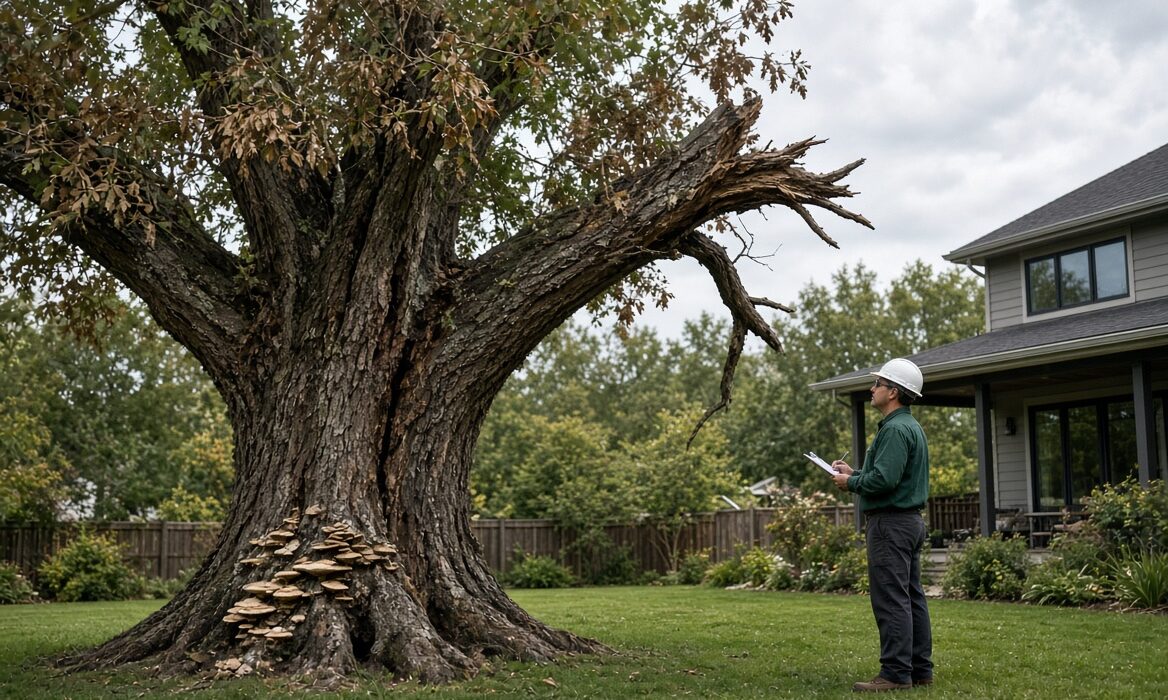
Large cracks in a tree trunk are among the most important warning signs to investigate. A healthy trunk provides structural support, allowing the tree to withstand wind, rain, and the weight of its branches. When the trunk develops deep cracks or splits, its structural strength may be compromised.
Pay attention to cracks that extend vertically along the trunk, areas where the trunk appears to be separating, or splits that become larger over time. These problems may indicate internal decay, storm damage, or structural weakness.
Not every surface crack means a tree is about to fall. However, deep cracks, particularly those accompanied by a leaning trunk or damaged branches, should be assessed by a qualified arborist.
What to do: Keep people and vehicles away from the affected area if the tree appears unstable. Arrange a professional inspection to determine the level of risk and whether corrective pruning or tree removal is required.
2. Dead or Falling Branches
Dead branches are another common sign that a tree may pose a safety risk. Unlike healthy branches, dead wood can become brittle and break unexpectedly, especially during strong winds or heavy rainfall.
Large dead branches above driveways, footpaths, outdoor seating areas, roofs, or children’s play areas deserve particular attention. Even a relatively small branch can cause injury or damage property when it falls from a significant height.
Look for branches with no leaves during the growing season, brittle wood, peeling bark, and branches that have already broken away from the tree. However, some trees naturally shed smaller branches, so the overall condition and location of the dead wood matter.
What to do: Professional tree pruning can remove hazardous branches while preserving healthy growth. If widespread deadwood affects much of the canopy, an arborist should investigate whether disease, pests, drought, or another underlying problem is responsible.
3. A Tree That Suddenly Starts Leaning
A tree that develops a new or increasingly noticeable lean may have an unstable root system or damaged supporting structure. This can happen after storms, prolonged rainfall, soil movement, or damage caused by nearby excavation.
Although some trees naturally grow at an angle, a sudden change in position is more concerning than a long-standing lean. You may notice the trunk tilting further, the ground lifting around the base, or exposed roots pulling out of the soil.
These signs can indicate that the tree is losing its ability to remain securely anchored. The risk may increase when the soil becomes saturated or strong winds place additional pressure on the canopy.
What to do: If a tree suddenly leans or the ground around its base begins to lift, keep clear of the potential fall zone and contact a qualified tree professional urgently. Do not attempt to straighten or secure a large tree yourself.
4. Exposed, Damaged, or Decaying Roots
Tree roots provide stability and absorb the water and nutrients needed for healthy growth. When roots become damaged, diseased, or weakened by decay, the tree may lose its structural support.
Warning signs include roots that appear rotten, damaged roots following excavation, fungal growth around the base, and soil that has shifted or cracked near the trunk. Construction work, trenching, vehicle traffic, and changes to drainage can also damage important roots.
Some tree roots naturally grow above the ground, so exposed roots alone do not necessarily mean a tree is dangerous. The concern increases when exposed roots are broken, decaying, or associated with a leaning trunk or movement in the surrounding soil.
What to do: Arrange a professional assessment if you suspect significant root damage. Avoid cutting large roots or covering the root flare with additional soil without expert advice, as these actions may worsen the tree’s condition.
5. Fungal Growth Around the Trunk or Base
Mushrooms, brackets, and other fungal growth around a tree can sometimes indicate internal decay. Certain wood-decaying fungi affect the roots, trunk, or major branches, reducing the strength of the affected wood.
Look for shelf-like fungal growth attached to the trunk, clusters of mushrooms near the base, soft or crumbling wood, and areas where bark has begun to deteriorate. Fungal growth around a tree does not automatically mean it is structurally unsafe, but it can indicate an underlying problem that needs investigation.
Some types of decay remain hidden inside the trunk, making it difficult to judge the tree’s stability from its external appearance alone.
What to do: Ask an arborist to inspect the tree and identify the likely cause. Depending on the findings, the recommended solution may involve monitoring, targeted pruning, treatment of contributing conditions, or tree removal if the risk cannot be managed safely.
6. Hollow Areas or Soft, Decaying Wood
A hollow trunk or decaying section of a tree can be another warning sign. As fungi and other organisms break down wood, the tree may gradually lose part of its structural strength.
Possible indicators include cavities in the trunk, loose or missing bark, soft wood, deep wounds, and sections that crumble when naturally exposed. Large cavities near major branch unions or the base of a tree may require particular attention.
However, a hollow tree is not always immediately dangerous. Some trees can remain stable for years despite having internal cavities. The level of risk depends on the remaining sound wood, the tree’s shape, its species, the extent of decay, and the targets that could be affected if it failed.
What to do: Have a qualified arborist evaluate the tree rather than deciding its safety based on the size of the cavity alone. A professional can assess its structure and recommend the most appropriate management option.
7. Unusual Changes in Leaves, Bark, or Branch Growth
Changes in a tree’s appearance may indicate disease, pest activity, environmental stress, or declining health. While not every unhealthy tree is dangerous, a tree experiencing significant decline may develop dead branches or become more vulnerable to structural failure.
Watch for these symptoms:
- Leaves wilting, discolouring, or dropping unusually early.
- Large sections of the canopy dying back.
- Bark peeling away or falling off in unusual patches.
- Sudden loss of major branches.
- Extensive insect activity, unusual holes, or signs of infestation.
- Little or no new growth during the expected growing season.
These symptoms may result from drought, poor drainage, root damage, disease, pests, or other environmental conditions. The cause should be identified before deciding whether the tree needs treatment or removal.
What to do: Arrange a tree health assessment if the decline is severe, spreading, or accompanied by structural damage. Early intervention may help preserve a valuable tree, while identifying serious structural problems can reduce the risk of unexpected failure.
What Should You Do If You Notice Dangerous Tree Signs?
Identifying a possible hazard is the first step. Taking appropriate action can help prevent injuries and minimise property damage.
Keep people away from the danger zone
If the tree is visibly unstable, has a split trunk, or has started uprooting, keep people and pets away. Move vehicles from the potential fall area only if it is safe to do so. Do not stand beneath damaged branches to take photographs or inspect the tree.
Arrange a professional tree inspection
A qualified arborist can evaluate the trunk, canopy, roots, branch attachments, and surrounding conditions. This assessment helps establish whether the tree presents an immediate hazard or can be managed through maintenance.
Consider appropriate tree maintenance
Depending on the problem, professional pruning, removal of deadwood, pest management, or other maintenance may help address the issue. However, pruning cannot correct every structural defect, and some severely compromised trees may require removal.
Schedule tree removal when necessary
If a tree is dead, severely damaged, or structurally unstable, removal may be the safest option. Professional tree removal services can assess the site, plan the work, and use suitable equipment to reduce risks to nearby structures and landscaping.
Check local requirements before removal
Tree removal rules can vary according to the property, tree species, size, location, and local council requirements. Before arranging non-emergency removal, check whether a permit or other approval is required in your area.
Can a Dangerous Tree Be Saved?
Yes, some trees with visible damage can be preserved. The right approach depends on the underlying problem, the tree’s remaining structural strength, and the level of risk to people and property.
For example, a tree with a few dead branches may benefit from professional pruning. A tree affected by a treatable pest problem may recover with appropriate management. A tree with root damage may require monitoring and changes to site conditions, depending on the severity of the damage.
However, a tree with extensive decay, a major trunk split, severe root failure, or an unstable root plate may not be safe to retain.
An arborist can recommend a suitable solution based on the tree’s condition and location. The goal is to preserve healthy trees where practical without compromising safety.
Why Professional Tree Removal Matters
Removing a hazardous tree is not a simple DIY task. Large trees can weigh several tonnes, and falling branches or uncontrolled trunk movement can cause serious injuries and extensive damage.
Professional tree removal specialists assess the tree’s condition, identify nearby hazards, and plan how to dismantle or remove it safely. They also consider overhead power lines, buildings, fences, neighbouring properties, access restrictions, and surrounding vegetation.
Depending on the site, the work may involve sectional dismantling, controlled lowering of branches, specialist equipment, and appropriate safety measures.
Attempting to remove a large or unstable tree without the necessary training and equipment can increase the danger. If you suspect that a tree could fall, seek professional advice rather than climbing it, cutting major limbs, or using machinery to pull it over.
Frequently Asked Questions
What are the most common signs of a dangerous tree?
Common warning signs include a sudden lean, deep trunk cracks, large dead branches, damaged or lifting roots, extensive decay, fungal growth, and significant canopy decline. A combination of these symptoms can indicate a greater risk and should be assessed professionally.
Should I remove a tree with a hollow trunk?
Not necessarily. Some hollow trees remain structurally stable, while others may be unsafe. A qualified arborist should evaluate the extent and location of the cavity, the amount of sound wood remaining, and the potential consequences of tree failure.
Can a leaning tree fall without warning?
Yes. A tree with compromised roots or a weakened trunk may fail with little warning, particularly during strong winds or when the soil is saturated. A newly developing lean or lifting soil around the roots should be treated as a serious warning sign.
When should I call a tree removal professional?
Contact a professional when a tree has significant structural cracks, major dead branches, severe decay, substantial root damage, or a sudden change in its position. If the tree appears likely to fall, keep clear of the area and seek urgent professional assistance.
Is tree removal always necessary when a tree is unhealthy?
No. Many unhealthy trees can be managed through pruning, treatment, or ongoing monitoring. Removal is generally considered when the tree is dead, severely compromised, or presents a level of risk that cannot be managed adequately through other measures.
Protect Your Property With Professional Tree Services
Recognising dangerous tree signs early can help you make informed decisions about tree maintenance and property safety. While some issues can be addressed through routine pruning or targeted treatment, serious structural problems require prompt professional attention.
If you have noticed a leaning trunk, extensive decay, damaged roots, or large dead branches, arrange an assessment before the condition becomes more serious. A professional can determine whether maintenance, monitoring, or tree removal is the most suitable option for your property.
Need help assessing a potentially dangerous tree? Contact our team to discuss your tree concerns and arrange professional assistance.