What Are the Risks of Removing a Large Tree Near Your House?
Removing a large tree close to your home is one of the most complex and high risk jobs in tree care. While it is sometimes necessary for safety or property protection, it carries real dangers if not handled correctly. Understanding these risks helps you make informed decisions and choose the right professionals for the job.
Here are the main risks involved when removing a large tree near a house.
1. Damage to the House During Removal
The biggest and most immediate risk is the tree or its limbs falling onto the house. Large trees can weigh several tonnes. Even a single heavy branch can damage roofs, gutters, windows, or walls.
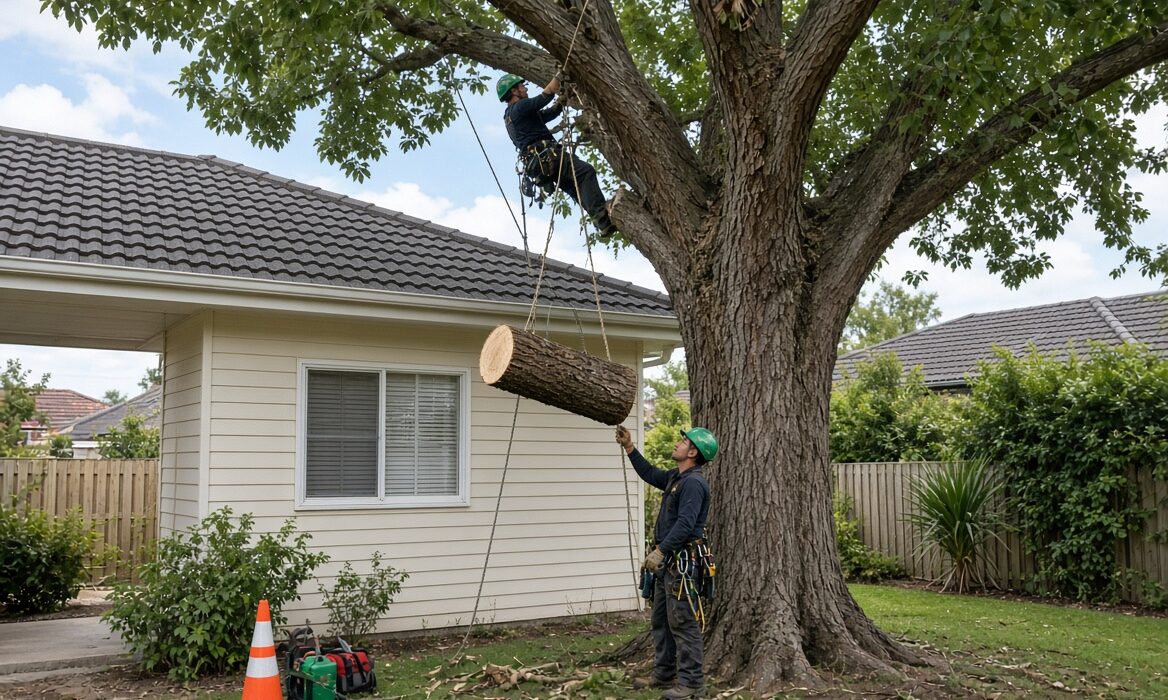
Unlike trees in open spaces, there is often no safe direction to fell a large tree next to a house. Professionals usually dismantle the tree in sections from the top down, using ropes, rigging systems, or cranes to lower each piece carefully. Any error in cutting, rigging, or direction can result in serious structural damage.
2. Injury Risks
Tree removal near structures is considered high risk work. Falling branches, swinging timber, equipment failure, or unexpected tree movement can cause serious injuries to workers or bystanders. DIY attempts or hiring inexperienced operators significantly increase the chance of accidents.
3. Damage to Property and Surroundings
Beyond the house itself, other risks include:
- Damage to fences, sheds, decks, or garden structures
- Impact on power lines or overhead cables
- Harm to nearby plants, lawns, or hard landscaping
- Damage to vehicles or neighbouring properties if sections fall outside the intended zone
4. Foundation and Soil Movement Issues
On certain soil types, especially clay soils, removing a large tree can affect the ground around the foundation. Tree roots draw moisture from the soil. When the tree is removed, the soil can reabsorb water and expand (known as heave). In other cases, the decaying root system can leave voids that cause settlement. Both situations may lead to cracks in walls, floors, or the foundation over time.
This risk is higher with very large, mature trees that have extensive root systems close to the house.
5. Underground Utilities and Services
Roots often grow near or around water pipes, sewer lines, gas lines, and electrical cables. During removal or stump grinding, there is a risk of damaging these services. Hitting a utility line can be expensive and dangerous.
6. Unexpected Tree Behaviour
Large trees may have hidden defects such as internal decay, weak unions, or metal objects (old nails, wire, or fencing) grown into the trunk. These can cause the tree to split, twist, or fall in an unpredictable direction during cutting. What looks like a straightforward job can quickly become complicated.
7. Cost and Insurance Implications
If something goes wrong and the tree damages your home, insurance claims may be complicated, especially if the work was done by an uninsured or unqualified operator. Professional tree companies carry public liability insurance, which protects homeowners in the event of an accident.
How to Reduce These Risks
The safest approach is to hire experienced, qualified tree removal specialists who:
- Assess the tree, site, and surrounding structures carefully
- Use proper rigging, climbing, or crane techniques
- Have the right insurance and safety procedures
- Plan the entire removal process in advance
Never attempt to remove a large tree near your house yourself. The combination of height, weight, and proximity to structures makes it far too hazardous for DIY methods.
Final Thoughts
Removing a large tree near a house can eliminate ongoing risks such as falling branches or root related foundation problems, but the removal process itself must be managed carefully. With the right team and proper planning, these risks can be greatly reduced.
If you have a large tree close to your home and need professional advice or safe removal, the experienced team at Aussie Tradies Group can help. Visit https://atgltd.com.au/ to get in touch and arrange a consultation.