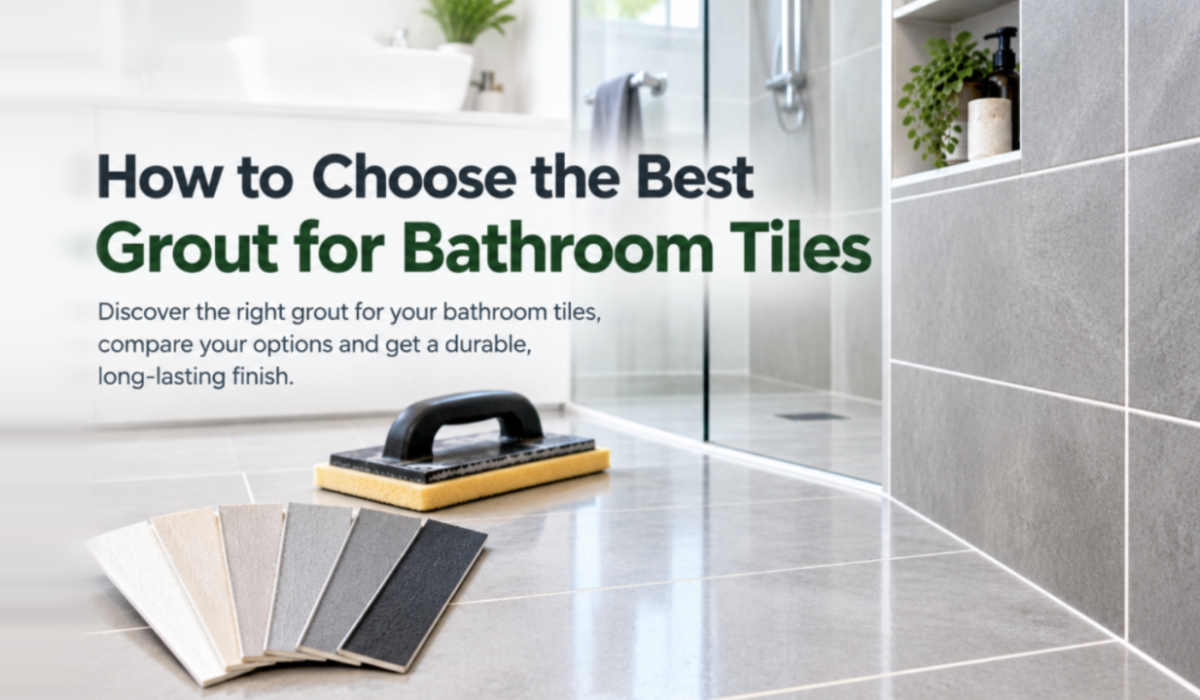
How to Choose the Best Grout for Bathroom Tiles
Choosing the right grout is just as important as selecting the right bathroom tiles. Grout fills the gaps between tiles, keeps their edges properly supported and helps create a clean, finished appearance. The wrong grout can lead to discolouration, cracking, moisture-related problems and difficult maintenance.
So, what is the best grout for bathroom tiles? The answer depends on where the tiles are installed, how much moisture the area receives and how much maintenance you are willing to perform.
Whether you are renovating a bathroom or replacing damaged grout, understanding the different grout options can help you make a better decision.
Why Is Choosing the Right Bathroom Grout Important?
Grout does more than improve the appearance of tiled surfaces. It plays an important role in maintaining the condition of your bathroom.
Here are some reasons why selecting suitable grout matters.
1. Helps Protect Tile Edges
Grout fills the joints between individual tiles and helps support their edges. Properly installed grout reduces the amount of dirt and debris collecting between tiles.
2. Improves Moisture Resistance
Bathrooms experience regular exposure to water and humidity. Choosing grout suitable for wet areas helps reduce water absorption through grout joints.
However, grout is not a substitute for a waterproofing membrane.
3. Prevents Dirt Build-Up
Some grout types have lower porosity than others. Choosing the right material can make cleaning easier and reduce staining.
4. Improves Bathroom Appearance
Grout colour can completely change the appearance of tiled walls and floors. Matching grout creates a seamless appearance, while contrasting colours highlight the tile pattern.
What Are the Different Types of Grout for Bathroom Tiles?
Before choosing grout, it is important to understand the available options.
Each type has different properties, installation requirements and maintenance needs.
1. Cement-Based Grout
Cement-based grout is one of the most commonly used options for residential tiling projects.
It is made using cement, water-retaining additives and other materials. Some products also contain polymers to improve flexibility and performance.
Benefits:
- Generally affordable.
- Available in different colours.
- Suitable for many wall and floor tiles.
- Relatively straightforward to install.
- Widely available.
Limitations:
- Can absorb moisture depending on the formulation.
- May require a suitable grout sealer.
- Can become stained over time.
- Requires proper cleaning and maintenance.
Cement-based grout can be a suitable choice for many bathroom applications when the correct product is selected.
2. Epoxy Grout
Epoxy grout is made using epoxy resins and a hardener. It offers excellent resistance to moisture, stains and many household chemicals.
It is commonly considered for bathrooms, showers and other areas exposed to frequent water contact.
Benefits:
- Highly resistant to staining.
- Low water absorption.
- Durable when correctly installed.
- Generally does not require sealing.
- Easier to maintain in many applications.
Limitations:
- More expensive than standard cement grout.
- Requires careful installation.
- Can be more difficult to work with.
- Needs proper cleaning during installation to prevent residue.
Epoxy grout is worth considering for shower floors, shower walls and other areas where stain resistance is important.
3. Unsanded Grout
Unsanded grout has a smooth texture and does not contain the larger sand particles found in traditional sanded grout.
It is generally suitable for narrower grout joints and delicate tile surfaces that could be scratched by abrasive materials.
Benefits:
- Smooth finish.
- Suitable for narrow joints.
- Less abrasive on delicate tile surfaces.
- Available in different colours.
Limitations:
- May be unsuitable for wider joints.
- Can shrink more than sanded grout.
- Not appropriate for every floor tile application.
Always check the manufacturer’s recommended joint width before choosing unsanded grout.
4. Sanded Grout
Sanded grout contains fine sand particles that help reduce shrinkage and improve its suitability for wider joints.
It is commonly used with many ceramic and porcelain floor tiles.
Benefits:
- Suitable for wider grout joints.
- Generally more resistant to shrinkage.
- Available in multiple colours.
- Suitable for many floor tiling projects.
Limitations:
- Can scratch certain polished or delicate tiles.
- Requires proper mixing and application.
- May need sealing depending on the product.
5. Premixed Grout
Premixed grout comes ready to use and does not require traditional mixing before application.
Some products use advanced resin or acrylic formulations and offer convenient installation for suitable applications.
Benefits:
- Convenient to apply.
- Consistent product mixture.
- Less preparation required.
- Available in different finishes and colours.
Limitations:
- Not every product is suitable for shower floors or continuously wet areas.
- Application requirements vary.
- May cost more than traditional cement grout.
Always check the product specifications before using premixed grout in a shower or other wet area.
Which Grout Is Best for Different Bathroom Areas?
Not every part of a bathroom experiences the same amount of moisture or daily use.
Here is how to approach grout selection for different surfaces.
Shower Walls
Shower walls experience frequent water exposure and require suitable grout.
Epoxy grout is a strong option because of its low water absorption and stain resistance. A suitable cement-based grout can also work when installed according to manufacturer instructions.
Shower Floors
Shower floors require grout that can withstand regular water exposure, cleaning and foot traffic.
Epoxy grout is often worth considering because it offers excellent moisture and stain resistance.
The grout must also be compatible with the tile material and joint width.
Bathroom Floors
Bathroom floors experience foot traffic, water splashes and regular cleaning.
A suitable sanded or polymer-modified cement grout can work well, depending on tile spacing and manufacturer recommendations. Epoxy is another option for homeowners looking for improved stain resistance.
Bathroom Walls
Bathroom walls generally experience less physical wear than floors.
A suitable cement-based or epoxy grout can provide a durable finish. The final choice depends on tile type, joint width and moisture exposure.
How to Choose the Right Grout Colour
Grout colour has a major influence on the final appearance of your bathroom.
Even when using the same tiles, different grout colours can create completely different visual results.
White Grout
White grout creates a bright, clean appearance and works particularly well with white, grey and neutral tiles.
However, it may show dirt and discolouration more easily in frequently used areas.
Grey Grout
Grey grout is a popular option for modern bathrooms.
It works well with white, marble-effect and concrete-look tiles. Medium grey shades can also help hide everyday dirt.
Beige Grout
Beige grout complements warm-toned tiles, natural stone and earthy bathroom designs.
It creates a softer appearance than strong contrasting colours.
Dark Grout
Dark grout can create a striking contrast with lighter tiles.
It is particularly effective for highlighting tile patterns, although soap residue and mineral deposits may still be visible.
Tip: Always compare grout samples with your actual tiles under bathroom lighting before making a final decision.
7 Common Bathroom Grouting Mistakes to Avoid
Even high-quality grout can fail when it is installed incorrectly.
Avoid these common mistakes to achieve a better and longer-lasting finish.
1. Choosing Grout Without Checking Joint Width
Different grout products are designed for specific joint widths.
Using an unsuitable product can increase the risk of cracking, shrinkage or poor adhesion.
2. Ignoring Tile Material
Some delicate tiles can become scratched by sanded grout.
Always check tile compatibility before selecting a grout product.
3. Using the Wrong Grout in Wet Areas
Not every grout product is suitable for shower floors or continuously wet environments.
Check the manufacturer’s specifications before installation.
4. Adding Too Much Water
Incorrect mixing can affect grout strength, consistency and colour.
Follow the manufacturer’s recommended water-to-product ratio.
5. Skipping Surface Preparation
Dust, adhesive residue and debris can prevent grout from filling joints correctly.
Clean the tile joints thoroughly before applying grout.
6. Cleaning Grout Too Early or Too Late
Cleaning at the wrong stage can remove grout from joints or leave difficult residue on tile surfaces.
Follow the product instructions for the correct cleaning time.
7. Treating Grout as Waterproofing
Grout alone does not waterproof a bathroom.
A properly installed waterproofing membrane beneath the tiled surface is essential in areas that require waterproofing.
How to Maintain Bathroom Grout
Regular maintenance can help preserve grout appearance and reduce the risk of premature deterioration.
Follow these simple practices:
- Clean tiled surfaces regularly with a suitable pH-neutral cleaner.
- Avoid harsh cleaning chemicals unless approved for the grout.
- Dry areas with excessive standing water when practical.
- Check grout lines for cracks and gaps.
- Address mould and persistent discolouration promptly.
- Apply a suitable grout sealer when recommended by the manufacturer.
If grout becomes cracked, loose or heavily deteriorated, professional inspection can help determine whether repair or complete regrouting is necessary.
When Should You Regrout Your Bathroom Tiles?
Over time, bathroom grout can deteriorate due to moisture exposure, movement, cleaning products and everyday use.
Some warning signs include:
- Cracked grout lines.
- Missing or crumbling grout.
- Persistent stains.
- Mould that returns after cleaning.
- Gaps between tiles.
- Water-related damage around tiled areas.
Minor surface discolouration does not always mean the grout needs replacing. However, damaged or missing grout should be inspected to prevent further deterioration.
Professional regrouting can restore the appearance of tiled surfaces and address deteriorated joints.
Does New Grout Prevent Bathroom Leaks?
No. Installing new grout does not guarantee that a bathroom will become waterproof.
Water can travel through tile joints, cracks and other weak points if the underlying waterproofing system is damaged.
If you notice leaking outside the shower, damp walls, water stains or persistent moisture, the underlying waterproofing should be inspected.
Replacing grout without addressing a failed waterproofing membrane may only provide a temporary cosmetic improvement.
Why Choose Professional Bathroom Tiling Services in Melbourne?
Choosing suitable grout is only one part of achieving a durable bathroom finish.
Correct tile preparation, joint sizing, product selection and installation all contribute to the final result.
A professional tiler can assess your existing surfaces, recommend suitable materials and ensure grout is applied according to product requirements.
Aussie Tradies Group (ATG) provides tiling, waterproofing and regrouting solutions for Melbourne property owners.
Whether you are updating an existing bathroom, repairing damaged grout or planning a complete renovation, professional workmanship can help achieve a clean and durable result.
Contact ATG to discuss your bathroom tiling and regrouting requirements.
Frequently Asked Questions
1. What is the best grout for bathroom tiles?
Epoxy grout is an excellent option for bathrooms because of its low water absorption and stain resistance. However, suitable cement-based grout can also perform well when correctly installed.
2. Is epoxy grout better than cement grout?
Epoxy grout generally offers better stain resistance and lower water absorption. Cement grout is usually more affordable and easier to work with.
3. Should bathroom grout be sealed?
Many cement-based grouts benefit from an appropriate sealer. Epoxy grout generally does not require sealing. Always follow the product manufacturer’s instructions.
4. What colour grout is best for bathroom floors?
Grey and beige are practical choices because they can hide everyday dirt better than very light grout. The best colour depends on your tile design and personal preference.
5. How often should bathroom grout be replaced?
There is no fixed replacement schedule. Grout should be inspected regularly and replaced when it becomes cracked, loose, missing or significantly deteriorated.
6. Can I apply new grout over old bathroom grout?
In most cases, simply applying new grout over existing grout is not recommended. Damaged or deteriorated grout should be removed to the appropriate depth before replacement.
7. Does grout stop water from leaking through bathroom tiles?
No. Grout helps fill tile joints but is not a replacement for a waterproofing membrane. Proper bathroom waterproofing is essential to protect the underlying structure.