Why Do Tree Stumps Produce New Shoots After Cutting?
If you have ever cut down a tree and watched the stump come back to life with a cluster of new green shoots, you are not alone. Many homeowners are surprised when a tree they thought was gone starts growing again. This is a completely natural survival response, and understanding why it happens can help you manage it properly.
Here’s a clear explanation of the science behind stump regrowth and what you can do about it.
The Biology Behind Stump Sprouting
When a tree is cut down, the trunk is removed but the root system usually remains alive underground. Those roots still hold significant reserves of stored energy in the form of starches and sugars built up over previous growing seasons.
At the same time, the tree loses a key hormonal signal. While the tree was intact, hormones produced in the growing tips of the branches travelled downward and kept dormant buds suppressed. This is known as apical dominance. Once the trunk is removed, that suppressing signal disappears. The dormant buds, which have been sitting inactive in the bark or at the root collar (the area where the trunk meets the roots), are suddenly released and begin to grow.
The combination of available stored energy and the removal of hormonal suppression allows new shoots to appear, sometimes within just a few weeks during the growing season.
Two Types of Regrowth
Not all new growth comes from the same place:
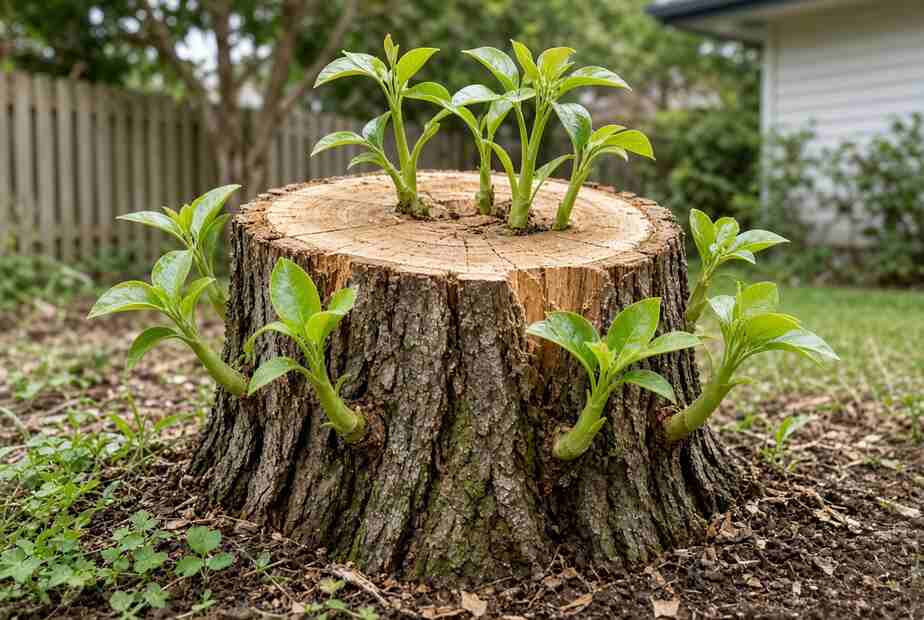
- Stump sprouts grow directly from the cut surface or sides of the stump. These often form a ring of shoots around the edge of the stump.
- Root suckers emerge from the roots themselves, sometimes appearing several metres away from the original stump. Species such as poplars, willows, and some maples are especially known for this.
Both types are fuelled by the remaining root system and give the tree a strong head start compared with a newly planted seedling.
Which Trees Are Most Likely to Regrow?
Hardwood (broadleaf) trees are generally much more likely to produce new shoots than conifers.
Strong resprouters include:
- Maples (especially silver and Norway maple)
- Willows
- Poplars and cottonwoods
- Elms
- Oaks (particularly younger ones)
- Locusts
- Tree of heaven
Most conifers, such as pines, spruces, and firs, rarely regrow from stumps because they lack the same type of dormant buds at the base. There are a few exceptions, such as coast redwood.
Younger trees and those cut during the dormant season tend to resprout more vigorously because they have higher energy reserves stored in the roots.
Why This Happens in Nature
Stump sprouting is an evolutionary survival strategy. In the wild, trees face disturbances such as fire, storms, browsing animals, or human activity. Being able to regrow quickly from the base or roots gives the tree a second chance without having to start again from seed. This is the same natural ability that people have used for centuries in the traditional woodland practice known as coppicing, where trees are deliberately cut near ground level and allowed to regrow multiple stems for harvest.
How to Stop Unwanted Stump Regrowth
If you do not want the tree to come back, simply cutting the shoots off is not enough. The roots will keep sending up new growth as long as they still have energy reserves.
Effective options include:
- Stump grinding to destroy the upper root collar and disrupt the main energy source
- Applying a suitable herbicide to the freshly cut stump surface (best done immediately after cutting)
- Repeatedly removing new shoots over one or two seasons until the root system is exhausted
- Complete excavation of the stump and major roots in stubborn cases
The most reliable long term solution is usually professional stump grinding combined with proper treatment.
Final Thoughts
Tree stumps produce new shoots because the living root system still holds energy and the natural growth controls of the tree have been disrupted. It is a remarkable survival mechanism, but it can become a nuisance if you want the tree permanently gone.
If you are dealing with unwanted stump regrowth or need advice on tree removal and stump management, the experienced team at Aussie Tradies Group can help. Visit https://atgltd.com.au/ to get in touch and arrange professional assistance.