Why Do Floor Tiles Crack Even Without Heavy Impact?
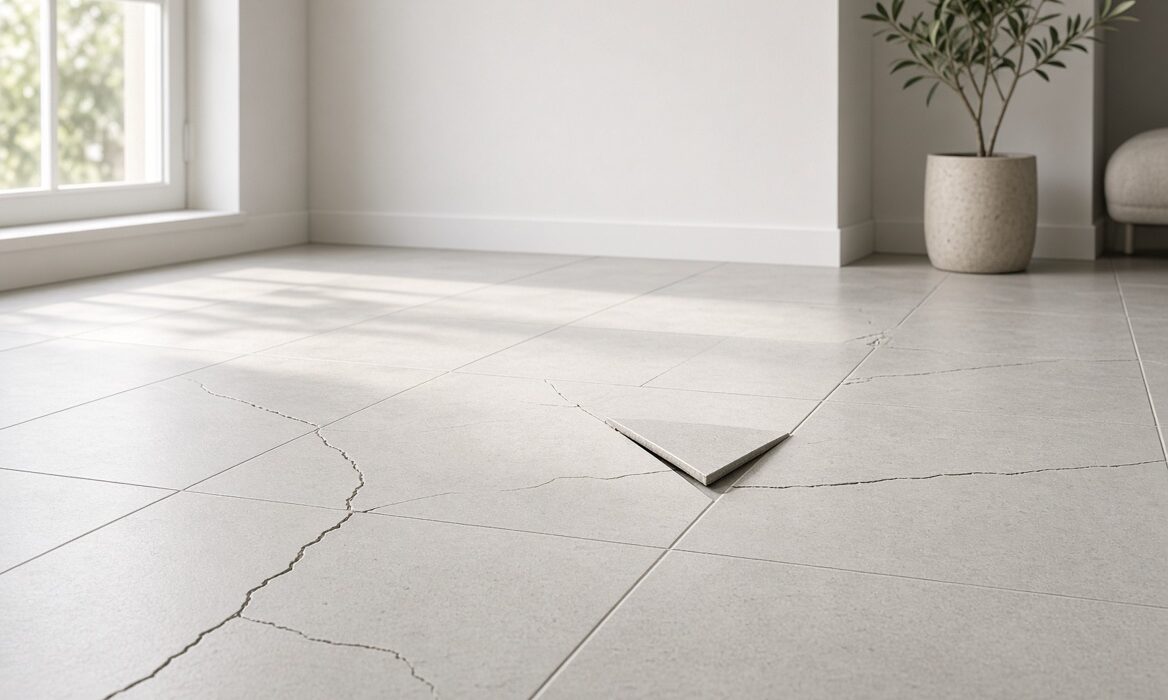
Floor tiles can crack even when nothing heavy has been dropped on them or when they have not experienced any obvious physical impact. This happens because tiles are affected by several factors beneath and around their surface, including poor installation, uneven subfloors, temperature changes, moisture movement and structural shifts.
Although ceramic and porcelain tiles are designed to withstand everyday foot traffic, they are not completely resistant to pressure or movement. Even small changes in the surface underneath a tile can create stress that eventually causes cracks.
Understanding why floor tiles crack without heavy impact is important because the visible damage may be a sign of a deeper problem. Replacing a damaged tile without addressing its underlying cause can result in the same issue happening again.
In this guide, we explain the most common reasons floor tiles crack, how to recognise early warning signs and what homeowners can do to prevent further damage.
1. Uneven Subfloor Beneath the Tiles
One of the most common reasons floor tiles crack is an uneven or unstable subfloor.
Before tiles are installed, the underlying surface must be properly prepared. It needs to be level, clean, stable and capable of supporting the weight of the tiles and everyday use.
If the subfloor contains dips, raised sections or weak areas, individual tiles may not receive even support. When someone walks across the floor, pressure is transferred to the unsupported sections.
Over time, this repeated pressure can cause the tile to develop small cracks.
How an Uneven Subfloor Causes Cracks
Tiles are rigid materials. Unlike timber or flexible flooring, they cannot easily bend to accommodate movement underneath them.
When a tile rests on an uneven surface, certain sections carry more weight than others. This creates concentrated stress points.
Common signs of an uneven subfloor include:
- Cracks appearing across individual tiles.
- Tiles becoming loose or moving slightly.
- Hollow sounds when tapping the tiled surface.
- Cracks appearing repeatedly in the same area.
- Grout lines separating between neighbouring tiles.
Proper floor preparation is essential before installing new tiles. Levelling compounds and suitable preparation methods can help create a stable foundation.
2. Poor Tile Installation
Incorrect installation is another major reason floor tiles develop cracks without experiencing heavy impact.
Even high-quality tiles can fail when installation procedures are not followed correctly. The adhesive, installation technique, tile spacing and surface preparation all affect the long-term durability of a tiled floor.
For example, if insufficient tile adhesive is applied, small gaps may remain underneath the tile.
These empty spaces create unsupported sections. When normal pressure is applied, the tile can flex slightly and eventually crack.
Common Tile Installation Mistakes
Several installation problems can contribute to cracked floor tiles:
Insufficient adhesive coverage: Not enough adhesive underneath a tile can leave unsupported areas that become vulnerable to pressure.
Incorrect adhesive selection: Different tiles and surfaces require suitable adhesive products. Using an unsuitable adhesive can affect bonding and performance.
Poor surface preparation: Dust, grease, loose materials and uneven surfaces can prevent proper adhesion.
Incorrect installation techniques: Inconsistent adhesive application and poor positioning can create weak points beneath the tiles.
Insufficient curing time: Walking on newly installed tiles before the adhesive has properly cured can disturb their position and bonding.
Professional installation helps reduce these risks by ensuring that the surface, adhesive and installation methods are suitable for the project.
3. Temperature Changes and Thermal Expansion
Temperature changes can also cause floor tiles to crack, particularly when the flooring experiences repeated heating and cooling.
Most building materials expand when temperatures increase and contract when temperatures decrease.
Tiles, adhesive and the underlying surface can respond differently to temperature changes. If the installation does not allow sufficient movement, stress can develop within the tiled surface.
This pressure may eventually cause individual tiles to crack or sections of flooring to become damaged.
Where Temperature-Related Cracks Commonly Occur
Temperature-related tile damage can happen in:
- Areas exposed to direct sunlight.
- Rooms with large windows.
- Floors near heating systems.
- Outdoor tiled areas.
- Rooms with significant temperature fluctuations.
Movement joints are important because they allow building materials to expand and contract without placing excessive pressure on the tiled surface.
The appropriate placement and design of these joints depend on the installation location, substrate and applicable standards.
4. Moisture Problems Beneath the Floor
Moisture is another factor that can contribute to cracked floor tiles.
Water can enter through damaged grout, leaking plumbing, inadequate waterproofing or moisture rising from the underlying structure.
Although porcelain and many ceramic tiles have relatively low water absorption, moisture can still affect the materials beneath them.
For example, moisture may weaken certain adhesives, damage susceptible substrates or contribute to movement within the floor structure.
When the supporting surface becomes unstable, the tiles above it may experience additional stress.
Warning Signs of Moisture-Related Tile Damage
Look for these signs around damaged tiles:
- Grout becoming discoloured.
- Persistent dampness around floor edges.
- Loose or hollow-sounding tiles.
- Musty smells in enclosed areas.
- Cracks appearing near plumbing fixtures.
- Water stains or damaged skirting boards.
If moisture is suspected, identifying the source is more important than simply replacing the cracked tile.
A qualified professional can investigate the affected area and recommend suitable repairs.
5. Building Settlement and Structural Movement
Buildings can experience small movements over time. This is sometimes associated with natural settlement, changes in soil conditions, foundation movement or structural adjustments.
Most buildings are designed to accommodate a certain amount of normal movement. However, excessive or uneven movement can affect internal finishes, including tiled floors.
Because tiles are rigid, they may crack when the supporting structure moves beyond what the installation can accommodate.
Signs of Structural Movement
Structural movement may be responsible when:
- Multiple tiles crack in a similar direction.
- Cracks extend across several adjoining tiles.
- Wall and floor cracks appear together.
- Doors and windows begin sticking.
- Cracks repeatedly return after repairs.
Not every cracked tile indicates a structural problem. However, widespread or recurring cracks should be investigated rather than treated as isolated tile damage.
6. Missing or Incorrect Movement Joints
Movement joints are designed to accommodate expansion, contraction and other small movements within a tiled floor.
When these joints are missing, incorrectly positioned or filled with unsuitable materials, pressure can build up across the tiled surface.
This can cause tiles to crack, lift or separate from the underlying surface.
Large tiled areas are particularly important to plan carefully because they may experience greater cumulative movement.
Movement joints should be installed in suitable locations and designed according to the flooring system, building conditions and relevant Australian standards.
7. Heavy Furniture and Concentrated Pressure
Floor tiles do not need to experience a sudden heavy impact to crack. Continuous pressure from furniture and appliances can also contribute to damage.
For example, a heavy refrigerator, cupboard or dining table may place concentrated weight on a small section of flooring.
If the tile underneath has an unsupported area or an existing weakness, the pressure can eventually cause it to crack.
The problem can become more noticeable when furniture has small or narrow feet that distribute weight across a limited surface area.
How to Reduce Pressure on Floor Tiles
Homeowners can reduce unnecessary pressure by:
- Using protective pads beneath furniture legs.
- Distributing heavy loads across a wider surface.
- Avoiding dragging heavy appliances across tiled floors.
- Checking for existing cracks before placing heavy furniture.
- Ensuring the floor is properly supported.
These precautions are particularly useful in kitchens, living rooms and other high-use areas.
8. Incorrect Tile Selection
Not every tile is suitable for every flooring application.
Tiles vary in thickness, strength, composition, water absorption and intended use. Selecting an unsuitable product for a particular environment can increase the risk of cracking.
For example, a tile designed for wall applications should not automatically be used on a floor where it may experience regular foot traffic and loading.
Similarly, certain tiles may not be suitable for specific commercial or outdoor environments.
Before choosing tiles, consider:
- The intended installation location.
- Expected foot traffic.
- The type of supporting surface.
- Tile thickness and strength.
- Moisture exposure.
- Manufacturer installation recommendations.
Selecting the right product is an important part of creating a durable tiled floor.
9. Incorrect Grout Application
Grout fills the spaces between tiles and contributes to the overall finish of a tiled floor.
However, grout is not a replacement for proper tile adhesive or suitable movement joints.
Incorrect grout application can contribute to visible problems and may indicate weaknesses in the installation.
For example, rigid grout placed where a flexible movement joint is required can restrict movement and contribute to cracking or separation.
Other common grout problems include:
- Incorrect grout selection.
- Poor mixing ratios.
- Inadequate joint preparation.
- Insufficient curing.
- Crumbling or missing grout.
If grout cracks repeatedly alongside tile damage, the entire installation should be assessed to identify the underlying issue.
10. Ageing Materials and Deteriorating Adhesive
Even a properly installed tiled floor can develop problems as building materials age.
Over time, certain adhesives, substrates and supporting materials may deteriorate due to moisture exposure, repeated movement or unsuitable installation conditions.
As the bond between the tile and supporting surface weakens, the tile may become loose.
A loose tile can move slightly under everyday foot traffic, increasing stress and making cracking more likely.
If several tiles are becoming loose or damaged, repairing only the visible cracks may not provide a lasting solution.
An assessment of the existing installation can help determine whether individual tile replacement or more extensive work is required.
How to Identify the Cause of Cracked Floor Tiles
Finding the actual cause of a cracked tile is essential before starting repairs.
Different types of cracks can provide useful clues about what is happening beneath the flooring.
Here are some common patterns to look for.
| Visible Problem | Possible Cause |
|---|---|
| One tile has a small crack | Localised pressure or an unsupported area |
| Several tiles crack in a straight line | Subfloor movement or structural changes |
| Tiles sound hollow | Insufficient adhesive coverage or loss of bonding |
| Cracks appear with damaged grout | Installation problems or movement |
| Tiles become loose | Adhesive deterioration or substrate issues |
| Cracks appear near damp areas | Moisture-related damage |
| Multiple cracks return after repairs | Underlying movement or installation problems |
These observations can help identify potential causes, but they do not confirm the exact source of the damage.
A professional inspection may be necessary, especially when cracks are widespread or continue appearing after repairs.
Can Cracked Floor Tiles Be Repaired Without Replacing the Entire Floor?
Yes. In many situations, cracked floor tiles can be repaired by replacing only the affected tiles.
However, the correct repair method depends on the extent of the damage and the condition of the underlying surface.
When Individual Tile Replacement Is Suitable
Replacing individual tiles may be appropriate when:
- Only one or two tiles are damaged.
- The surrounding tiles remain secure.
- The underlying surface is stable.
- There are no signs of widespread structural movement.
- Matching replacement tiles are available.
The damaged tile is carefully removed, the surface is prepared and a suitable replacement tile is installed using the correct adhesive and grout.
When More Extensive Repairs Are Necessary
A larger repair may be required when:
- Several tiles are cracked across a large area.
- The subfloor is uneven or damaged.
- Moisture has affected the supporting materials.
- Tiles continue becoming loose.
- Cracks repeatedly appear after replacement.
In these situations, the underlying problem needs to be corrected before installing new tiles.
Replacing damaged tiles without addressing the cause may only provide a temporary improvement.
How to Prevent Floor Tiles from Cracking
Preventing cracked tiles starts with selecting suitable materials and ensuring that the floor is properly prepared and installed.
Here are practical ways to protect your tiled flooring.
1. Prepare the Surface Properly
The supporting surface should be clean, stable and sufficiently level before installation.
Any significant unevenness, loose materials or existing damage should be addressed before tiling begins.
2. Choose Suitable Tiles
Select tiles according to the intended application.
Consider their strength, thickness, intended use and manufacturer recommendations before purchasing.
3. Use the Correct Adhesive
Different tile types and substrates may require different adhesive products.
Using the correct adhesive and applying it according to the manufacturer’s instructions helps provide consistent support.
4. Allow Proper Movement
Movement joints should be incorporated where required to accommodate normal building and temperature-related movement.
This is particularly important across larger tiled areas and locations exposed to changing temperatures.
5. Address Moisture Issues
Investigate leaks, dampness and waterproofing problems before installing or repairing tiles.
Preventing moisture from affecting the underlying materials helps protect the overall flooring system.
6. Avoid Premature Foot Traffic
Newly installed tiles should not be exposed to unnecessary pressure before the adhesive and grout have cured according to the manufacturer’s instructions.
7. Arrange Professional Installation
Experienced tilers understand the importance of surface preparation, adhesive coverage, tile positioning and movement joints.
Professional workmanship can reduce installation-related problems and improve the long-term performance of the floor.
Why Professional Tiling Matters
A tiled floor is only as reliable as the materials and preparation beneath it.
Choosing attractive tiles is important, but proper installation plays an equally important role in ensuring that the finished surface remains secure and durable.
Professional tiling involves more than placing tiles in position. It includes assessing the substrate, preparing the surface, selecting suitable adhesives, maintaining consistent spacing and applying appropriate grout.
Waterproofing is also important in areas where moisture protection is required, particularly bathrooms and wet areas.
At Aussie Tradies Group, quality workmanship and suitable installation practices are important considerations when planning tiling and waterproofing projects.
Whether you are renovating an existing floor or installing new tiles, addressing potential problems before work begins can help reduce future maintenance and repair costs.
Explore our [tiling and waterproofing services] and learn more about how suitable preparation and professional workmanship can help protect your property.
Frequently Asked Questions
1. Why do floor tiles crack without anything being dropped on them?
Floor tiles can crack because of uneven subfloors, poor adhesive coverage, temperature changes, moisture problems or structural movement. These factors can create pressure within the tile even without a sudden impact.
2. Can floor tiles crack because of heat?
Yes. Temperature changes can cause building materials to expand and contract. If the tiled surface does not have suitable movement joints, accumulated pressure can contribute to cracking.
3. Do hollow-sounding tiles mean they will crack?
Not necessarily. Hollow sounds may indicate gaps beneath the tiles or a loss of bonding. However, unsupported areas can increase the risk of damage under normal foot traffic.
4. Can moisture cause floor tiles to crack?
Yes. Moisture can affect adhesives and susceptible supporting materials. If the underlying surface becomes unstable, tiles may loosen or crack.
5. Should I replace one cracked tile or the entire floor?
If the damage is limited to one tile and the surrounding surface is stable, individual replacement may be sufficient. Widespread or recurring cracks may require more extensive investigation and repairs.
6. Are porcelain tiles less likely to crack than ceramic tiles?
Porcelain tiles generally have lower water absorption and are often denser than standard ceramic tiles. However, both can crack if they are incorrectly installed, poorly supported or exposed to excessive stress.
7. How can I tell if cracked tiles are caused by structural movement?
Multiple cracks extending across adjoining tiles, cracks appearing in walls and floors, or repeated damage after repairs may indicate structural movement. A qualified professional should investigate these signs.
8. Can cracked floor tiles be prevented?
Many installation-related problems can be reduced through proper surface preparation, suitable tile selection, correct adhesive application, movement joints and professional installation.
Final Thoughts
Floor tiles can crack without heavy impact because the problem often starts beneath the visible surface. Uneven subfloors, poor installation, moisture, temperature changes and structural movement can all contribute to tile damage.
The most important step is to identify the underlying cause before replacing damaged tiles. This helps prevent recurring cracks and protects the long-term condition of your flooring.
If you are planning a flooring upgrade or need professional assistance with tiling and waterproofing, Aussie Tradies Group can help you explore suitable solutions for your property.
Need help with your next tiling project? Contact Aussie Tradies Group to discuss your requirements and request a quote.