Right Bathroom Tiles
How to Choose the Right Bathroom Tiles for Your Home
Walk into any tile showroom and you will quickly feel overwhelmed. There are hundreds of colours, dozens of sizes and finishes that range from glossy to rough stone. Yet the bathroom tiles you pick will be touched by water, steam and soap every single day for the next fifteen years or more. Choosing well is not only about style. It is about safety, cleaning time, comfort underfoot and how long your bathroom stays in good shape.
This guide explains how to choose the right bathroom tiles for your home, step by step. It is written by the team at Aussie Tradies Group, a local business based in Campbellfield that supplies tiling and waterproofing across Melbourne, backed by more than 25 years of practical experience. We have laid tiles in small ensuites, busy family bathrooms and large renovations, so the advice here comes from real work on real sites.
Quick answer: The best bathroom tiles are the ones that suit how the room is used. Choose porcelain for strength and low water absorption, pick a slip resistant finish for floors and shower bases, use larger tiles on walls to reduce grout lines, and always make sure waterproofing is completed properly before the first tile is laid.
Why Choosing the Right Bathroom Tiles Matters
A bathroom is the hardest working room in most homes. Surfaces are wet several times a day, temperatures change quickly and cleaning products are used often. The wrong tile can feel slippery, stain easily or crack when the house moves. The right tile makes the room easier to clean, safer to walk on and more pleasant to live in.
Tiles also make up the largest visible surface in the room. They set the mood before you notice the vanity, the tapware or the mirror. For homeowners planning a bathroom renovation in Melbourne, tile choice often decides both the look of the finished room and a big share of the budget.
What Makes Good Bathroom Tiles?
Good bathroom tiles share four qualities. They absorb very little water, they grip safely when wet, they resist staining and chemicals, and they suit the size and shape of the room. When a tile meets all four, it will usually perform well for many years, provided it is installed correctly over a proper waterproof layer.
Step One: Think About How Your Bathroom Is Used
Before you fall in love with a sample, picture the room in daily life. A bathroom used by young children has very different needs from a quiet guest ensuite that is rarely used. Thinking about this first saves you from choosing tiles that look wonderful but frustrate you later.
Family Bathrooms
Family bathrooms take the most wear. There are wet feet, splashing, dropped bottles and frequent cleaning. Choose tough porcelain with a good grip underfoot and a finish that hides water spots and soap marks. Mid tone colours usually show less dirt than very dark or pure white surfaces.
Ensuites and Master Bathrooms
Ensuites are used by fewer people, so you have more freedom to choose a delicate finish or a premium material such as natural stone. Warm tones and larger tiles can make an ensuite feel calm and spacious, which is the feeling most people want after a long day.
Powder Rooms and Small Bathrooms
Small rooms can carry bold choices because there is less surface to cover. A feature tile on one wall can add personality without a large cost. Light colours and larger tiles help small bathrooms feel open, while very busy patterns can make a tiny room feel crowded.
The Main Types of Bathroom Tiles Compared
Most bathroom tiles fall into a handful of materials. Each has strengths and weaknesses, so the best choice depends on where you plan to use it.
| Tile type | Best used for | Water absorption | Care level |
|---|---|---|---|
| Porcelain | Floors, walls and showers | Very low | Low |
| Ceramic | Walls and light use areas | Low to medium | Low |
| Natural stone | Feature walls and premium floors | Medium, needs sealing | High |
| Mosaic | Shower floors, niches and feature areas | Depends on material | Medium |
| Large format | Walls and floors in open rooms | Depends on material | Low |
Porcelain Bathroom Tiles
Porcelain is the most popular choice for bathrooms across Melbourne, and for good reason. It is dense, strong and absorbs very little water, which makes it suitable for floors, walls and showers. Modern porcelain can imitate stone, timber and concrete very convincingly, so you can enjoy a natural look without the extra maintenance.
Ceramic Bathroom Tiles
Ceramic tiles are lighter and usually more affordable than porcelain. They work well on bathroom walls and in rooms with light foot traffic. They are slightly softer, so they are less suited to heavy use floors. Ceramic comes in a huge range of colours and glazes, which makes it a favourite for feature walls and classic subway styles.
Natural Stone Tiles
Marble, travertine, limestone and slate create a rich, luxurious look that no printed tile can fully copy. Stone is also porous, which means it needs sealing and gentle cleaning products. If you love the look but not the upkeep, consider a high quality porcelain tile that imitates stone.
Mosaic Tiles
Mosaics are small tiles joined on sheets. Because they are small, they follow curves and slopes easily, which makes them ideal for shower floors and curved niches. They also add texture and sparkle to feature walls. The trade off is more grout lines, which need regular cleaning.
Large Format Tiles
Large format tiles are bigger than traditional sizes, often covering a wide area with very few joints. They create a clean, modern look and make cleaning easier. They do need a very flat surface and an experienced tiler, because any unevenness is more visible with a large tile.
How to Choose Bathroom Floor Tiles
Floors are where safety matters most. A wet bathroom floor is one of the most common places for slips at home, so grip should come before looks.
Check the Slip Resistance
Ask your supplier about the slip resistance rating of every floor tile you consider. A tile that feels smooth and polished in the showroom can become very slippery once it is wet. Look for textured, matte or honed finishes, and test the sample with a drop of water if you can.
Choosing Shower Floor Tiles
The shower floor needs the highest level of grip because it is wet and soapy every day. It also needs to slope gently towards the drain so water does not pool. This is why many shower floors use smaller tiles or mosaics.
Why Smaller Tiles Suit Shower Floors
Small tiles bend around the gentle slope of a shower floor without needing awkward cuts. Their extra grout lines also add natural grip underfoot. A large flat tile can still work, but it usually needs more cuts to follow the fall to the drain.
Falls and Drainage
The slope under the tiles is just as important as the tiles themselves. Water must flow steadily to the drain, with no flat spots where it can sit. A skilled tiler checks the falls before laying a single tile, because fixing a poor slope later means removing everything and starting again.
Floor Tiles for the Rest of the Bathroom
Outside the shower, you have a little more freedom. Many homeowners use the same tile across the whole floor for a seamless look, while others choose a slightly different shade or pattern to mark out the shower area. Floor tiles should always feel warm and comfortable, so consider adding underfloor heating if you want cosy mornings during a Melbourne winter.
How to Choose Bathroom Wall Tiles
Wall tiles do not need the same grip as floor tiles, so you have more freedom with finish and size. Glossy surfaces reflect light and make a room feel brighter, while matte surfaces look softer and hide water marks better.
Decide How High to Tile
In the shower, tiles should cover the walls fully to the ceiling or at least well above the shower head. In other areas, many people tile to half height, to the top of the vanity or all the way up for a continuous look. Full height tiling costs more but gives a cleaner, more modern result and protects walls from steam.
Feature Walls and Niches
A feature wall behind the vanity or inside the shower niche is a cost effective way to add personality. Use a bolder colour, a textured tile or a pattern just in that area, and keep the rest of the room calm. Niches also give you built in storage so bottles do not clutter the shower floor.
Choosing the Right Size, Shape and Layout
Size and layout change the feel of a room as much as colour does. The same tile can look completely different depending on how it is laid.
Tile Size
Larger tiles make a room feel open and reduce the number of grout lines, which means less scrubbing. Smaller tiles give more detail and suit curved surfaces and tight spaces. A good rule is to match the tile size to the room. Very large tiles can overwhelm a tiny powder room, while very small tiles can feel busy in a big bathroom.
Popular Layouts
- Straight stack gives a modern, clean grid look
- Brick pattern, often called subway, is classic and works in almost any style
- Herringbone adds movement and a sense of luxury
- Vertical stacking draws the eye upwards and makes ceilings feel taller
- Offset layouts soften the look of large tiles
Plan the Layout Before You Start
A professional tiler plans where the first tile begins so edge cuts look balanced and lines run straight. Ask your tiler to show you the layout plan before work starts, because moving a pattern after tiles are fixed is nearly impossible.
Colour, Finish and Grout
Colour is the part most people enjoy, but it should work with the rest of your home, not against it.
Picking a Colour That Lasts
Neutral tones such as white, soft grey, beige and warm stone tend to age well and suit most buyers if you ever sell. Bolder colours are fun, yet they can date quickly. A safe approach is to keep the main surfaces neutral and add colour through towels, accessories and one feature wall.
Glossy, Matte or Textured?
Glossy tiles bounce light around and feel fresh, but they show water spots and can feel slippery on floors. Matte tiles hide marks and feel softer. Textured tiles add grip and depth but can be harder to clean. Many homeowners combine a matte floor with glossy walls for balance.
Do Not Forget the Grout
Grout covers a lot of surface and changes how a tile looks. A matching grout colour makes the tile surface look continuous, while a contrasting colour highlights the pattern. Lighter grout shows dirt more easily, so a mid tone often works best in busy bathrooms. Ask your tiler about modern grouts that resist stains and mould.
Matching Bathroom Tiles to Your Home Style
Your bathroom should feel like part of the same home, not a separate showroom.
Modern and Minimal
Large format porcelain in concrete or stone looks, matte finishes and slim grout lines create a calm, uncluttered feel. Pair them with black or brushed metal tapware for a crisp result.
Classic and Hamptons Style
White subway tiles, soft grey grout and timber look floors suit coastal and traditional homes. Add a mosaic floor or a framed feature wall for extra charm.
Period and Heritage Homes
Melbourne has many Victorian and Edwardian homes. Small hexagon floors, black and white patterns and classic gloss wall tiles suit these homes beautifully and respect their character.
Do Not Skip the Waterproofing Under Your Bathroom Tiles
This is the part nobody sees, yet it matters more than any tile you choose. Tiles and grout are not waterproof on their own. Grout is porous and can crack as a house moves, so a proper waterproof layer must be applied underneath before any tile is laid.
Without it, water slowly reaches the walls and floor, causing mould, damp smells, swollen timber and expensive repairs. The best bathroom tiles in the world cannot protect a home that has no waterproofing beneath them. You can learn more about bathroom waterproofing in Melbourne and why it must always come first.
Why One Team for Waterproofing and Tiling Helps
When the same business handles both jobs, nobody has to guess who is responsible if something goes wrong later. The waterproofing and the tiling are planned together, and one team stays accountable for the finished result. You can read more on our tiling and waterproofing page.
Budgeting for Bathroom Tiles
Tile prices vary widely. A simple ceramic wall tile costs far less than imported natural stone, and installation costs rise with complex layouts, small tiles and large format pieces that need extra care.
What Affects the Final Cost
- The tile material and brand
- The total area of floor and walls to be covered
- Tile size and layout complexity
- The condition of the surface underneath
- Extra work such as levelling, niches and trims
- Waterproofing and preparation
Order Extra Tiles
Always order about ten percent more tiles than your measurements say. This covers cuts, breakages and future repairs. Tile batches can vary slightly in colour, so keeping spare tiles from the same batch is very helpful years later.
Order Early
Some tiles take weeks to arrive. Order early, check every box on delivery for chips and colour differences, and make sure the full quantity is on site before your tiler starts.
Common Mistakes When Choosing Bathroom Tiles
Choosing Looks Over Safety
A beautiful polished tile on the floor can become dangerous when wet. Always put grip first on floors and shower bases.
Ignoring Cleaning Needs
Very small tiles and dark grout lines look lovely but need more cleaning. Think honestly about how much time you want to spend scrubbing.
Forgetting the Surface Underneath
Uneven walls and floors show up as uneven tiles. A good tiler corrects the surface before laying, which is why preparation is as important as the tile itself.
Buying Without Seeing Samples at Home
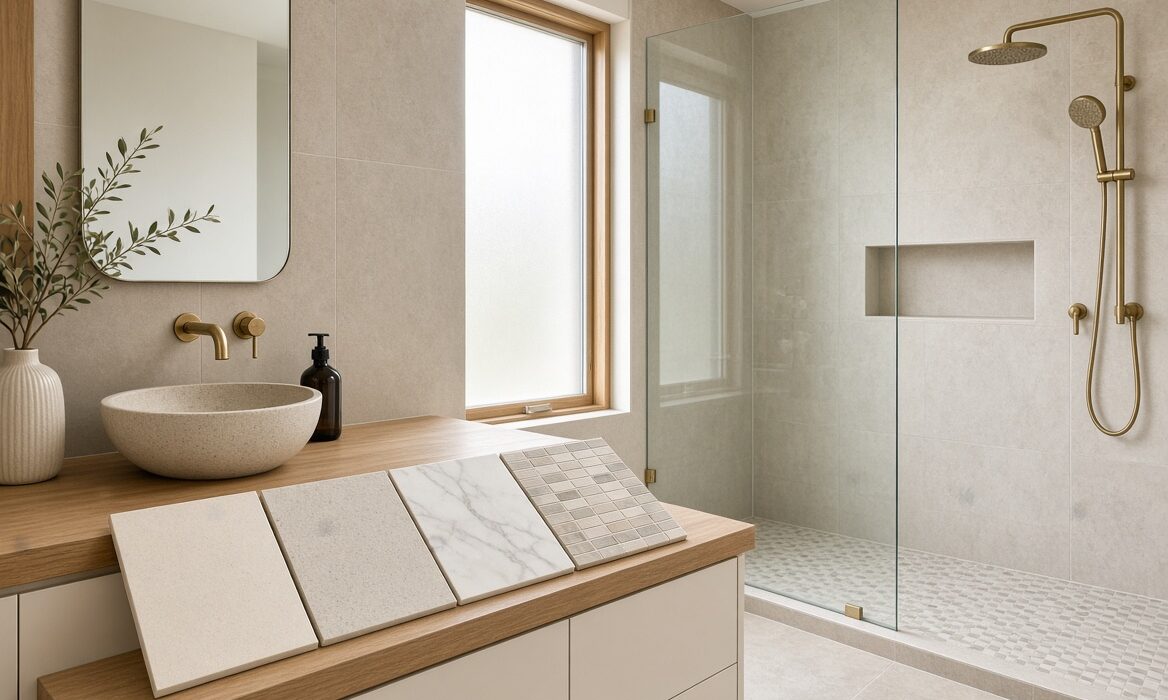
Showroom lighting can change how a tile looks. Take samples home and view them in your own bathroom, in morning and evening light.
Skipping Professional Advice
A short chat with an experienced tiler can save you from expensive mistakes. They know which tiles perform well, which are hard to lay and which suit your budget.
How to Care for Your Bathroom Tiles
Good care keeps your tiles looking new and protects the waterproofing underneath.
- Allow grout and silicone time to cure before heavy use
- Clean with a gentle tile cleaner instead of harsh chemicals
- Run the exhaust fan during and after every shower
- Wipe excess water from floors and screens regularly
- Check grout and silicone once a year and repair small cracks quickly
- Replace any cracked or loose tile promptly so water cannot reach the layer below
Questions to Ask Before You Buy
Take this short list to the showroom and to your tiler.
- Is this tile suitable for a wet area, and for the floor or the wall?
- What is its slip resistance rating?
- Does it need sealing, and how often?
- What grout and adhesive do you recommend for it?
- How much extra should I order?
- How long will delivery take?
Areas We Serve Across Melbourne
Aussie Tradies Group is based in Campbellfield and serves homeowners across northern, eastern and south eastern Melbourne. Our team regularly works in suburbs including Toorak, Doncaster, Box Hill, Hampton, Bentleigh, St Kilda and Hawthorn. If your suburb is not listed, please contact our team, because we can often help with projects in nearby areas.
Frequently Asked Questions About Bathroom Tiles
What are the best tiles for a bathroom?
Porcelain is usually the best choice because it is strong, dense and absorbs very little water. It works on floors, walls and showers. Ceramic is a good option for walls, and natural stone suits feature areas if you are happy to maintain it.
What size bathroom tiles are best?
Larger tiles suit most walls because they reduce grout lines and make cleaning easier. Smaller tiles and mosaics suit shower floors and curved areas because they follow slopes easily. The best size depends on the size of your room and the look you want.
Are matte or glossy bathroom tiles better?
Matte tiles hide water marks and feel safer underfoot, so they suit floors. Glossy tiles reflect light and feel bright, so they suit walls. Many bathrooms use a matte floor with glossy wall tiles.
Do I need waterproofing under bathroom tiles?
Yes. Tiles and grout are not waterproof on their own, so a waterproofing layer must be applied in showers and wet areas before tiling. It protects your walls, floor and structure from hidden water damage.
Can I tile over existing bathroom tiles?
Sometimes, but it is not always wise. Old tiles must be firmly fixed, flat and in good condition, and tiling over them raises the floor height. The waterproofing underneath may also be failing, so a professional inspection is the safest first step.
How long do bathroom tiles last?
Quality tiles can last for decades. The real lifespan depends on correct installation, proper waterproofing, regular care and how well the building moves over time.
How many extra tiles should I order?
Order about ten percent more than your measured area. This covers cuts, breakages and future repairs.
Ready to Choose Your Bathroom Tiles?
Choosing the right bathroom tiles comes down to knowing how your room is used, putting safety first, balancing style with cleaning time and making sure the waterproofing underneath is done properly. Take your time, view samples at home and ask plenty of questions.
Aussie Tradies Group provides tiling and waterproofing in Melbourne with clear quotes, tidy work sites and one team that stays responsible for the finished result. Call us on 0421 595 305, email info@atgltd.com.au or visit our contact page to request a free quote. You can also browse our full range of services or read more about our team before you decide.