How Much Does Stump Grinding Cost in Melbourne?
If you have an unwanted tree stump taking up space in your garden, one of the first questions you may ask is how much it will cost to remove it. The stump grinding cost Melbourne property owners pay depends on several factors, including the stump’s diameter, wood type, root structure, accessibility, and the depth of grinding required. A small stump in an open lawn is generally quicker and easier to grind than a large, mature stump surrounded by fences, garden beds, or other obstacles.
Stump grinding is a practical way to remove the visible portion of a tree stump without excavating the entire root system. The process can help reclaim garden space, improve the appearance of your property, and prepare the area for future landscaping. Understanding the factors that influence pricing can help you compare quotes, plan your budget, and choose the right service for your property.
How Much Does Stump Grinding Cost in Melbourne?
Stump grinding prices vary depending on the size and complexity of the job. Some service providers charge according to stump diameter, while others use a minimum call-out fee or calculate the price based on the time, equipment, and labour required.
The following table provides a general budgeting guide rather than a confirmed Melbourne market price list. Actual quotes can vary significantly between providers and properties.
| Stump size | General cost expectation |
|---|---|
| Small stump under 30 cm wide | Usually the lower-cost category |
| Medium stump, 30–60 cm wide | Moderate cost, depending on access |
| Large stump, 60–100 cm wide | Higher cost due to additional grinding |
| Very large stump over 100 cm wide | May require a customised quote |
| Multiple stumps on one property | Pricing depends on the number, size, and layout |
These categories are indicative only. They should not be treated as fixed prices or guaranteed quotes. For an accurate estimate, contact a local provider and share the stump’s approximate dimensions, location, and surrounding conditions.
The cheapest quote is not always the best value. Make sure you understand whether the quoted price includes the required grinding depth, wood chip management, and cleanup.
1. Stump Diameter and Size
The size of the stump is one of the most important factors affecting grinding costs. Larger stumps contain more wood and generally require more time, machine operation, and labour.
A small stump from a young tree may be completed relatively quickly. A wide stump from a mature tree can require repeated grinding passes across the surface and additional work around the edges.
When estimating the cost, a professional may consider:
- The stump’s diameter at ground level
- Its height above the surrounding soil
- The amount of exposed root material
- The depth to which the stump must be ground
- The volume of wood chips expected
For a more accurate quote, measure the stump across its widest point and take clear photographs from several angles. If the stump has large exposed roots, include those in your photographs as well.
2. Type of Tree and Wood Hardness
Different tree species have different wood densities and root structures. These differences can affect how quickly the grinder cuts through the stump and how much work is required.
Dense hardwood stumps may take longer to process than some softer woods, although the condition of the individual stump also matters. A decaying stump may behave differently from a recently cut stump of similar dimensions.
The service provider may consider:
- The tree species, if known
- The density and condition of the wood
- Whether the stump is dry, damp, or decaying
- The size and arrangement of the roots
- Any visible stones or foreign materials around the stump
A professional can choose suitable equipment and a grinding approach based on these conditions. Providing details about the original tree can help the provider assess the job, particularly if the species has an extensive root system.
3. Root Spread and Additional Root Grinding
The visible stump is not always the only part of the tree that needs attention. Some trees develop broad surface roots that extend across lawns, garden beds, or nearby landscaped areas.
If the service only needs to grind the central stump, the job may be relatively straightforward. If you also want large exposed roots reduced, additional labour and machine time may be required.
Extra work may be needed when roots:
- Extend into a lawn that needs restoration
- Interfere with garden beds
- Create obstacles along pathways
- Affect the planned layout of a landscaped area
- Need to be reduced to improve the appearance of the garden
Stump grinding generally does not remove the entire underground root system. Most remaining roots are left in the soil to decay naturally.
Before accepting a quote, clarify whether it covers the visible stump only or includes selected surface roots. This helps prevent confusion about the final result and the total price.
4. Accessibility of the Stump
Access can have a significant impact on the cost of stump grinding in Melbourne. A stump in an open front yard may be easy to reach, while one behind a narrow side passage or inside a restricted backyard can require additional planning.
The equipment must be able to reach the stump safely and operate within the available space.
Access-related considerations include:
- Narrow gates and pathways
- Steps or changes in ground level
- Steep or uneven surfaces
- Fences and retaining walls
- Nearby sheds or buildings
- Limited space for machinery
- Obstacles that need to be moved before work begins
Where access is restricted, a provider may need to use a smaller grinder or allow extra time for equipment positioning.
A small stump in a difficult location can therefore cost more to grind than a larger stump in an open area.
When requesting a quote, provide photographs of the access route as well as the stump itself. Mention any gates, steps, slopes, or other restrictions that could affect the work.
5. Required Grinding Depth
The depth of grinding affects both the amount of work and the final cost. Grinding the stump just below ground level is generally less involved than reducing it further to prepare for a particular landscaping project.
The right depth depends on how you intend to use the area.
For lawn restoration: The stump may need to be ground below the surface so the area can be filled and prepared for grass or turf.
For garden beds: The required depth depends on the planned planting and the amount of remaining wood that can be accommodated.
For general garden maintenance: A shallower grind may be suitable if the objective is simply to remove the visible stump.
For construction or major landscaping: Grinding alone may not be sufficient. The project may require further root removal, excavation, or ground preparation.
Deeper grinding typically creates more wood chips and can increase the time required. Explain your plans to the provider so the quote reflects the work you actually need.
6. Number of Stumps on the Property
If you have several stumps, ask for a quote covering the entire job rather than pricing each stump in isolation.
The total cost will depend on the number of stumps, their dimensions, how far apart they are, and the equipment required. Multiple small stumps may be relatively straightforward, while several large stumps across a difficult site can require substantial work.
A multi-stump job may involve:
- Moving the grinder between locations
- Preparing each work area
- Adjusting the approach for different stump sizes
- Grinding selected surface roots
- Managing the resulting wood chips
- Cleaning the affected areas
Having multiple stumps assessed at once can make it easier to compare the overall cost and coordinate the work.
Provide a list of stump locations and approximate diameters when requesting the quote. Photographs are particularly useful if the stumps are spread across different parts of the property.
7. Equipment and Labour Requirements
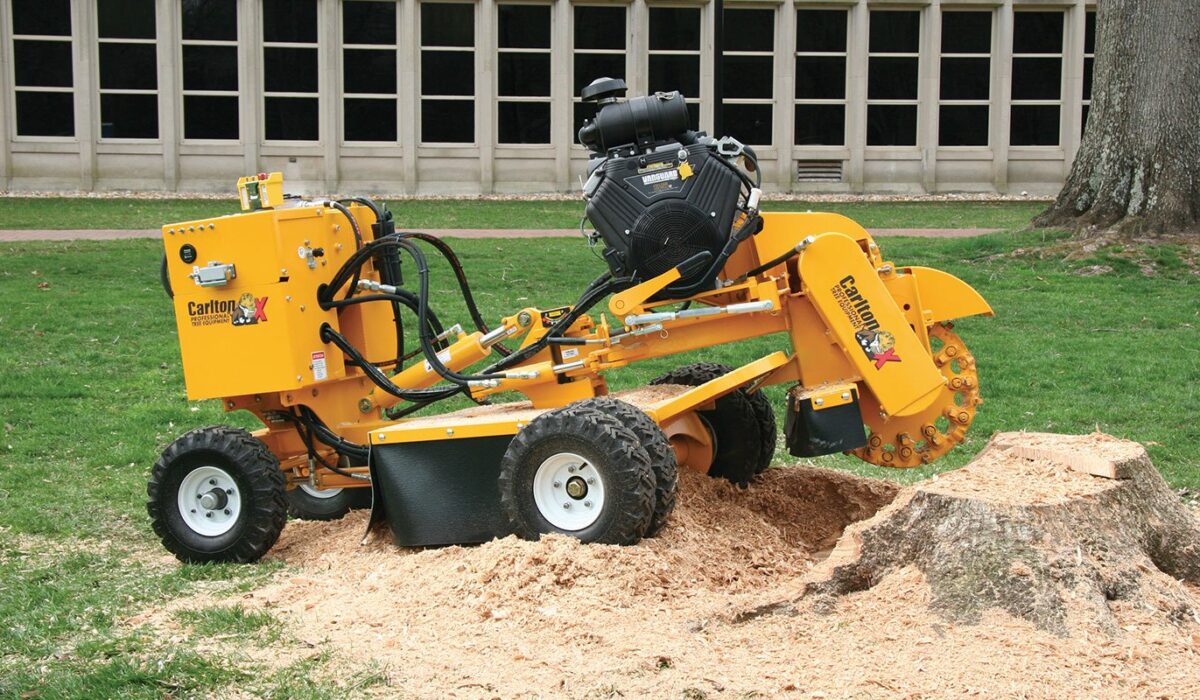
The equipment used for stump grinding can influence the final price. Professional grinders come in different sizes and are suited to different stump dimensions and access conditions.
A larger machine may process a substantial stump efficiently when the site allows access. A compact machine may be more suitable for narrow spaces, although the work may take longer depending on the stump’s size and condition.
The quote may account for:
- Equipment selection and operation
- Labour requirements
- Travel and setup
- Time spent grinding
- Site preparation
- Cleanup and material handling
An experienced operator can select an appropriate method and manage the work efficiently. However, the best machine is not necessarily the largest one; it is the equipment that suits the stump and the property’s conditions.
Ask the provider what the quote includes rather than comparing prices based on the equipment alone.
8. Wood Chip Removal and Site Cleanup
Stump grinding produces wood chips mixed with some soil. These materials need to be managed after the grinding process, and the cleanup arrangement can affect the overall price.
Depending on your plans, the wood chips may be left on the property, moved to a designated location, or removed.
If you want to restore a lawn or prepare a garden bed, additional work may be needed to remove excess chips, add suitable topsoil, and level the area.
Before booking, ask whether the service includes:
- Collecting or moving wood chips
- Removing unwanted debris
- Leaving the area in an agreed condition
- Filling the resulting depression
- Basic levelling
- Additional soil or landscaping work
Not every stump grinding service includes complete garden restoration. Confirming the scope in advance helps you understand the actual cost rather than focusing only on the grinding charge.
9. Condition of the Site and Surrounding Hazards
The surrounding ground can affect how safely and efficiently stump grinding can be completed.
Stumps located near buildings, fences, underground services, or other sensitive features may require additional planning. Stones, buried materials, and uneven ground can also interrupt the grinding process.
Before work begins, identify any known:
- Irrigation pipes
- Underground electrical cables
- Water or gas lines
- Telecommunications services
- Garden lighting
- Nearby retaining walls or structures
Where underground services may be affected, arrange appropriate checks before grinding begins. Do not assume that the absence of visible warning signs means the area is clear.
If the stump is close to a house, driveway, retaining wall, or other structure, share that information when requesting a quote. The provider can then assess the access, equipment, and safety requirements.
10. Why Professional Stump Grinding Can Be Worth the Cost
Some property owners consider leaving a stump in place to avoid paying for removal. In certain locations, this may be reasonable if the stump does not interfere with safety, garden use, or future plans.
However, a stump can become a long-term obstacle. It may make mowing more difficult, take up usable garden space, produce unwanted shoots, or create an uneven surface as the wood decays.
Professional stump grinding can help you:
- Remove the visible stump
- Improve the appearance of your yard
- Make lawn maintenance easier
- Reduce tripping obstacles
- Prepare the area for suitable landscaping
- Avoid attempting difficult work with unsuitable equipment
Grinding is not a guarantee against all pest problems, root regrowth, or future ground movement. The results depend on the tree species, the remaining root system, and the conditions around the stump.
If the stump is large, close to a structure, or difficult to access, professional assessment can help determine the most appropriate method.
Stump Grinding vs Complete Stump Removal: Which Is More Cost-Effective?
Stump grinding and complete stump extraction are different services. The most suitable option depends on the condition of the stump and what you intend to do with the area afterwards.
| Consideration | Stump grinding | Complete stump extraction |
|---|---|---|
| Method | Grinds the stump below ground level | Excavates and removes the stump and substantial roots |
| Ground disturbance | Usually more limited | Often more extensive |
| Underground roots | Most remain in the soil | Major roots may be removed |
| Equipment | Uses a stump grinder | May require excavation equipment |
| Site restoration | Filling and levelling may be needed | Backfilling and additional restoration may be required |
| Best suited to | Many garden and lawn improvement projects | Projects requiring more extensive root removal |
When Is Stump Grinding the Better Choice?
Grinding is often practical when you want to eliminate the visible stump and reclaim garden space without excavating the entire root system.
It is commonly considered for lawns, garden beds, and general landscaping improvements where extensive root removal is not required.
When Might Complete Extraction Be Necessary?
Complete extraction may be appropriate when a construction or landscaping project requires substantial removal of the stump and its major roots.
Because extraction can disturb more soil and nearby ground, it may involve additional machinery, excavation, and restoration.
Do not assume that stump grinding alone will prepare a site for a building or major structural project. Discuss the requirements with your builder or relevant professional before choosing the service.
How to Get an Accurate Stump Grinding Quote in Melbourne
A clear quote helps you understand what you are paying for and makes it easier to compare providers.
Follow these steps when requesting an estimate.
1. Measure the Stump
Measure the diameter at ground level, including any substantial exposed sections. If the stump has an irregular shape, provide the widest measurement.
2. Take Clear Photographs
Photograph the stump from several angles and include the surrounding area. This helps the provider assess its size, condition, and proximity to obstacles.
3. Explain the Access Conditions
Mention narrow gates, steps, slopes, fences, or any other restrictions that could affect the equipment.
4. Specify the Required Depth
Explain whether you want the stump ground below ground level for general maintenance, lawn restoration, or another purpose.
5. Confirm Cleanup Requirements
Ask whether wood chips will be removed, left on site, or moved to a particular area. If you need topsoil, levelling, or further landscaping, request clarification about whether those tasks are included.
6. Ask About Additional Charges
Confirm whether the quote includes travel, setup, additional root grinding, and waste handling. Ask what circumstances could change the price.
7. Compare the Full Scope of Work
Compare providers based on the service included, their relevant experience, insurance, communication, and the expected result. A low initial price may not cover the same work as a more comprehensive quote.
Frequently Asked Questions About Stump Grinding Cost Melbourne
How much does stump grinding cost in Melbourne?
The price depends on stump size, wood hardness, access, grinding depth, root work, and cleanup requirements. There is no single price that applies to every property. Request a quote based on the actual stump and the work required.
Is stump grinding cheaper than complete stump removal?
Grinding is often a practical and less disruptive option when you only need to reduce the visible stump. Complete extraction may require more excavation and ground restoration, but the most cost-effective option depends on the site and the intended use of the area.
Does the stump’s size affect the price?
Yes. Larger stumps usually require more machine time and produce more wood chips. Their root structures and the required grinding depth can also affect the final quote.
Does stump grinding include root removal?
Not usually in the sense of removing the entire underground root system. Grinding reduces the stump and may include selected surface roots, but most underground roots remain and decay naturally.
Is wood chip removal included in the price?
That depends on the provider and the agreed scope of work. Confirm whether the quote includes moving, collecting, or removing the wood chips before booking.
Can I grow grass after stump grinding?
Yes, in many cases. The area may need excess wood chips removed or managed, followed by suitable topsoil and levelling before grass seed or turf is installed.
How long does stump grinding take?
A small, accessible stump may take around 15 to 30 minutes to grind, while a larger or more complicated stump can take an hour or several hours. Setup, access, and cleanup add to the total appointment time.
Can I grind a stump close to my house?
It may be possible, but the stump’s location and nearby structures must be assessed first. Tell the provider about the proximity to foundations, fences, paving, and underground services so the work can be planned appropriately.
Should I remove a stump if I do not plan to use the area?
Not necessarily. If the stump is in an unused location and does not create a safety, pest, or landscaping concern, leaving it may be reasonable. Consider its condition and proximity to buildings before deciding.
How can I reduce the cost of stump grinding?
Provide accurate measurements and photographs, ensure the agreed access route is clear, and explain the required grinding depth. If you have several stumps, request a combined quote. Avoid attempting hazardous work yourself simply to reduce the initial cost.
Get a Quote for Stump Grinding in Melbourne
The cost of stump grinding depends on more than the stump’s diameter. Wood hardness, root spread, access, grinding depth, equipment requirements, and cleanup can all affect the final price.
Understanding these factors helps you compare quotes fairly and select a service that meets your needs. For many homeowners, stump grinding is a practical way to reclaim garden space and prepare the area for lawn restoration or landscaping without excavating the entire root system.
If you have an unwanted stump in your yard, arrange a professional assessment and provide details about its size, location, and the planned use of the area. Ask for a clear quote covering the grinding work, required depth, wood chip management, and any additional preparation.
Choosing the right service can help you remove the stump efficiently and make better use of your outdoor space.