How to Choose Slip-Resistant Tiles for Outdoor Areas
Choosing the right outdoor tiles is about more than appearance. Outdoor flooring needs to provide reliable grip, withstand changing weather conditions and remain durable under regular foot traffic. One of the most important factors to consider is slip resistance, especially in areas exposed to rain, water, moisture and outdoor dirt.
Slip-resistant outdoor tiles help reduce the risk of slipping on patios, pathways, balconies, pool surrounds and alfresco areas. However, not every tile marketed as an outdoor tile offers the same level of grip. Surface texture, material, water exposure and certified slip resistance ratings all influence how suitable a tile is for a particular location.
In Australia, tile slip resistance is assessed using recognised testing methods, including AS 4586. Understanding P ratings, R ratings and the intended use of different tile finishes can help homeowners make better flooring decisions.
This guide explains how to choose slip-resistant tiles for outdoor areas, which materials and finishes to consider, what ratings mean and how to maintain outdoor tiled surfaces.
What Are Slip-Resistant Outdoor Tiles?
Slip-resistant outdoor tiles are flooring products designed to provide better traction underfoot, particularly when their surfaces become wet.
Unlike highly polished tiles, these products generally have textured, structured or specially treated surfaces that help improve grip.
They are commonly used in:
- Outdoor patios and entertaining areas.
- Garden pathways and walkways.
- Pool surrounds and poolside flooring.
- Balconies and terraces.
- Outdoor stairs and entryways.
- Alfresco dining spaces.
- Commercial outdoor areas.
The right tile depends on how the space will be used and how frequently it is exposed to water.
For example, a covered patio may have different requirements from an uncovered pool surround that regularly gets wet. Choosing tiles based only on their appearance or the label outdoor-rated is not enough.
Why Is Slip Resistance Important for Outdoor Flooring?
Outdoor flooring is exposed to conditions that can make walking surfaces slippery. Rainwater, pool splashes, algae, garden debris and accumulated dirt can reduce traction.
A surface that feels safe when dry may become slippery after rainfall or regular cleaning.
Selecting suitable slip-resistant tiles helps improve safety and usability in outdoor spaces.
1. Reduces the Risk of Slipping
The primary benefit of slip-resistant outdoor tiles is improved traction.
Textured surfaces can provide additional grip compared with smooth, polished finishes. This is particularly important around swimming pools, outdoor steps and frequently wet pathways.
2. Improves Safety Around Pools
Pool surrounds are regularly exposed to splashing water and wet feet.
Choosing suitable tiles with appropriate wet and barefoot slip resistance is important for reducing slip hazards.
The selected product should have test documentation suitable for the intended poolside application.
3. Makes Outdoor Areas More Practical
Outdoor spaces are used for entertaining, walking, dining and everyday household activities.
Slip-resistant flooring can make these spaces more practical in changing weather conditions.
4. Supports Safer Access for Different Age Groups
Children, older adults and visitors may have different levels of balance and mobility.
A suitable outdoor surface can help reduce avoidable slipping risks, particularly around steps, entrances and wet areas.
However, no tile is completely slip-proof. Proper installation, cleaning and drainage remain important.
Understanding Outdoor Tile Slip Ratings in Australia
Before purchasing outdoor tiles, it is important to understand their slip resistance ratings.
In Australia, AS 4586 provides testing methods for determining the slip resistance classification of pedestrian surface materials.
Two commonly discussed rating systems are P ratings and R ratings.
What Is a P Rating for Tiles?
P ratings are classifications obtained through a wet pendulum test.
The classification ranges from P0 to P5, with higher classifications indicating greater measured slip resistance under the test conditions.
The P rating is particularly useful when comparing tiles for pedestrian areas where wet conditions may occur.
A general explanation of the scale is:
- P0: Lowest classification.
- P1: Low measured slip resistance.
- P2: Higher than P1.
- P3: Higher wet slip resistance.
- P4: Higher classification for more demanding conditions.
- P5: Highest classification in the P scale.
The appropriate rating depends on the location, expected water exposure, slope and applicable building requirements.
What Is an R Rating for Outdoor Tiles?
R ratings come from an oil-wet inclining platform test.
The classifications range from R9 to R13.
Higher R ratings indicate greater resistance to slipping under the specific conditions of that test.
R ratings are commonly provided by European tile manufacturers and are often included in Australian product specifications.
A general overview is:
- R9: Lower slip resistance classification.
- R10: Moderate classification.
- R11: Higher classification.
- R12: Very high classification.
- R13: Highest classification in the R scale.
P and R ratings are based on different testing methods. They should not be treated as directly interchangeable or assumed to have exact equivalent values.
When comparing outdoor tiles, request the manufacturer’s technical data and confirm that the test results suit the intended application.
Which Slip Rating Should You Choose?
There is no single slip rating suitable for every outdoor area.
The correct specification depends on whether the surface is covered, exposed to rainfall, frequently wet, sloped or used barefoot.
For example:
- Covered patios may have different requirements from exposed outdoor paving.
- Pool surrounds need consideration of both wet and barefoot conditions.
- Outdoor stairs and ramps require particular attention to applicable building requirements.
- Commercial walkways may need a different specification from residential courtyards.
For regulated projects, confirm the required classification with the relevant building professional or certifier rather than relying on a general rating guide.
7 Important Factors to Consider When Choosing Slip-Resistant Outdoor Tiles
Choosing suitable outdoor tiles requires more than checking the slip rating. The material, surface finish, weather resistance and installation requirements also matter.
Here are seven important factors to consider.
1. Choose Tiles With a Suitable Slip Resistance Rating
Always check the slip resistance classification before purchasing outdoor tiles.
Ask the supplier for the product’s test report or technical data sheet.
Do not assume that a tile is suitable for outdoor use simply because it has a textured surface.
Compare the test results with the requirements of your intended installation.
For example, a tile selected for a covered patio may not be appropriate for a regularly wet pool surround.
2. Select the Right Tile Material
Different tile materials offer different benefits in outdoor environments.
Some materials are easier to maintain, while others provide a natural appearance or additional surface texture.
Porcelain Outdoor Tiles
Porcelain tiles are a popular option for outdoor flooring because they are generally dense, durable and have low water absorption.
They are available in various finishes, including stone-look, concrete-look and timber-look designs.
Textured porcelain tiles can provide suitable slip resistance when the product has been tested and specified for the intended area.
Benefits include:
- Low water absorption.
- Good durability.
- Wide design selection.
- Relatively easy cleaning.
- Resistance to everyday staining.
Always check that the selected porcelain product is approved for external installation.
Natural Stone Tiles
Natural stone tiles offer distinctive colours, textures and patterns.
Common options include:
- Travertine.
- Granite.
- Slate.
- Sandstone.
- Limestone.
Different stones have different surface characteristics and maintenance requirements.
Some natural stones require sealing to protect against moisture and staining. Their suitability also depends on the finish and tested slip resistance.
Choose a product specifically recommended for the intended outdoor application.
Concrete-Look Tiles
Concrete-look porcelain tiles provide a contemporary appearance without requiring the same maintenance as many traditional concrete finishes.
They are available in textured surfaces that can complement modern patios, outdoor kitchens and entertaining areas.
Check the technical specifications to ensure the product is suitable for external flooring.
3. Consider the Surface Texture
Surface texture plays an important role in outdoor tile performance.
Tiles with a suitable textured finish may provide better traction than smooth, polished surfaces.
Common finishes include:
Textured finish: Designed with a more pronounced surface structure that can improve grip.
Matt finish: Provides a non-glossy appearance, although a matt finish alone does not guarantee adequate slip resistance.
Structured finish: Features a more noticeable surface pattern or relief.
Natural stone finish: Offers natural variations in texture and appearance.
Always check the tested classification rather than judging slip resistance by appearance alone.
4. Consider Rainfall and Water Exposure
Outdoor tiles should be selected according to how much water the area is likely to receive.
An uncovered patio is regularly exposed to rainfall, while a covered alfresco area may receive only occasional moisture.
Pool surrounds and outdoor showers have more frequent water exposure.
Consider:
- Whether the area is covered or uncovered.
- How quickly water drains away.
- Whether the surface is exposed to pool splashes.
- Whether people will walk barefoot.
- Whether rainwater can collect on the surface.
Selecting a suitable slip resistance classification for these conditions is essential.
5. Choose Weather-Resistant Tiles
Outdoor flooring experiences changing temperatures, sunlight, rainfall and environmental exposure.
Tiles must be suitable for these conditions to maintain their appearance and performance.
Porcelain tiles designed for external applications are often a practical choice because of their low water absorption and durability.
In colder locations, check frost resistance where relevant.
For properties exposed to strong sunlight, consider how tile colour and surface finish affect heat absorption.
Light-coloured tiles may remain more comfortable underfoot than darker alternatives in direct sunlight, although actual surface temperatures vary.
6. Consider Tile Size and Layout
Tile size influences the appearance, installation and maintenance of outdoor flooring.
Large-format tiles can create a spacious, contemporary appearance with fewer grout joints.
Smaller tiles offer more layout flexibility and may be useful for areas with curves, steps or complex shapes.
Consider the following:
- Larger tiles require a suitably prepared and even substrate.
- Smaller tiles provide more grout joints.
- Tile dimensions should suit the size and shape of the area.
- Drainage and surface falls must be considered during installation.
- Outdoor steps may require carefully designed edges and suitable nosings.
The chosen tile format should complement the outdoor layout without compromising installation quality.
7. Consider Cleaning and Maintenance Requirements
Outdoor tiles regularly collect dust, leaves, mud, food spills and other debris.
Highly textured tiles may retain more dirt than smoother surfaces, depending on their design.
Before purchasing, consider how easily the surface can be cleaned.
Ask the supplier about:
- Recommended cleaning products.
- Suitable cleaning equipment.
- Whether sealing is required.
- Resistance to staining.
- Maintenance frequency.
- Manufacturer care instructions.
A practical outdoor tile should balance slip resistance with manageable cleaning requirements.
Best Types of Slip-Resistant Tiles for Different Outdoor Areas
Different outdoor spaces have different flooring requirements.
The following examples can help you narrow down suitable options.
Slip-Resistant Tiles for Patios
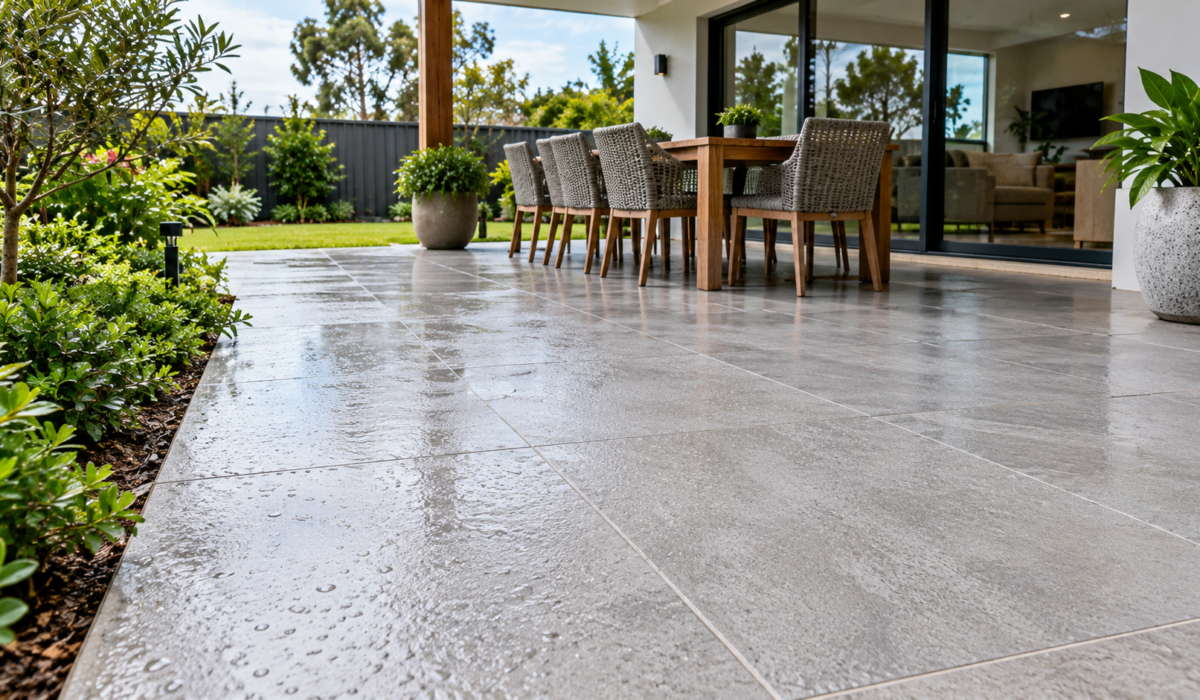
Patios are commonly used for outdoor dining, entertaining and relaxation.
Porcelain tiles with an appropriate external slip classification are a practical choice.
Stone-look and concrete-look finishes can complement modern homes while providing a range of design options.
Consider rainfall exposure, drainage and furniture placement before selecting the final product.
Non-Slip Tiles for Pool Surrounds
Pool surrounds require careful tile selection because the surface is frequently exposed to water and wet feet.
Look for products with documented wet slip resistance and an appropriate wet barefoot classification.
The texture should provide suitable grip without creating an unnecessarily uncomfortable surface for bare feet.
Also consider water drainage, cleaning and compatibility with the pool environment.
Outdoor Tiles for Balconies
Balcony flooring must be suitable for external weather exposure.
Porcelain tiles designed for balconies can provide durability and a clean appearance.
However, drainage and waterproofing are particularly important because water penetration can damage building structures.
The installation should comply with the relevant building requirements and waterproofing specifications.
Slip-Resistant Tiles for Garden Pathways
Garden pathways may become slippery due to rainfall, soil, leaves and organic growth.
Textured porcelain, suitable natural stone and other approved outdoor paving materials can be considered.
Choose a surface that is easy to maintain and appropriate for the slope and expected foot traffic.
Outdoor Tiles for Steps and Entrances
Steps and entrances require special attention because changes in floor level can increase the risk of falls.
Select appropriate slip-resistant materials and ensure that step edges are clearly visible.
The relevant building requirements for stair treads, landings and nosings should be checked before installation.
Common Mistakes to Avoid When Buying Outdoor Tiles
Even good-quality tiles can create problems if the wrong product is selected or installed incorrectly.
Avoid these common mistakes.
Choosing Tiles Based Only on Appearance
A tile may look attractive in a showroom but may not provide suitable traction when wet.
Always check the technical specifications and slip resistance test results.
Using Polished Indoor Tiles Outdoors
Polished tiles are generally unsuitable for outdoor areas exposed to water unless their tested performance specifically supports the application.
Do not use indoor flooring products simply because their colour or pattern matches the outdoor design.
Ignoring Drainage Requirements
Even slip-resistant tiles can become hazardous when water collects on their surface.
Poor drainage can also contribute to staining, algae growth and other maintenance issues.
The substrate should be designed with appropriate falls and drainage provisions.
Ignoring Installation Quality
Correct installation is essential for outdoor flooring performance.
Poor adhesive coverage, inadequate substrate preparation and incorrectly installed movement joints can lead to loose tiles, cracking and water-related problems.
Use suitable installation products and follow manufacturer recommendations.
Assuming Every Textured Tile Is Non-Slip
A rough-looking surface does not automatically meet the required slip resistance classification.
Always request the relevant test documentation before making a purchase.
Forgetting Long-Term Maintenance
Dirt, algae and organic deposits can reduce the grip of outdoor surfaces.
Regular cleaning and appropriate maintenance are important for keeping outdoor flooring in good condition.
How to Maintain Slip-Resistant Outdoor Tiles
Proper maintenance helps preserve the appearance and performance of outdoor flooring.
Although cleaning requirements vary by material, the following practices are useful for many outdoor tiled areas.
Clean Tiles Regularly
Remove dust, leaves, mud and other debris before they accumulate.
Use a suitable cleaning solution recommended by the tile manufacturer.
Avoid harsh chemicals that could damage the surface or surrounding grout.
Remove Algae and Organic Growth
Outdoor areas with shade and regular moisture can develop algae or organic deposits.
These deposits may make tiled surfaces slippery.
Use cleaning products specifically recommended for the tile material and follow the manufacturer’s instructions.
Inspect Grout Lines
Check grout joints for cracks, gaps and deterioration.
Damaged grout may allow water to enter the flooring system and contribute to further problems.
Repair damaged areas using suitable materials.
Check Drainage
Ensure that water flows away from the tiled surface rather than collecting in low spots.
Keep drainage channels and outlets free from leaves and debris.
Follow Manufacturer Recommendations
Different tile materials have different cleaning and sealing requirements.
Natural stone may require periodic sealing, while many porcelain tiles do not.
Always follow the product-specific care instructions.
Professional Outdoor Tiling: Why Installation Matters
Choosing the correct slip-resistant tile is only one part of a successful outdoor flooring project.
The installation process also plays a major role in the long-term performance of the finished surface.
Professional installation helps ensure that the substrate is properly prepared, suitable adhesive is selected and movement joints are incorporated where required.
Drainage, waterproofing and surface levels must also be considered according to the specific outdoor application.
For homeowners planning a patio, pathway, balcony or other outdoor tiling project, working with experienced tiling professionals can help reduce avoidable installation problems.
A properly planned installation can provide a practical, attractive and durable outdoor surface.
Frequently Asked Questions About Slip-Resistant Outdoor Tiles
What is the best tile for outdoor areas?
Porcelain tiles designed for external use are a popular option because they offer durability, low water absorption and a variety of finishes. Choose a product with a tested slip resistance classification suitable for the intended outdoor area.
What slip rating should outdoor tiles have in Australia?
The appropriate rating depends on the location and conditions. Wet pendulum P ratings and oil-wet R ratings are commonly used to assess slip resistance. Pool surrounds, ramps, patios and pathways can have different requirements. Check the relevant specifications and product test reports before purchasing.
Are porcelain tiles suitable for outdoor areas?
Yes. Porcelain tiles can be suitable for outdoor flooring when they are specifically manufactured and rated for external use. Check slip resistance, water absorption, weather suitability and installation requirements.
Are matt tiles slip-resistant?
Not necessarily. A matt finish does not automatically mean a tile has sufficient slip resistance. Always check the manufacturer’s test results and confirm suitability for the intended location.
What is the difference between P and R slip ratings?
P ratings come from a wet pendulum test, while R ratings come from an oil-wet inclining platform test. Both assess slip resistance using different methods, so their results should not be treated as directly interchangeable.
Can I use indoor tiles outside?
Indoor tiles should not automatically be used outdoors. They may lack the required slip resistance, weather suitability or other performance characteristics needed for external flooring. Select tiles specifically recommended for outdoor installation.
Are textured outdoor tiles difficult to clean?
Some heavily textured tiles can retain more dirt than smoother surfaces. However, cleaning requirements depend on the surface design and tile material. Regular maintenance and suitable cleaning products help keep outdoor tiles in good condition.
How do I make outdoor tiles less slippery?
Start by removing dirt, algae, leaves and other deposits that may reduce traction. Check whether the tiles are suitable for their location and consider professional assessment if the surface remains slippery. Do not apply coatings or chemical treatments without confirming compatibility with the tile and manufacturer.
Do outdoor porcelain tiles need sealing?
Most quality porcelain tiles do not require sealing because they have low water absorption. However, grout and some specialised finishes may have different requirements. Always follow the manufacturer’s instructions.
Final Thoughts
Choosing slip-resistant tiles for outdoor areas requires careful consideration of safety, material quality, surface texture, weather exposure and installation requirements.
Porcelain, natural stone and other external flooring materials can all be suitable when their specifications match the intended application. Understanding P and R slip ratings also helps homeowners compare products more confidently.
Whether you are upgrading a patio, installing a garden pathway or planning a poolside renovation, selecting the right tiles can improve the practicality, appearance and safety of your outdoor space.
Do not choose outdoor tiles based on appearance alone. Check the manufacturer’s slip resistance documentation, consider drainage and select materials designed for external conditions.
If you are planning an outdoor tiling project or need professional advice, contact Aussie Tradies Group to discuss your requirements.
Explore Aussie Tradies Group to learn more about our tiling and waterproofing services.