Floor Tiles vs Wall Tiles
Floor Tiles vs Wall Tiles: What Is the Difference?
Many homeowners fall in love with a tile in the showroom and only later discover it was never meant for the surface they had in mind. A glossy wall tile on a bathroom floor can turn into a slippery hazard. A heavy floor tile fixed to a tall wall can slide, crack or fail if the adhesive is wrong. Understanding floor vs wall tiles before you buy protects your safety, your budget and the finished look of the room.
This guide explains the difference between floor tiles vs wall tiles in plain language, so you can choose the right product for every surface in your home. It is written by the team at Aussie Tradies Group, a local business based in Campbellfield that supplies tiling and waterproofing across Melbourne, backed by more than 25 years of practical experience. We install both types every week, so the advice here comes from real work on real sites.
Quick answer: Floor tiles are thicker, harder and have more grip, because they must carry weight, resist wear and stay safe when wet. Wall tiles are thinner, lighter and often glossier, because they only need to look good and resist moisture. Floor tiles can often be used on walls, but wall tiles should not be used on floors.
What Is the Difference Between Floor Tiles and Wall Tiles?
The main difference between floor tiles and wall tiles is the job each one does. A floor tile lives under constant pressure. It supports furniture, takes the impact of dropped items, handles thousands of footsteps and must grip safely when wet. A wall tile carries only its own weight and needs to resist moisture and cleaning, so it can be thinner, lighter and more decorative.
These different jobs lead to differences in thickness, hardness, surface finish and weight. Tiles are designed and tested for a specific purpose, and that purpose should match the place where you install them.
Why the Difference Matters
Using the wrong tile may not cause trouble on day one. The problems appear months or years later as chips, cracks, loose tiles or slippery surfaces. In wet areas, a failed tile can also let water reach the structure behind it, which leads to costly repairs.
Floor Tiles vs Wall Tiles at a Glance
The table below gives a quick side by side view before we look at each point in more detail.
| Feature | Floor tiles | Wall tiles |
|---|---|---|
| Thickness | Thicker | Thinner |
| Strength | High, built for heavy loads | Lower, built to hang on a wall |
| Weight | Heavier | Lighter |
| Surface finish | Matte, textured or honed for grip | Often glossy or smooth |
| Slip resistance | Important and rated | Not required |
| Water absorption | Very low for wet areas | Low to medium |
| Use on floors | Yes | Not recommended |
| Use on walls | Often yes, with the right adhesive | Yes |
| Price | Usually higher | Usually lower |
Thickness and Strength
Floor tiles are made thicker and denser so they can survive years of walking, furniture and impact. They also need to resist cracking when a heavy item is dropped. Wall tiles are thinner and softer because they never carry a load.
What Happens If You Use a Wall Tile on a Floor
A wall tile is simply not built for foot traffic. It can crack under the weight of furniture, chip when something is dropped and wear down quickly in busy areas. In a bathroom or kitchen, the damage can open a path for water to reach the layers beneath.
Hidden Damage Under the Surface
A small crack in a floor tile may look like a cosmetic issue, yet it can allow water to seep down into the waterproofing layer and the structure below. This is one reason strength matters even more in wet areas.
Surface Finish and Slip Resistance
This is the difference that affects safety the most. Floor tiles are designed with grip in mind, and many carry a slip resistance rating. Matte, honed, textured and lightly rough surfaces give better traction when wet.
Why Glossy Tiles Belong on Walls
Glossy tiles reflect light and make a room feel bright and fresh, which is perfect for walls. On a floor, the same smooth surface becomes slippery once water, soap or spilled liquid is present. This is why glossy wall tiles should stay on the wall.
Choosing Slip Resistant Floor Tiles
Ask your supplier about the slip resistance rating of every floor tile you consider, especially for bathrooms, laundries, kitchens and outdoor areas. Take a sample home and test it with a little water to feel the difference in grip.
Weight and Installation
Weight changes how a tile must be installed. Floor tiles are heavy, and they rely on the solid base beneath them to hold their weight. Wall tiles must stay stuck against gravity, so the adhesive, the preparation and the method all matter.
Using Floor Tiles on Walls
Floor tiles can often be used on walls, especially in bathrooms, where homeowners like to carry the same tile from floor to wall for a seamless look. The extra weight means the wall must be strong, flat and properly prepared, and the tiler must use the right adhesive. Large and heavy tiles on walls need extra care.
Why Professional Installation Matters
Both tile types perform best when the surface is flat, clean and correctly waterproofed. A beautiful tile on a poor surface will still crack, lift or look uneven. An experienced team plans the preparation, the waterproofing and the tiling together. You can read more on our tiling and waterproofing page.
Water Absorption and Wet Areas
Water absorption tells you how much moisture a tile takes in. Tiles used on wet floors should absorb very little, so they do not stain, grow mould or crack when temperatures change. Porcelain is a popular choice for floors in showers, bathrooms and outdoor areas for this reason.
A Reminder About Waterproofing
No matter which tile you choose, remember that tiles and grout are not waterproof on their own. Grout is porous and can crack as a house moves, so a proper waterproof layer must sit underneath. You can learn more about bathroom waterproofing in Melbourne and why it must be completed before the first tile is laid.
Appearance and Design
Wall tiles often offer a wider range of colours, shapes and decorative finishes because they do not have to carry weight or provide grip. Handmade looks, bright colours, relief patterns and shiny glazes are common in the wall tile range.
Matching Floor and Wall Tiles
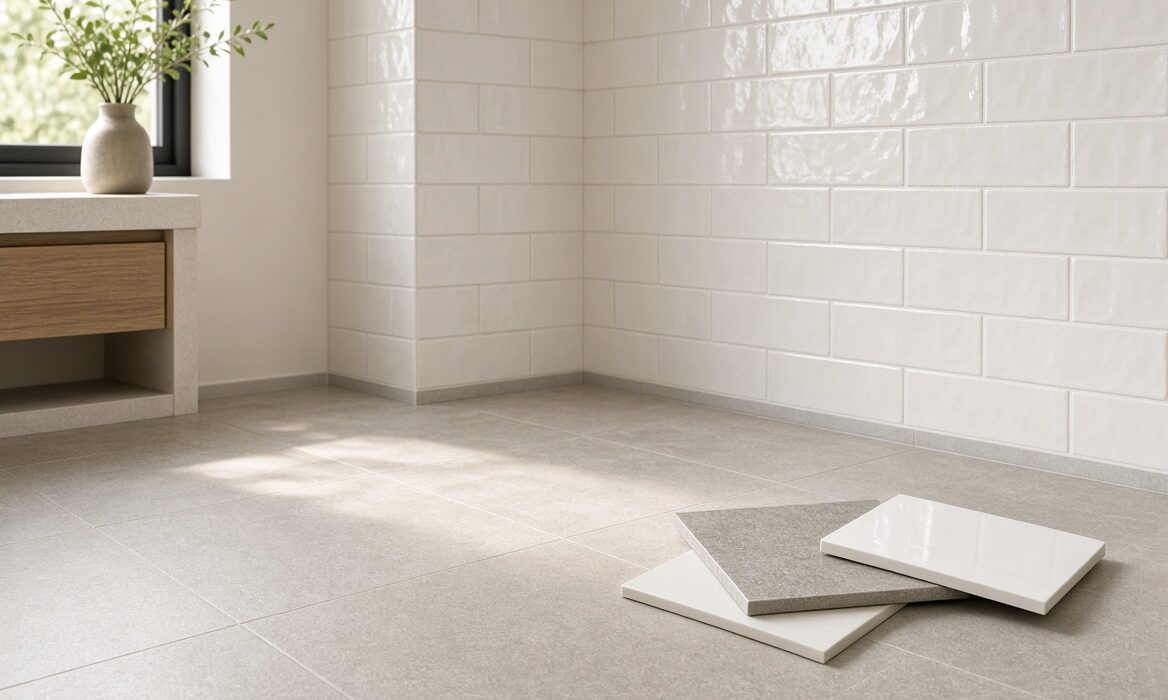
Many homeowners choose a floor tile and a wall tile that work together. A common approach is to pair a matte floor tile with a glossy wall tile in a similar colour. Another is to use the same tile on both surfaces for a calm, continuous look. Whichever you choose, check the shade and size of both tiles together before ordering.
Large Format Tiles
Large format tiles can look beautiful on both floors and walls, with fewer grout lines and a modern feel. They need a very flat surface and an experienced tiler, because any unevenness is more visible with a large tile.
Grout Colour
Grout covers a lot of surface and changes how a tile looks. Matching grout makes the surface look continuous, while a contrasting colour highlights the pattern. Lighter grout shows dirt more easily on floors, so a mid tone often works best.
Sealing and Care
Grout and some natural stone tiles benefit from sealing. Ask your tiler which products suit your tiles and how often they should be reapplied.
Best Tile Choices by Room
The smartest way to answer the question of floor vs wall tiles is to look at each room separately.
Bathrooms
Use slip resistant floor tiles on the bathroom floor and shower base. Wall tiles or floor tiles can both be used on the walls. Smaller tiles on the shower floor follow the slope to the drain, while larger tiles on the walls reduce grout lines and cleaning time.
Kitchens
Kitchen floors need hard wearing floor tiles that resist dropped items and heavy traffic. Splashbacks are an ideal place for wall tiles, where a smooth surface wipes clean quickly and a decorative finish adds personality.
Living Areas and Hallways
These spaces need tough floor tiles with a durable finish. Wall tiles do not belong here unless they are used for a decorative feature wall.
Laundries
Laundries are wet and busy, so floor tiles with good grip pair well with easy to clean wall tiles around the sink and tub.
Outdoor Areas and Balconies
Outdoor areas need floor tiles that are rated for outdoor use, with a slip resistant surface. The area must also be properly waterproofed and sloped for drainage.
How Much Do Floor and Wall Tiles Cost?
Floor tiles usually cost more than wall tiles because they are thicker, denser and built to a higher standard. However, the tile is only one part of the cost. Installation, preparation and waterproofing make up a large share of the final price.
What Affects the Final Cost
- The size of the area being tiled
- The tile material, brand and finish
- Tile size and layout complexity
- The condition of the walls and floors underneath
- Preparation work and waterproofing
- Whether old tiles must be removed first
Order Extra Tiles
Always order about ten percent more tiles than your measurements to cover cuts and future repairs. Tile batches can vary slightly in colour, so keep spares from the same batch for later use.
Common Mistakes When Choosing Floor and Wall Tiles
Using Wall Tiles on Floors
This is the most common mistake. Wall tiles lack the strength and grip a floor needs, and they can crack and become slippery.
Choosing Looks Over Safety
A beautiful polished tile on a bathroom floor can become dangerous when wet. Always put grip first on floors.
Ignoring the Adhesive
Heavy tiles on walls need the right adhesive. Using the wrong product can cause tiles to slip or fall.
Forgetting the Surface Underneath
Uneven walls and floors show up as uneven tiles. Proper preparation is essential for a neat finish.
Skipping Waterproofing
This is the most expensive mistake of all. Wet areas need a proper waterproof layer before any tile goes down.
How to Care for Floor and Wall Tiles
Good care keeps your tiles looking new and protects the waterproofing underneath.
- Clean with a gentle pH neutral tile cleaner instead of harsh chemicals
- Wipe spills quickly, especially in kitchens and bathrooms
- Run the exhaust fan in bathrooms to reduce steam and mould
- Check grout and silicone once a year and repair small cracks quickly
- Replace any cracked or loose tile promptly so water cannot reach the layer below
Questions to Ask Before You Buy
- Is this tile suitable for floors, walls or both?
- What is its slip resistance rating?
- Is it suitable for wet areas and outdoor use?
- What adhesive and grout do you recommend?
- How much extra should I order?
- How long will delivery take?
Areas We Serve Across Melbourne
Aussie Tradies Group is based in Campbellfield and serves homeowners across northern, eastern and south eastern Melbourne. Our team regularly works in suburbs including Toorak, Doncaster, Box Hill, Hampton, Bentleigh, St Kilda and Hawthorn. If your suburb is not listed, please contact our team, because we can often help with projects in nearby areas. We also provide tree and stump removal for homeowners who need outdoor areas cleared before tiling.
Frequently Asked Questions About Floor Tiles vs Wall Tiles
What is the difference between floor tiles and wall tiles?
Floor tiles are thicker, harder and have more grip, because they must handle weight, wear and wet conditions. Wall tiles are thinner, lighter and often glossier, because they only need to resist moisture and look good.
Can I use floor tiles on a wall?
Yes, in most cases. Floor tiles are strong enough for walls, but they are heavier, so the wall must be properly prepared and the correct adhesive used. A professional tiler can confirm what suits your project.
Can I use wall tiles on a floor?
No, it is not recommended. Wall tiles are thinner and less strong, so they can crack under foot traffic and furniture. Many are also glossy, which makes them slippery when wet.
Are floor tiles more expensive than wall tiles?
Usually yes. Floor tiles are thicker and denser, so they cost more to make. The total project cost also depends on preparation, waterproofing and installation.
What tiles are best for a bathroom floor?
Slip resistant porcelain floor tiles are usually the best choice because they absorb very little water and grip well when wet. Smaller tiles or mosaics suit shower floors because they follow the slope to the drain.
Do floor and wall tiles need waterproofing underneath?
Yes. In showers, bathrooms, laundries and other wet areas, both floor and wall tiles need a waterproofing layer installed under them before tiling, because tiles and grout are not waterproof on their own.
How do I know if a tile is suitable for floors?
Check the product details and ask your supplier. A tile suitable for floors will be marked for floor use and usually carries a slip resistance rating. If you are unsure, ask a professional tiler before you buy.
Ready to Choose the Right Tiles for Your Home?
When comparing floor tiles vs wall tiles, remember that each is built for a different job. Choose floor tiles where strength, grip and wear resistance matter most, and wall tiles where you want lighter weight, a wider range of looks or a lower cost. Whichever you choose, great results come from good preparation, proper waterproofing and skilled installation.
Aussie Tradies Group provides tiling and waterproofing in Melbourne with clear quotes, tidy work sites and one team that stays responsible for the finished result. Call us on 0421 595 305, email info@atgltd.com.au or visit our contact page to request a free quote. You can also browse our full range of services or read more.