Tree Pruning vs Tree Lopping: What Homeowners Should Know
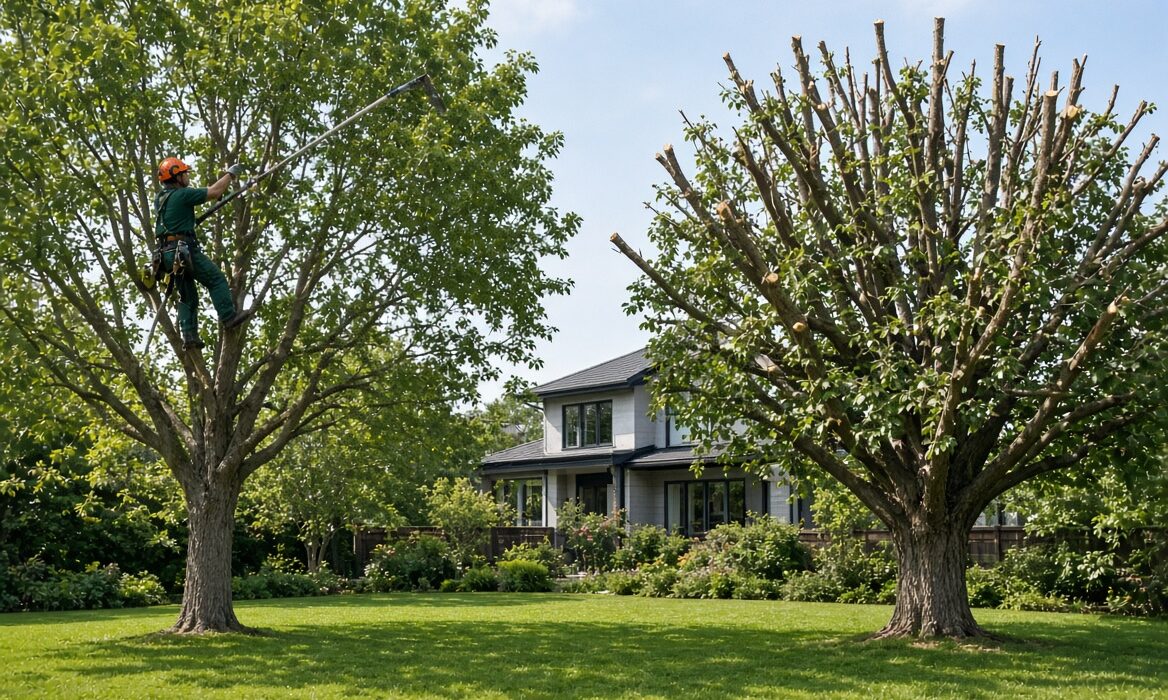
Understanding tree pruning vs lopping can help homeowners maintain healthy trees, improve their property’s appearance, and reduce potential safety risks. Although both methods involve cutting tree branches, they differ significantly in their approach, purpose, and impact on tree health. Tree pruning focuses on removing selected branches to improve a tree’s structure, health, and growth, while tree lopping often involves cutting back large sections of the canopy. Choosing the right method depends on the tree’s condition, its location, and your landscaping goals. Before arranging tree maintenance, it is important to understand how each technique works and why professional tree care can make a lasting difference.
What Is Tree Pruning?
Tree pruning is the selective removal of branches to improve a tree’s health, structure, appearance, and safety. The process involves identifying specific branches that are dead, diseased, damaged, crossing, or growing in an undesirable direction.
When performed correctly, tree pruning helps maintain the tree’s natural shape while encouraging healthy development. It can also reduce certain hazards, improve clearance around buildings, and allow better airflow through the canopy.
Professional tree pruning takes the tree’s species, age, condition, and growth habits into account. The objective is not simply to remove as much growth as possible but to make carefully considered cuts that support the tree’s long-term health.
Common Types of Tree Pruning
1. Crown cleaning
Crown cleaning involves removing dead, dying, diseased, or broken branches from the canopy. This helps reduce certain hazards and improves the tree’s overall condition.
2. Crown thinning
Crown thinning selectively removes suitable branches to improve light penetration and airflow through the canopy. It should be carried out carefully to preserve the tree’s natural shape and structural integrity.
3. Crown raising
Crown raising involves removing or shortening selected lower branches to provide clearance above footpaths, driveways, roads, and other areas.
4. Crown reduction
Crown reduction reduces the overall size of a tree’s canopy by shortening selected branches to suitable lateral branches. It can help manage a tree’s size while retaining a more natural form when performed appropriately.
5. Structural pruning
Structural pruning focuses on developing or maintaining a strong branch framework. It is particularly useful for young trees and may also help address certain structural issues in mature trees.
Benefits of Tree Pruning
Tree pruning offers several benefits when the work is appropriate for the species and condition of the tree.
- Supports tree health: Removing selected diseased or damaged branches can help manage some health problems.
- Improves safety: Pruning can address identified hazards, such as dead branches above walkways or driveways.
- Maintains appearance: Selective cuts can preserve a tree’s natural form and improve its overall appearance.
- Provides clearance: Branches can be managed where they interfere with buildings, paths, or other structures.
- Encourages suitable growth: Structural pruning can help young trees develop a stronger framework.
- Improves light conditions: Appropriate canopy management can allow more sunlight to reach selected garden areas.
Pruning should always be guided by the tree’s needs. Excessive cutting can damage even a healthy tree, so removing unnecessary branches should be avoided.
What Is Tree Lopping?
Tree lopping generally refers to cutting large sections from a tree’s branches or canopy to reduce its size. Depending on the work performed, this may involve removing substantial portions of major limbs or cutting branches back without suitable consideration of their natural growth structure.
Unlike selective pruning, severe lopping can leave large wounds and poorly positioned cut points. It may also remove a substantial portion of the tree’s leaf-bearing canopy, reducing its ability to produce energy through photosynthesis.
The term is sometimes used broadly in everyday conversation to describe different forms of tree cutting. However, the important distinction is the technique used and its effect on the tree, rather than the name given to the service.
Why Do Homeowners Consider Tree Lopping?
Homeowners may consider extensive cutting when a tree has grown too large for its location or appears to interfere with nearby structures.
Common reasons include:
- Branches growing close to roofs or gutters.
- A canopy blocking sunlight from windows or gardens.
- Concerns about branches near driveways or outdoor areas.
- A tree that appears too large for the available space.
- Previous poor maintenance that has left an unbalanced canopy.
- A desire to reduce the tree’s height quickly.
Although these concerns can be legitimate, severe lopping is not necessarily the safest or most effective solution. A professional tree assessment can help identify alternatives that address the problem without causing avoidable damage.
Potential Problems With Tree Lopping
1. Large pruning wounds
Cutting large branches can create substantial wounds that are more difficult for a tree to compartmentalise. This may increase the opportunity for decay organisms to enter susceptible wood.
2. Reduced energy production
Removing a large portion of the canopy reduces the leaf area available for photosynthesis. The tree may experience significant stress as it attempts to recover.
3. Weak regrowth
Some trees respond to severe cutting by producing numerous rapidly growing shoots around the cut areas. Depending on the species and how the branches are attached, this regrowth may have weaker attachments than well-developed natural branches.
4. Increased maintenance needs
A heavily lopped tree may require additional inspections and corrective pruning as new shoots develop. The cost of repeated maintenance can outweigh the perceived short-term benefit of cutting the tree back severely.
5. Loss of natural appearance
Severe cutting can leave a tree with an unbalanced canopy, large exposed limbs, and an unnatural shape. Recovery may take years, and some trees may never regain their original form.
For these reasons, indiscriminate lopping is generally discouraged in professional tree care. If substantial size reduction is necessary, an arborist can determine whether appropriate crown reduction or another management option is suitable.
Tree Pruning vs Lopping: Key Differences
Although both methods involve removing branches, the most important difference is how much material is removed and whether the cuts respect the tree’s natural structure.
| Comparison | Tree pruning | Tree lopping |
|---|---|---|
| Main purpose | Improve health, structure, appearance, or safety | Often intended to reduce tree size quickly |
| Cutting approach | Selective, planned branch removal | May involve removing large sections of the canopy |
| Canopy shape | Aims to preserve natural form | Can significantly alter the natural shape |
| Tree stress | Generally lower when performed correctly | Can be substantial when cutting is severe |
| Wound size | Often smaller and strategically positioned | May create large wounds on major limbs |
| Regrowth | Supports suitable branch development | May encourage dense or poorly attached shoots |
| Long-term maintenance | Depends on species and pruning objectives | May require additional corrective work |
| Professional recommendation | Commonly used for routine tree care | Severe or indiscriminate lopping is generally discouraged |
It is important to note that poorly performed pruning can also harm a tree. The quality of the work, the size and location of cuts, and the amount of foliage removed all influence the outcome.
Which Method Is Better for Tree Health?
For most routine tree maintenance, selective and correctly performed tree pruning is the preferred approach.
Pruning removes specific branches based on a clear objective while preserving the tree’s overall structure. It can help manage hazards, maintain clearance, and support healthy growth without unnecessarily removing large amounts of foliage.
Severe lopping, on the other hand, can place a tree under considerable stress. Large wounds and extensive canopy loss may increase the likelihood of decay, undesirable regrowth, and future maintenance problems.
However, the right approach depends on the circumstances. A tree with extensive storm damage, serious structural defects, or a canopy that conflicts with its surroundings may require more substantial work.
A qualified arborist can assess the tree and recommend the least damaging practical option. In some situations, pruning may not adequately address the problem, and tree removal may need to be considered.
When Should You Prune a Tree?
The best time for tree pruning depends on the species, the purpose of the work, and the tree’s condition. There is no single season that is ideal for every tree.
Routine Maintenance Pruning
Routine pruning can be scheduled to remove deadwood, address crossing branches, maintain suitable clearance, and support a healthy structure.
The timing should account for the tree’s growth cycle, flowering habits, and any local environmental considerations.
Pruning After Storm Damage
Broken or hanging branches may need urgent attention when they present a safety hazard. However, damaged branches should not be cut without assessing the tree’s stability and the risks involved.
Large suspended limbs, split trunks, and uprooted trees require professional attention rather than routine DIY pruning.
Pruning for Clearance
Branches may need management when they interfere with roofs, driveways, footpaths, or other structures. Selective pruning can sometimes provide the necessary clearance without substantially reducing the entire canopy.
If a tree is near power lines, contact the relevant electricity distributor or an appropriately authorised tree service. Never attempt to cut branches that are touching or close to electrical infrastructure.
Pruning Young Trees
Early structural pruning can help establish a balanced branch framework. Removing selected competing or poorly positioned branches at the appropriate time may reduce the need for major corrective work as the tree matures.
The amount and timing of pruning should reflect the tree’s species and development.
Can Tree Lopping Kill a Tree?
Severe lopping can seriously damage a tree and, in some circumstances, contribute to its decline or death. However, the outcome varies according to the species, the extent of the cuts, the tree’s health, and the conditions in which it grows.
When a large portion of the canopy is removed, the tree loses leaf area needed to produce energy. Large wounds may also be difficult to contain, allowing decay to develop in susceptible wood.
Some species produce vigorous new shoots after severe cutting, but visible regrowth does not necessarily mean the tree has recovered structurally.
A heavily lopped tree may develop an irregular canopy, weakly attached shoots, or additional decay. These problems can create future maintenance needs and may increase the risk of branch failure.
If a tree has already been lopped, avoid making further cuts without understanding its condition. An arborist can inspect the wounds, evaluate the regrowth, and recommend a suitable management plan.
Is Tree Lopping Ever Necessary?
There are circumstances in which a tree needs substantial intervention, but severe lopping is not automatically the right solution.
For example, a tree may have suffered major storm damage, developed a dangerous structural defect, or grown into a location where its branches conflict with nearby infrastructure.
In such cases, a professional may recommend selective pruning, appropriate crown reduction, the removal of specific hazardous limbs, or complete tree removal.
The correct option depends on whether the problem can be resolved while retaining a safe and structurally sound tree.
Where significant size reduction is required, cuts should be planned around suitable branch attachments rather than indiscriminately cutting large limbs. If the tree cannot be managed safely through pruning, removal may be a more appropriate long-term decision.
How Much Does Tree Pruning Cost?
The cost of tree pruning depends on several factors, including the tree’s size, species, condition, location, and the complexity of the work.
Tree Height and Canopy Size
Large trees generally require more time and equipment than smaller trees. Work involving extensive canopies may require specialist access equipment or additional ground staff.
Type of Pruning Required
Removing a few small dead branches is usually less complex than crown reduction, structural pruning, or removing large hazardous limbs.
The extent of the work and the required level of care can affect the overall price.
Accessibility and Surrounding Structures
Trees close to buildings, fences, roads, sheds, and neighbouring properties may require careful planning. Restricted access can increase labour requirements and influence the equipment needed.
Waste Removal
Some quotes include the collection and disposal of branches, while others charge separately for green-waste removal. Confirm whether the price covers cleanup and disposal.
Tree Condition and Safety Risks
A tree with significant decay, unstable branches, or storm damage may require specialist techniques. These additional risks can increase the complexity of the job.
When comparing quotes, ask for a clear description of the proposed work, the branches or canopy sections to be removed, waste disposal arrangements, and any additional charges.
Why Hire a Professional Tree Pruning Service?
Tree pruning can appear straightforward, but cutting the wrong branch or removing too much foliage can damage a tree and create safety risks.
Professional tree care involves understanding branch structure, species-specific growth habits, appropriate cutting techniques, and the potential consequences of removing particular limbs.
Correct Cutting Techniques
Professionals identify suitable cut locations that minimise unnecessary damage and support the tree’s natural response to wounds.
They also understand why indiscriminate topping and excessive canopy removal can create long-term problems.
Improved Safety
Branches can be heavy, unpredictable, and difficult to control when they fall. Working at height adds further risks, particularly when ladders, chainsaws, or unstable branches are involved.
Professional teams use suitable equipment and work procedures to reduce the risks associated with tree maintenance.
Protection for Nearby Property
Carefully planned pruning helps manage the removal of branches near buildings, fences, gardens, and vehicles.
Where necessary, professionals can use controlled lowering techniques to reduce the chance of branches damaging surrounding property.
Better Long-Term Tree Management
A professional can help establish a maintenance plan based on the tree’s condition, location, and future growth.
This may include periodic inspections, selective pruning, monitoring for disease, and recommendations for addressing structural problems.
Tree Pruning and Local Council Regulations in Melbourne
Before arranging substantial tree work, homeowners should check whether local council rules or planning controls apply to their property.
Tree protection requirements can vary across Melbourne municipalities and may depend on the tree’s size, species, location, heritage status, and applicable planning controls.
Some trees may be protected even when they are located on private property. Certain work may require a permit, and rules can differ for routine pruning, major canopy reduction, and complete removal.
If a tree is damaged during a storm, do not automatically assume that all removal or pruning restrictions no longer apply. Emergency circumstances may affect the applicable process, but requirements should be checked with the relevant council or qualified professional.
Before work begins:
- Identify the local council responsible for your property.
- Check applicable tree protection and planning requirements.
- Ask the tree service provider whether permits or approvals may be needed.
- Confirm any relevant restrictions before undertaking major cutting or removal.
If the tree is an immediate danger, prioritise personal safety and contact the appropriate emergency services or professional provider for guidance.
Frequently Asked Questions
What is the main difference between tree pruning and tree lopping?
Tree pruning involves selectively removing branches to support tree health, structure, appearance, or safety. Tree lopping generally refers to cutting back large sections of the canopy, sometimes without suitable regard for natural branch structure. Severe lopping can cause significant damage and is generally discouraged.
Is tree pruning better than tree lopping?
For routine maintenance, properly performed tree pruning is generally the better choice. It helps preserve the tree’s natural shape and structure while addressing specific concerns. The best approach for a damaged or oversized tree depends on a professional assessment.
How often should trees be pruned?
There is no universal schedule. Pruning frequency depends on the species, growth rate, condition, location, and management objectives. Some trees require periodic maintenance, while others need attention only when specific issues arise.
Can I prune a tree myself?
Small, accessible branches may be manageable for a suitably equipped person when there are no significant hazards. However, large branches, work at height, damaged trees, and branches near power lines should be left to appropriately qualified professionals.
Does tree pruning encourage faster growth?
Pruning can influence how a tree grows, but it does not automatically make the entire tree grow faster. The response depends on the species, timing, amount removed, and the tree’s health. Excessive pruning may reduce energy production and place the tree under stress.
What should I do if my tree has already been lopped?
Arrange an assessment with a qualified arborist if the tree has large wounds, extensive regrowth, decay, or structural concerns. Avoid further severe cutting until its condition has been evaluated.
Can pruning prevent a tree from falling?
Pruning can help manage certain hazards, such as dead branches and selected structural problems, but it cannot guarantee that a tree will not fail. Root damage, decay, severe weather, and other factors may still create risks.
Choose the Right Tree Care for Your Property
Understanding tree pruning vs lopping helps homeowners make informed decisions about maintaining trees safely and responsibly. Selective pruning can preserve a tree’s natural structure, address specific hazards, and support long-term health, while severe lopping can cause unnecessary stress and create future maintenance problems.
The right approach depends on the tree’s species, size, condition, location, and the reason for the work. Before arranging major cutting, consider a professional assessment to determine whether pruning, crown reduction, or another solution is appropriate.
Need professional tree care in Melbourne? Contact our team to discuss your tree maintenance requirements and arrange a suitable pruning service for your property.