Emergency Tree Removal After Storm Damage: What Melbourne Property Owners Should Know
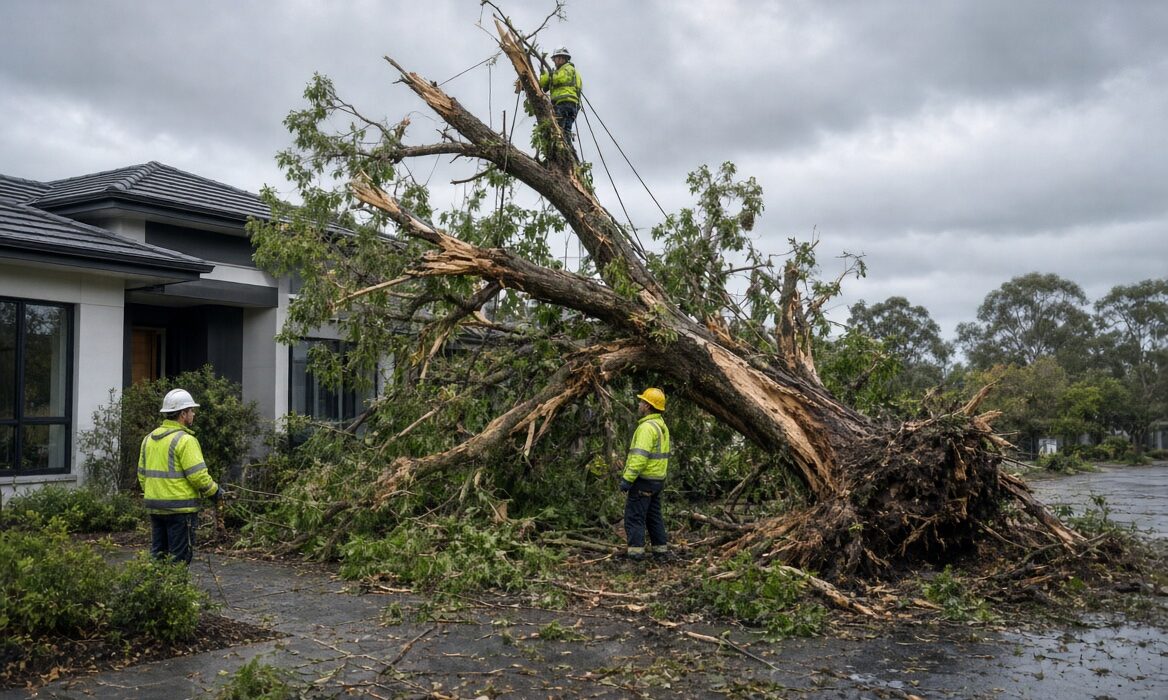
Severe storms can leave trees split, uprooted, leaning dangerously, or resting against roofs and fences. When a damaged tree threatens people, buildings, vehicles, or public access, emergency tree removal in Melbourne may be necessary to reduce the risk of further damage. Acting quickly and safely is essential, particularly when strong winds, heavy rain, or falling branches have weakened a tree’s structure. Understanding the warning signs, knowing what to do immediately after a storm, and contacting experienced tree removal professionals can help protect your property and ensure the situation is handled appropriately.
What Is Emergency Tree Removal?
Emergency tree removal is the urgent removal or management of a tree that presents an immediate or serious safety risk. It is often required after storms, strong winds, heavy rainfall, lightning strikes, or other events that cause significant structural damage.
Unlike routine tree maintenance, emergency tree services prioritise immediate hazards. The objective is to secure the affected area, assess the tree’s condition, and determine the safest way to remove or stabilise the damaged tree.
Emergency situations may involve:
- Trees that have fallen onto houses, garages, sheds, or other buildings.
- Uprooted trees that are leaning towards occupied areas.
- Large branches hanging over driveways, footpaths, or outdoor living spaces.
- Split trunks that could collapse unexpectedly.
- Trees blocking access to a property or creating a serious obstruction.
- Storm-damaged trees tangled with power lines.
- Broken limbs suspended above roads, fences, or neighbouring properties.
Not every storm-damaged tree needs to be removed entirely. In some cases, professional pruning or the removal of dangerous branches may resolve the immediate problem. A qualified tree professional can assess the damage and recommend an appropriate course of action.
Common Signs That a Tree Needs Emergency Removal After a Storm
Storm damage is not always obvious from the ground. Some trees appear stable immediately after severe weather but have hidden structural weaknesses that become more dangerous over time.
Recognising the following warning signs can help you decide when to seek urgent professional assistance.
1. A Tree Has Fallen Onto a Building
A tree that has fallen onto a house, garage, shed, or other structure requires immediate attention. Even when the tree appears to be resting securely, its weight may be placing pressure on the roof, walls, or supporting framework.
Moving the tree without a suitable removal plan can cause further structural damage or sudden movement.
What to do: Keep people away from the affected area and leave the building if you believe its structural safety is compromised. Contact emergency services if anyone is in danger. Arrange professional tree removal assistance once the immediate emergency has been addressed.
2. The Tree Has Become Uprooted
Heavy rain can soften the soil around a tree’s roots, while strong winds place additional pressure on its trunk and canopy. This combination may cause the root plate to lift or pull away from the ground.
Signs of uprooting include exposed roots, raised soil, cracks around the base, and a sudden change in the tree’s position.
An uprooted tree may remain partly upright for a short time before falling further. It should not be considered safe simply because it has not yet collapsed.
What to do: Stay well clear of the tree and its potential fall zone. Do not attempt to pull it upright, cut its roots, or remove branches yourself. Contact a professional for an urgent assessment.
3. The Trunk Has Split or Cracked
Strong winds can cause a trunk to split, particularly when a tree has existing decay, weak branch attachments, or an uneven canopy.
A major split may reduce the tree’s ability to support its own weight. The damaged sections could separate further when exposed to additional wind or movement.
Look for deep cracks, separated trunk sections, broken major limbs, and visible changes in the tree’s structure.
What to do: Avoid standing beneath or near the damaged tree. A qualified arborist can assess whether emergency removal is necessary or whether a more limited intervention can make the site safe.
4. Large Branches Are Hanging Dangerously
Storms can break branches without causing the entire tree to fall. These damaged limbs may remain caught in the canopy, creating a serious hazard above pedestrian areas, driveways, gardens, and roofs.
A hanging branch can fall unexpectedly, even after the weather has improved.
What to do: Keep people and vehicles away from the area beneath the branch. Professional emergency tree services can remove suspended limbs using suitable equipment and controlled techniques.
5. A Tree Is Leaning Towards a House or Road
A tree that develops a sudden lean after a storm may have suffered root damage, trunk failure, or movement in the surrounding soil.
The risk is particularly concerning when the tree is leaning towards a building, road, footpath, or frequently used outdoor area.
However, a tree that naturally grows at an angle is not necessarily dangerous. The important factors include whether the lean is new, whether the ground has shifted, and whether other structural damage is visible.
What to do: If the lean is new or worsening, keep clear of the potential fall area and request an urgent professional assessment.
What Should You Do Immediately After Storm Damage?
The actions you take after a storm can help reduce the risk of injury and further property damage. Safety should always come before clearing debris or attempting repairs.
Step 1: Check for Immediate Dangers
From a safe location, look for fallen trees, unstable trunks, hanging branches, damaged structures, and electrical hazards.
Do not approach a tree that is touching power lines or has fallen near electrical infrastructure. Stay well away and contact the electricity distributor or emergency services as appropriate.
If a tree is blocking a road or creating an immediate threat to public safety, contact the relevant emergency or local authority service.
Step 2: Keep People Away From the Affected Area
Restrict access to the area surrounding the damaged tree. Warn household members, visitors, and neighbours if they could unknowingly enter the danger zone.
Do not park vehicles beneath damaged branches or allow children and pets to play near the tree.
Remember that damaged branches and partially uprooted trees can move without warning.
Step 3: Document the Damage From a Safe Distance
If it is safe to do so, take photographs of the fallen tree, damaged property, and surrounding area.
These images may help with insurance claims and communication with tree removal professionals. Avoid climbing onto roofs, approaching unstable trees, or standing beneath hanging branches to obtain better photographs.
Step 4: Contact a Professional Tree Removal Service
Describe the situation clearly when requesting emergency tree removal in Melbourne. Explain whether the tree has fallen, whether it is leaning, whether a building has been damaged, and whether power lines or public access are affected.
Provide photographs only if they can be taken safely. This information can help the service provider understand the urgency and determine what equipment or specialist assistance may be needed.
Step 5: Follow Professional Safety Advice
Do not begin cutting a storm-damaged tree while waiting for assistance. Removing one section can shift the weight of the remaining trunk or branches, potentially causing sudden movement.
Follow instructions from emergency services, utility providers, and qualified tree professionals until the site has been assessed and secured.
Why Professional Emergency Tree Removal Is Important
Removing a storm-damaged tree is often more complicated than removing a healthy tree in a controlled environment.
Storms can leave branches under tension, trunks partially split, and roots detached from the soil. These conditions make it difficult to predict how a tree will move when cut.
Professional tree removal specialists assess the damaged tree, the surrounding structures, access restrictions, and the safest sequence for removing hazardous material.
Managing Unstable Trees
A damaged tree may be supported by another tree, a roof, a fence, or nearby branches. Removing one section without understanding the load distribution can cause the remaining structure to collapse.
Experienced professionals use appropriate techniques and equipment to manage unstable sections and reduce the risk of uncontrolled movement.
Protecting Buildings and Landscaping
Trees often fall close to homes, garages, fences, sheds, gardens, and paved surfaces. Careful planning helps minimise additional damage during removal.
Depending on the situation, the work may involve sectional dismantling, controlled lowering of branches, cranes, elevated work platforms, or other specialist equipment.
The method depends on the tree’s size, position, stability, and available access.
Working Safely Around Electrical Hazards
Trees that contact power lines present serious risks. Electricity can travel through branches and other conductive materials, making apparently minor contact dangerous.
Only appropriately authorised and qualified personnel should undertake work requiring specialist electrical clearances or coordination with the electricity network.
Homeowners should never attempt to cut or move branches near power lines.
Removing Debris and Restoring Access
Once the immediate hazard has been managed, the remaining trunk sections and branches can be cleared according to the agreed service.
Depending on the scope of work, additional services may include cutting timber into manageable sections, removing green waste, and preparing the affected area for further repairs or landscaping.
Confirm whether debris removal and site cleanup are included in your quote.
Emergency Tree Removal vs Storm Damage Tree Pruning
Not every damaged tree requires complete removal. The appropriate solution depends on the extent of the damage and whether the tree can remain safely in place.
| Situation | Possible response |
|---|---|
| A few broken branches on an otherwise stable tree | Professional pruning |
| Large hanging limbs above an occupied area | Urgent hazardous branch removal |
| A severely split or structurally unstable trunk | Emergency assessment and possible removal |
| A tree with a lifted root plate | Urgent assessment and likely removal if unstable |
| Minor branch damage with no significant structural weakness | Inspection and routine maintenance |
| A fallen tree resting on a building | Emergency coordination and controlled removal |
| A tree tangled with power lines | Keep clear and contact the relevant electricity provider or emergency service |
This comparison is a general guide rather than a substitute for a site assessment. A tree’s condition can be difficult to evaluate from photographs alone, and some apparently minor damage can conceal serious structural weaknesses.
How Much Does Emergency Tree Removal Cost in Melbourne?
The cost of emergency tree removal in Melbourne depends on the type of damage, the size of the tree, the urgency of the job, and the complexity of the site.
Storm-related work can require additional labour, specialist machinery, traffic management, or coordination with other service providers.
Tree Size and Condition
Large trees generally require more time and equipment to dismantle than smaller trees. A partially uprooted tree or a split trunk may also require more complex handling than a tree that has fallen in an open area.
Location and Accessibility
A tree in an accessible front yard may be easier to remove than one resting on a roof or positioned between buildings.
Narrow access, steep ground, retaining walls, nearby fences, and limited machinery access can affect the work required.
Damage to Buildings or Other Structures
When a tree has fallen onto a roof, garage, fence, or other structure, removal must be planned carefully to avoid causing additional damage.
The work may require specialised equipment or coordination with builders, roofers, or other contractors.
After-Hours and Urgent Callouts
Emergency work outside normal business hours may involve additional callout charges. Availability and pricing vary between providers, so confirm the expected cost before work begins whenever circumstances allow.
Waste Removal and Additional Services
The quote may include branch removal, timber cutting, stump work, green-waste disposal, and basic site cleanup, or these may be charged separately.
Ask for an itemised quote that explains what is included and identifies any additional costs that could arise.
Important: If there is an immediate danger to life, do not delay contacting emergency services while comparing commercial quotes.
Does Home Insurance Cover Storm-Damaged Tree Removal?
Home insurance may cover some costs associated with storm-damaged trees, but the terms vary between policies and individual circumstances.
Some policies cover damage caused by a fallen tree and may contribute to certain removal costs when the tree has damaged an insured building or other covered property. Other policies may treat the removal of a fallen tree differently when it has caused no insured damage.
Coverage can also depend on exclusions, maintenance obligations, the cause of the damage, and the specific wording of your policy.
Before arranging non-urgent work, contact your insurer and ask:
- Is emergency tree removal covered under my policy?
- Does the policy cover removal if the tree has damaged a building?
- Are green-waste disposal and stump removal included?
- Do I need approval before engaging a contractor?
- What photographs, reports, invoices, or other evidence are required?
If the tree creates an immediate safety hazard, prioritise safety and follow your insurer’s emergency procedures where possible. Keep records of the damage and any urgent work undertaken.
Do not assume that all storm-related tree removal costs will automatically be reimbursed.
Can a Storm-Damaged Tree Be Saved?
In some cases, yes. A tree that has lost a few branches may remain healthy and structurally sound if its trunk and root system are intact.
Professional pruning may help remove damaged limbs, improve the canopy’s structure, and reduce certain hazards. An arborist may also recommend monitoring a tree if the damage does not compromise its stability.
However, trees with extensive trunk splits, major root failure, severe structural damage, or an unstable root plate may not be safe to retain.
The decision should consider the tree’s condition, the likelihood of failure, its location, and the potential consequences if it falls.
A professional assessment helps determine whether pruning, ongoing monitoring, or complete removal is the most appropriate option.
How to Prepare Your Melbourne Property for Future Storms
Although storms cannot be prevented, regular tree maintenance can help identify certain hazards before severe weather arrives.
Schedule Tree Inspections
Arrange inspections for mature trees, particularly those close to houses, garages, driveways, and frequently used outdoor areas.
An arborist can look for structural defects, deadwood, decay, weak branch attachments, and other conditions that may require attention.
Remove Hazardous Deadwood
Dead branches can become more likely to break during strong winds. Professional pruning can remove identified hazards while preserving the tree’s healthy structure.
Avoid excessive pruning, which can damage a tree and create additional problems.
Monitor Root and Soil Conditions
Watch for changes around the base of trees, including lifted soil, exposed roots, cracks in the ground, and sudden leaning.
These signs may indicate root movement or structural instability and should be assessed promptly.
Maintain Trees Before Severe Weather
Routine maintenance can help manage identified risks, although it cannot guarantee that a tree will withstand every storm.
Avoid carrying out major pruning or tree work yourself unless you have the appropriate training and equipment. Work involving large branches, unstable trees, or elevated cutting is best handled by qualified professionals.
Understand Your Property’s Drainage
Waterlogged soil can affect the stability of some trees, particularly when combined with strong winds. Ensure drainage problems are investigated appropriately, and avoid changing soil levels around established trees without understanding the potential effects on their roots.
Frequently Asked Questions About Emergency Tree Removal
When should I call for emergency tree removal?
Contact a professional urgently when a tree has fallen onto a building, developed a dangerous lean, suffered a major trunk split, or left large branches suspended above people or property. If there is an immediate threat to life or a serious electrical hazard, contact emergency services or the relevant utility provider.
Can a storm-damaged tree fall after the storm has passed?
Yes. A tree may remain unstable after the wind and rain have stopped. Damaged roots, cracked trunks, and broken branches can shift later, so do not assume that a tree is safe because conditions have improved.
How quickly can an emergency tree removal service respond?
Response times depend on the provider’s availability, the severity of the storm, demand, site access, and the level of risk. Widespread storm damage can create significant delays. Explain the immediate hazards when calling so the provider can assess the urgency.
Should I remove fallen branches myself?
Small branches on the ground may be safe to clear if there are no electrical hazards, unstable material, or other dangers. However, avoid cutting branches that remain attached to a damaged tree or are trapped beneath heavy timber. These can move unexpectedly when released.
Do I need council permission to remove a storm-damaged tree in Melbourne?
Requirements vary by local council, the property’s planning controls, the tree’s status, and the circumstances. Emergency situations may be treated differently from routine removals, but you should not assume that all damaged trees can be removed without approval. Check with the relevant council or seek professional guidance when it is safe to do so.
Is stump removal included in emergency tree removal?
Not always. Emergency work generally focuses on the immediate tree hazard. Stump grinding, complete stump extraction, and landscaping restoration may be separate services. Confirm the scope of work before booking.
What should I tell a tree removal company when requesting urgent help?
Explain the tree’s location, the type of damage, whether it has fallen onto a building, and whether there are power lines or access obstructions involved. Mention any immediate safety concerns and provide photographs only if they can be taken from a safe location.
Arrange Emergency Tree Removal in Melbourne
Storm-damaged trees can create serious risks for homes, businesses, vehicles, and public spaces. Whether a tree has fallen onto a building, developed a dangerous lean, or left broken branches hanging overhead, the priority is to keep people away from the affected area and obtain appropriate professional assistance.
Emergency tree removal in Melbourne requires careful assessment, suitable equipment, and a safe approach to handling unstable trees. Depending on the damage, the right solution may involve removing dangerous branches, dismantling the tree in sections, or carrying out complete tree removal.
Do not attempt to cut, pull, or reposition a severely damaged tree yourself. Secure the area, contact the appropriate emergency services if necessary, and arrange a professional assessment.
Need urgent help with a storm-damaged tree? Contact our team to discuss the situation, assess the required work, and arrange professional tree removal services for your Melbourne property.