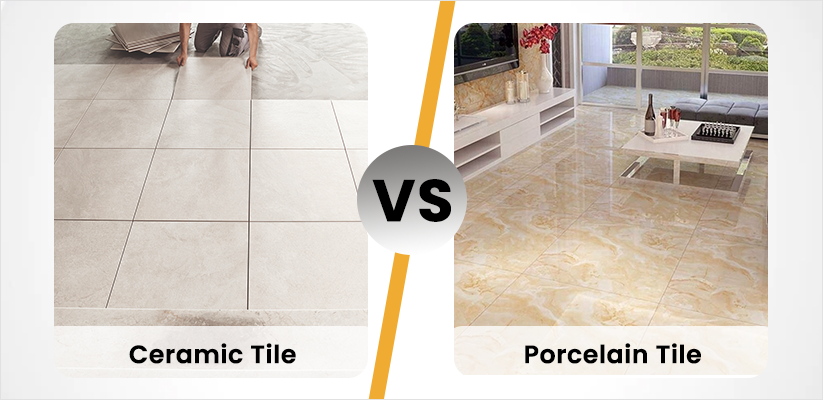
Porcelain vs Ceramic Tiles: Which Is Better?
When comparing porcelain vs ceramic tiles, there is no single winner for every project. Porcelain is generally denser, harder and less water absorbent, making it an excellent choice for floors, bathrooms and areas that receive heavier use. Ceramic tiles are often easier to cut, widely available and available in a large range of colours, patterns and finishes, making them a practical option for many walls and lighter-use areas. The right choice depends on where the tiles will be installed, your budget, design preferences, maintenance requirements and the conditions of the space.
Both porcelain and ceramic tiles are made from clay and other natural materials, but differences in manufacturing and composition give them different characteristics. Understanding these differences can help you select the right tile for a bathroom, kitchen, living area, commercial property or other space.
Porcelain vs Ceramic Tiles at a Glance
| Feature | Porcelain Tiles | Ceramic Tiles |
|---|---|---|
| Density | Higher | Lower |
| Water absorption | Very low | Generally higher |
| Durability | Excellent | Good |
| Floor applications | Excellent | Good when suitable for flooring |
| Wall applications | Excellent | Excellent |
| Bathroom use | Excellent | Excellent |
| Ease of cutting | More difficult | Generally easier |
| Design options | Extensive | Extensive |
| Weight | Generally heavier | Generally lighter |
| Cost | Often higher | Often more affordable |
| Maintenance | Generally easy | Generally easy |
| Best suited to | High-use floors, wet areas, premium finishes | Walls, floors, kitchens and general residential applications |
The specific product specification still matters. Not every porcelain or ceramic tile is suitable for every application.
What Is the Difference Between Porcelain and Ceramic Tiles?
The main difference between porcelain and ceramic tiles is their composition, manufacturing process and water absorption.
Both are manufactured using clay-based materials and are fired in a kiln. Porcelain is generally made using more refined materials and fired at higher temperatures, producing a denser and less porous tile.
Ceramic tiles are also durable and suitable for many applications, but they generally have a higher water absorption rate than porcelain.
This difference becomes particularly relevant when selecting tiles for areas exposed to moisture, heavy traffic or demanding conditions.
What Are Porcelain Tiles?
Porcelain tiles are a type of ceramic tile manufactured to achieve a particularly dense and durable product.
They are commonly used for:
- Bathroom floors
- Shower walls
- Kitchen floors
- Living areas
- Hallways
- Commercial floors
- Outdoor areas where the specific product is suitable
- Feature walls
Porcelain tiles are available in many finishes, including products designed to resemble:
- Natural stone
- Marble
- Concrete
- Timber
- Terrazzo
- Natural textures
This means you can achieve a premium appearance without necessarily using the natural material that the tile imitates.
What Are Ceramic Tiles?
Ceramic tiles are manufactured from clay and other materials before being fired at high temperatures.
They are widely used for:
- Bathroom walls
- Kitchen splashbacks
- Bathroom floors where the product is rated for floor use
- Laundry walls
- General residential areas
- Decorative feature walls
One of the major advantages of ceramic tiles is the wide selection of styles and finishes available.
They can also be easier to cut than porcelain, which can make certain installation projects more straightforward.
Is Porcelain Stronger Than Ceramic?
Generally, porcelain is denser and more resistant to wear than standard ceramic tile.
This makes porcelain particularly useful for areas that experience:
- Heavy foot traffic
- Frequent use
- Moisture
- Commercial activity
- Higher wear requirements
However, strength is only one factor when choosing a tile.
A ceramic tile that is correctly selected for its intended application can perform very well in a residential bathroom or wall installation.
The important question is not simply whether porcelain is stronger.
It is whether the specific tile is appropriate for the area where you intend to install it.
Is Porcelain More Waterproof Than Ceramic?
Porcelain generally has a lower water absorption rate than standard ceramic tiles.
This makes it particularly suitable for areas where moisture resistance is important.
However, it is important to distinguish between a water-resistant tile and a complete waterproofing system.
For example, installing porcelain tiles in a bathroom does not eliminate the need for appropriate wet area waterproofing.
The tile is part of the finished surface. It should not be treated as a substitute for properly designed waterproofing behind or beneath the tiled area.
Which Is Better for Bathroom Floors?
For bathroom floors, porcelain is often an excellent choice because of its density, durability and low water absorption.
However, ceramic tiles can also be suitable when the specific product is designed and rated for floor use.
When selecting bathroom floor tiles, pay attention to:
- Slip resistance
- Water exposure
- Tile thickness
- Surface finish
- Cleaning requirements
- Bathroom traffic
- Installation requirements
Do not choose a bathroom floor tile based solely on colour or appearance.
A tile that looks attractive may not provide the characteristics required for a wet floor.
Which Is Better for Bathroom Walls?
Both porcelain and ceramic can work well on bathroom walls.
Ceramic is often a practical choice because bathroom walls do not experience the same foot traffic as floors.
Porcelain can also be used when you want:
- Large format tiles
- Stone-look finishes
- Marble-look surfaces
- Consistent designs
- Premium finishes
The best option depends on the design and performance requirements of the bathroom.
Porcelain vs Ceramic for Showers
Both can be used in shower areas when the selected product is suitable for the application.
For shower walls, either porcelain or ceramic can provide an attractive and practical finish.
For shower floors, the choice requires greater care because the surface is regularly exposed to water.
Consider:
- Slip resistance
- Tile size
- Drainage
- Grout joints
- Surface preparation
- Waterproofing
Smaller tiles or mosaics can sometimes be useful on shower floors because their multiple joints allow the tile surface to follow the required falls towards the drain.
Porcelain vs Ceramic for Kitchen Floors
Both porcelain and ceramic tiles can be suitable for kitchens.
Porcelain may be preferred where the floor receives heavy traffic or where greater durability is required.
Ceramic can be an excellent option for many residential kitchens when the product is suitable for floor installation.
When choosing kitchen floor tiles, consider:
- Foot traffic
- Spills
- Cleaning
- Cooking grease
- Furniture movement
- Slip resistance
- Overall design
A kitchen floor should be practical as well as attractive.
Porcelain vs Ceramic for Kitchen Splashbacks
Ceramic tiles are commonly used for kitchen splashbacks because they are available in many decorative designs and can be relatively easy to cut and install.
Porcelain can also be used where a more durable or premium finish is preferred.
Since splashbacks do not receive foot traffic, durability requirements are different from those of a kitchen floor.
This means ceramic can often be a practical and cost-effective choice.
Which Is More Durable?
Porcelain generally has the advantage when comparing durability.
Its dense composition makes it suitable for areas that receive significant wear.
This can make porcelain particularly useful for:
- Commercial flooring
- Entryways
- Hallways
- Busy kitchens
- High-traffic living areas
- Retail environments
Ceramic is still a durable material when correctly selected and installed.
For a normal residential wall application, choosing porcelain simply because it is stronger may not provide enough additional benefit to justify the extra cost.
Which Is Easier to Cut and Install?
Ceramic tiles are generally easier to cut than porcelain.
Porcelain is denser and harder, which can require more specialised cutting equipment and greater care during installation.
This can affect installation time and labour costs.
However, experienced professional tilers regularly work with both materials and can select the appropriate tools and installation methods for the tile being used.
Large format porcelain can require particularly careful handling because the tiles can be heavier and more difficult to manoeuvre.
Is Porcelain More Expensive Than Ceramic?
Porcelain tiles are often more expensive than standard ceramic tiles, although pricing varies significantly according to the product.
The final cost depends on:
- Tile material
- Brand
- Size
- Finish
- Design
- Quality
- Quantity
- Supplier
- Installation requirements
A premium ceramic tile can cost more than an entry-level porcelain product, so material alone does not determine the final price.
You should compare the actual products rather than assuming that one material will always be more expensive.
Does Porcelain Cost More to Install?
Installation costs can be higher for some porcelain projects because the material is denser and may require more specialised cutting and handling.
Large format porcelain can also require:
- More accurate substrate preparation
- Additional handling
- Specialised cutting
- More careful transportation
- Experienced installation
However, installation pricing depends heavily on the project.
A simple porcelain floor may be easier and cheaper to install than a complicated ceramic mosaic design.
The tile material is only one part of the overall installation cost.
Porcelain vs Ceramic: Maintenance
Both porcelain and ceramic tiles are generally relatively easy to maintain when correctly installed and cared for.
Regular maintenance typically involves:
- Sweeping or vacuuming
- Removing spills
- Mopping with a suitable cleaning product
- Cleaning grout regularly
- Following the manufacturer’s recommendations
The grout between the tiles can require more maintenance than the tile surface itself.
Bathrooms can also develop soap residue, mineral deposits and moisture-related staining if surfaces are not cleaned regularly.
Which Is Better for High Traffic Areas?
Porcelain is generally the stronger choice for high traffic flooring because of its durability and density.
Examples include:
- Shopping areas
- Commercial buildings
- Busy entrances
- Restaurants
- Office buildings
- Large family homes
However, the specific tile rating should always be checked before installation.
Not every tile is designed for every level of traffic.
Which Is Better for Commercial Projects?
Porcelain is frequently considered for commercial flooring because of its durability and range of available finishes.
Commercial spaces may experience significantly more foot traffic than a typical residential property.
For a commercial project, the tile should be selected according to:
- Expected traffic
- Application
- Slip resistance
- Cleaning requirements
- Durability
- Maintenance
- Design
- Project budget
- Installation conditions
Commercial tiling also requires careful planning around access, material delivery, other trades and project deadlines.
The cheapest tile may not provide the best long-term value if it is unsuitable for the level of use.
Porcelain vs Ceramic for Large Format Tiles
Large format tiles have become increasingly popular in contemporary interiors.
Porcelain is commonly available in large formats, making it a popular option for:
- Open-plan floors
- Feature walls
- Bathrooms
- Kitchens
- Commercial interiors
Large tiles can create fewer grout lines and a more continuous appearance.
However, they require a properly prepared surface.
Even minor unevenness can become more noticeable when installing large tiles.
Professional installation is particularly important when working with large format products.
Which Is Better for a Small Bathroom?
Both porcelain and ceramic can work well in a small bathroom.
Instead of automatically choosing one material, consider:
- Tile size
- Colour
- Grout
- Lighting
- Surface finish
- Layout
- Maintenance
Large light-coloured tiles can help create a visually continuous appearance, while smaller tiles can provide more flexibility around drains and complicated areas.
The best choice depends on the bathroom layout.
Which Has More Design Options?
Both porcelain and ceramic offer extensive design choices.
You can find products that replicate:
- Marble
- Stone
- Concrete
- Timber
- Terrazzo
- Natural textures
- Geometric patterns
- Plain colours
Ceramic tiles are particularly popular for decorative wall applications because of the wide range of colours, shapes and patterns.
Porcelain offers extensive options as well, especially for large format floors and premium surfaces.
There is no clear winner when it comes to design variety.
Porcelain vs Ceramic: Pros and Cons
Porcelain Tile Advantages
- High density
- Low water absorption
- Excellent durability
- Suitable for many high-traffic applications
- Wide range of designs
- Available in large formats
- Suitable for many bathroom applications
Porcelain Tile Disadvantages
- Can cost more
- Generally harder to cut
- Can require specialised installation
- Can be heavier
- Large format products require careful handling
Ceramic Tile Advantages
- Wide range of styles
- Often more affordable
- Easier to cut
- Suitable for many wall applications
- Good option for many residential areas
- Available in numerous colours and patterns
Ceramic Tile Disadvantages
- Generally higher water absorption than porcelain
- Not every ceramic tile is suitable for floors
- Some products may be less suitable for heavy traffic
- Product suitability must be checked for wet areas
Porcelain vs Ceramic: Which Should You Choose?
Your choice should depend on the application.
Choose Porcelain When:
You may want porcelain when you need:
- Greater durability
- Lower water absorption
- High-traffic flooring
- Large format tiles
- Premium stone-look finishes
- Commercial flooring
- Durable bathroom flooring
Choose Ceramic When:
Ceramic may be a practical choice when you need:
- Bathroom wall tiles
- Kitchen splashback tiles
- Decorative wall finishes
- A wide range of designs
- Easier cutting
- A more budget-friendly option
However, these are general guidelines rather than strict rules.
The product specifications should always be checked before purchasing.
What About Grout With Porcelain and Ceramic?
The grout you choose can influence the appearance and maintenance of both porcelain and ceramic tiles.
Matching grout can make the surface appear more continuous.
Contrasting grout can emphasise individual tiles.
For example:
White tile + white grout
Creates a clean, seamless appearance.
White tile + dark grout
Creates stronger definition.
Stone-look tile + neutral grout
Creates a more natural appearance.
Grout colour should also be selected with maintenance in mind, particularly in bathrooms and kitchens.
What About Waterproofing?
Neither porcelain nor ceramic tiles should be considered a replacement for waterproofing.
This is especially important in bathrooms and other wet areas.
A properly constructed wet area may require waterproofing before tiles are installed.
The installation process should consider:
- Substrate preparation
- Waterproofing
- Drainage falls
- Adhesive
- Tile layout
- Grouting
- Sealing where applicable
Choosing a high-quality tile cannot compensate for poor preparation or inadequate waterproofing.
How to Choose Between Porcelain and Ceramic
If you are still unsure, use this simple decision process.
Step 1: Identify the Location
Is the tile going on a wall, floor, shower floor, splashback or commercial surface?
Step 2: Consider Water Exposure
Will the area regularly come into contact with water?
Step 3: Consider Traffic
Will the surface receive heavy foot traffic?
Step 4: Set Your Budget
Consider the complete cost, including tiles and installation.
Step 5: Select the Design
Choose a colour, texture and finish that complements the rest of the space.
Step 6: Check Product Suitability
Confirm that the specific tile is suitable for the intended application.
Step 7: Consider Installation
Discuss the tile with your tiler before purchasing it, particularly if you are choosing large format or complex tiles.
Common Mistakes When Choosing Between Porcelain and Ceramic
Choosing the Cheapest Tile
Price should not be the only consideration. The tile needs to be suitable for the intended application.
Assuming Every Porcelain Tile Is Suitable for Every Area
Porcelain comes in many different products and finishes. Always check the manufacturer’s recommendations.
Using Wall Tiles on Floors
Some wall tiles are not designed for floor traffic.
Ignoring Slip Resistance
Bathroom floors need appropriate consideration of slip resistance.
Forgetting Installation Costs
The purchase price of tiles is only part of the project budget.
Not Checking Tile Availability
If a particular tile becomes unavailable halfway through a project, replacing it can be difficult.
Buying Without Consulting the Installer
Your tiler can identify potential installation challenges before you purchase the materials.
Frequently Asked Questions
Is porcelain better than ceramic?
Porcelain is generally denser, more durable and less water absorbent than standard ceramic tile. However, ceramic can be the better choice for some applications, particularly decorative walls and areas where lower cost and easier cutting are priorities.
Which is better for bathroom floors, porcelain or ceramic?
Porcelain is often a strong choice for bathroom floors because of its density and low water absorption. However, a ceramic tile specifically designed and rated for floor use can also be suitable.
Which is better for bathroom walls?
Both porcelain and ceramic can work well on bathroom walls. Ceramic is often a practical option, while porcelain may be preferred for large format or premium finishes.
Is porcelain harder to install than ceramic?
Porcelain is generally denser and harder to cut, so it can require more specialised tools and greater care during installation.
Is ceramic cheaper than porcelain?
Ceramic is often more affordable than porcelain, but pricing varies according to the specific tile, brand, size, finish and quality.
Which tile lasts longer?
Porcelain generally offers greater durability, particularly in high-use applications. However, properly selected and professionally installed ceramic tiles can also provide many years of service.
Can porcelain tiles be used outdoors?
Some porcelain products are specifically manufactured for outdoor applications. Always check the manufacturer’s specifications before using a particular tile outdoors.
Can ceramic tiles be used in a shower?
Ceramic tiles can be used on shower walls when the specific product is suitable for the application. Shower floors require additional consideration of slip resistance and tile suitability.
Are porcelain tiles easier to clean?
Both porcelain and ceramic tiles are generally easy to clean when properly installed and maintained. The grout joints may require more regular cleaning than the tile surface.
Should I choose porcelain or ceramic for my home?
Choose based on the location, water exposure, traffic, design, maintenance requirements and budget. Porcelain is often ideal for durable flooring, while ceramic can be an excellent option for walls and many residential applications.
Final Verdict: Porcelain vs Ceramic Tiles
So, porcelain vs ceramic tiles: which is better?
The answer depends on the project.
Porcelain is generally the better choice when durability, low water absorption and heavy-use performance are priorities. It can be particularly suitable for bathroom floors, high-traffic areas, commercial flooring and large format applications.
Ceramic can be the better choice when design flexibility, easier cutting and a more affordable material are important. It is particularly practical for many bathroom walls, kitchen splashbacks and decorative applications.
Neither material is automatically right for every project.
The most important step is to select a product that is specifically suitable for its intended application and then have it installed over a properly prepared surface.
Need Help Choosing the Right Tiles?
Choosing between porcelain and ceramic is only one part of a successful tiling project. The substrate, waterproofing, tile layout, adhesive, grout and installation quality can all affect the finished result.
If you are planning a bathroom, kitchen, residential or commercial tiling project, professional advice can help you select the right materials for the space.
Get Free Strategy Session
Talk to our team about your tiling requirements and get professional guidance for your project.